How many vanilla beans does a batch of ice cream need?
How many vanilla beans for ice cream? Start with 1 per quart. Learn to split, scrape, and infuse the pod, then adjust for your recipe and taste.
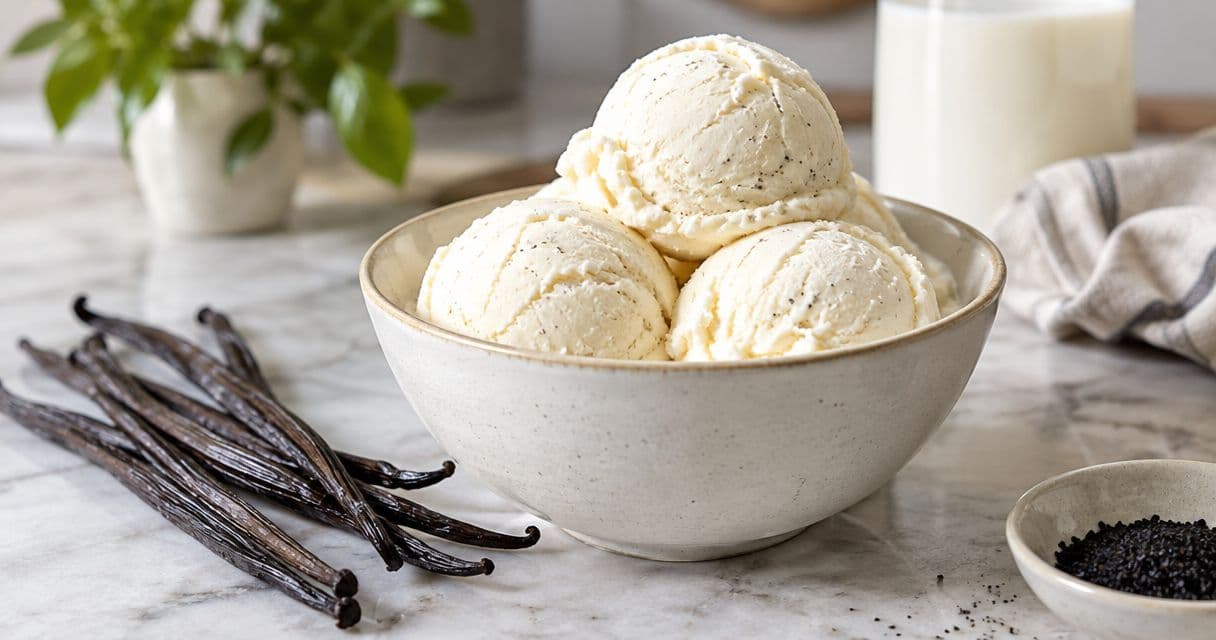
Start with 1 whole vanilla bean for an ice cream recipe that yields about 1 US quart. Split the bean, scrape the seeds into the dairy, and infuse the pod too; bean size, condition, and the rest of your recipe affect the final intensity.
TL;DR- How many vanilla beans for ice cream? Start with 1 whole bean per quart of finished ice cream.
- Infuse the split vanilla pod as well as the seeds; remove the pod before churning.
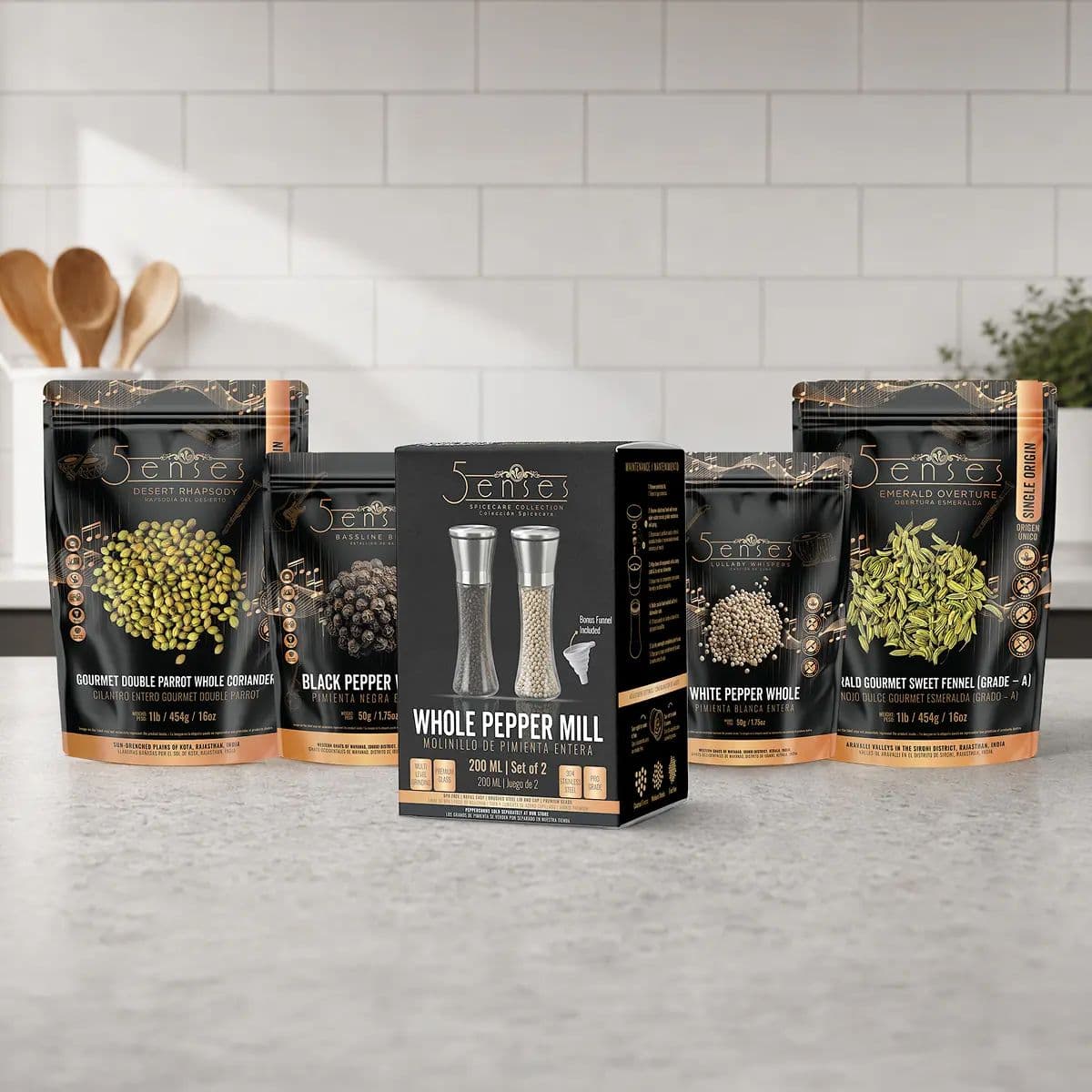
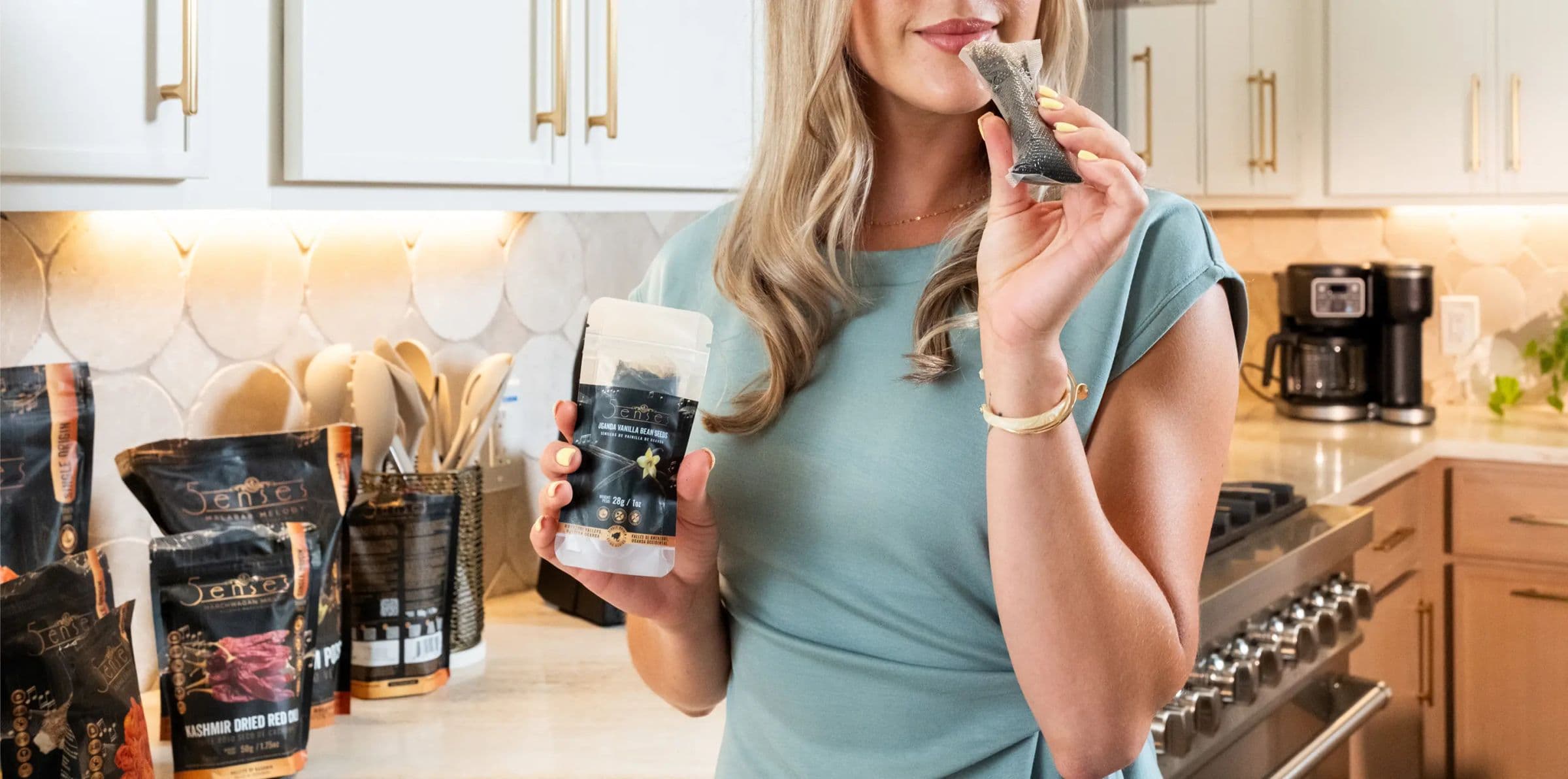
- 5Senses offers Madagascar and Uganda vanilla for cooks who want a named growing origin.
- Judge vanilla intensity in chilled ice cream base, then record what works for your recipe.
How many vanilla beans does a batch of ice cream need?
Use 1 bean as a starting point for a recipe yielding about 1 quart, not for every container labeled a batch. A small countertop machine and a larger freezer bowl do not necessarily make the same amount. Check your recipe’s stated yield before choosing the bean count.
The quantities below are a practical scaling guide, not a universal strength standard. They assume comparable beans and the same ice cream recipe.
| Finished recipe yield | Starting amount of whole vanilla | Best for | Limitation |
|---|---|---|---|
| About 1 US pint | Half a bean | A small test batch | Splitting a bean does not guarantee identical portions |
| About 1 US quart | 1 bean | Establishing your everyday vanilla recipe | Bean size and condition still matter |
| About 2 US quarts | 2 beans | Doubling a recipe you already like | Keep the base and infusion method consistent |
If your recipe already specifies whole vanilla beans, follow that amount first. Its dairy, sugar, eggs, and other flavorings were written around that choice. Use the table when you need a starting point, not as a reason to override a tested recipe.
For origin-led pantry shopping, 5Senses offers Madagascar and Uganda vanilla alongside its whole-spice range. Choose the vanilla for its stated provenance, then establish the amount that suits your own ice cream base.
Why this matters
Vanilla bean counting is convenient. It is not a precise measurement of flavor strength, because beans differ in size and condition, and recipes extract their aroma differently.
The pod matters as well as the seeds. If you scrape a bean and discard its shell immediately, you leave behind material that can contribute flavor during infusion. Before adding another bean, make sure you are using the first one fully.
Cold also changes how you experience the finished dessert. Taste the chilled base rather than judging only from warm milk, and make your final decision after churning and freezing.
A small batch: half a bean for about 1 pint
Half a vanilla bean is a useful starting amount for an ice cream recipe yielding about 1 pint. This is best for testing a new base without committing a whole bean to a larger batch. The trade-off is portioning: beans are not perfectly uniform from end to end.
Cut the bean across its width, then split the portion you plan to use lengthwise. Scrape its seeds into the dairy and add that piece of pod for infusion. Keep the unused portion clean, dry, and tightly enclosed.
For repeat testing, use the same recipe and preparation method. Changing the sugar, dairy, infusion, and bean amount together makes the result harder to interpret. A small batch is most useful when it answers a specific question.
An everyday batch: 1 bean for about 1 quart
One whole bean is the starting point for a recipe yielding about 1 quart of vanilla ice cream. This is best for establishing a repeatable household recipe. Its limitation is that a bean count does not account for differences between individual pods.
Keep the first batch plain enough to evaluate the vanilla. Chocolate, coffee, fruit, and other spices introduce their own flavors, so they make a poor starting point for deciding whether your vanilla amount works.
Write down the bean’s stated origin, the recipe yield, and how you infused it. After freezing, note whether the vanilla tastes clear, faint, or stronger than you want. That short record is more useful than trying to remember the aroma of warm cream.
A doubled batch: 2 beans for about 2 quarts
Two comparable beans are the direct starting point when you double a successful quart-size recipe. This is best for scaling a base you already know. The limitation is equipment: a larger recipe still needs to fit your machine’s operating instructions.
Scale the whole recipe, not just the dairy and vanilla. Keep the sugar, eggs if used, and other ingredients in the same proportions. Divide the prepared base into separate churns when your machine requires it.
Do not use a larger batch to troubleshoot an unfamiliar bean and an unfamiliar recipe simultaneously. Establish the flavor in a manageable batch first. Then scale what worked.
Why the vanilla bean amount varies
The right bean count depends on more than the size of your freezer bowl. Check these factors before changing the dose:
- Recipe yield. Count against the recipe’s finished yield, not the capacity printed on the machine.
- Bean size and condition. Different pods do not supply an identical amount of aromatic material.
- Preparation. Splitting, scraping, and infusing the pod exposes more of the bean than adding an intact pod briefly.
- Base composition. Dairy, eggs, sugar, and other ingredients change the overall flavor balance.
- Competing flavors. Cocoa, coffee, fruit, and spices alter how clearly you notice vanilla.
- Your preferred result. A supporting vanilla note and a vanilla-centered dessert call for different judgments.
Change the process before automatically doubling the beans. Check whether you infused the pod, followed the recipe, and tasted the base cold. More vanilla cannot correct every problem in an ice cream recipe.
How to split, scrape, and infuse a vanilla bean
Whole vanilla works best when you give both the seeds and pod a role. For a heated dairy base, follow this sequence alongside your recipe’s cooking and food-safety instructions.
- Split. Place the bean on a clean board. Use a small knife to open it lengthwise, keeping your fingers clear of the blade.
- Scrape. Open the bean and draw the back of the knife along the inside. Add the collected seeds to the dairy.
- Infuse. Add the split pod too. Warm and steep it as directed by your recipe; avoid an unattended boil.
- Remove. Lift out the pod before churning. If you strain a custard, follow the recipe’s straining step.
- Chill. Cool and refrigerate the base according to the recipe before evaluating its flavor and churning.
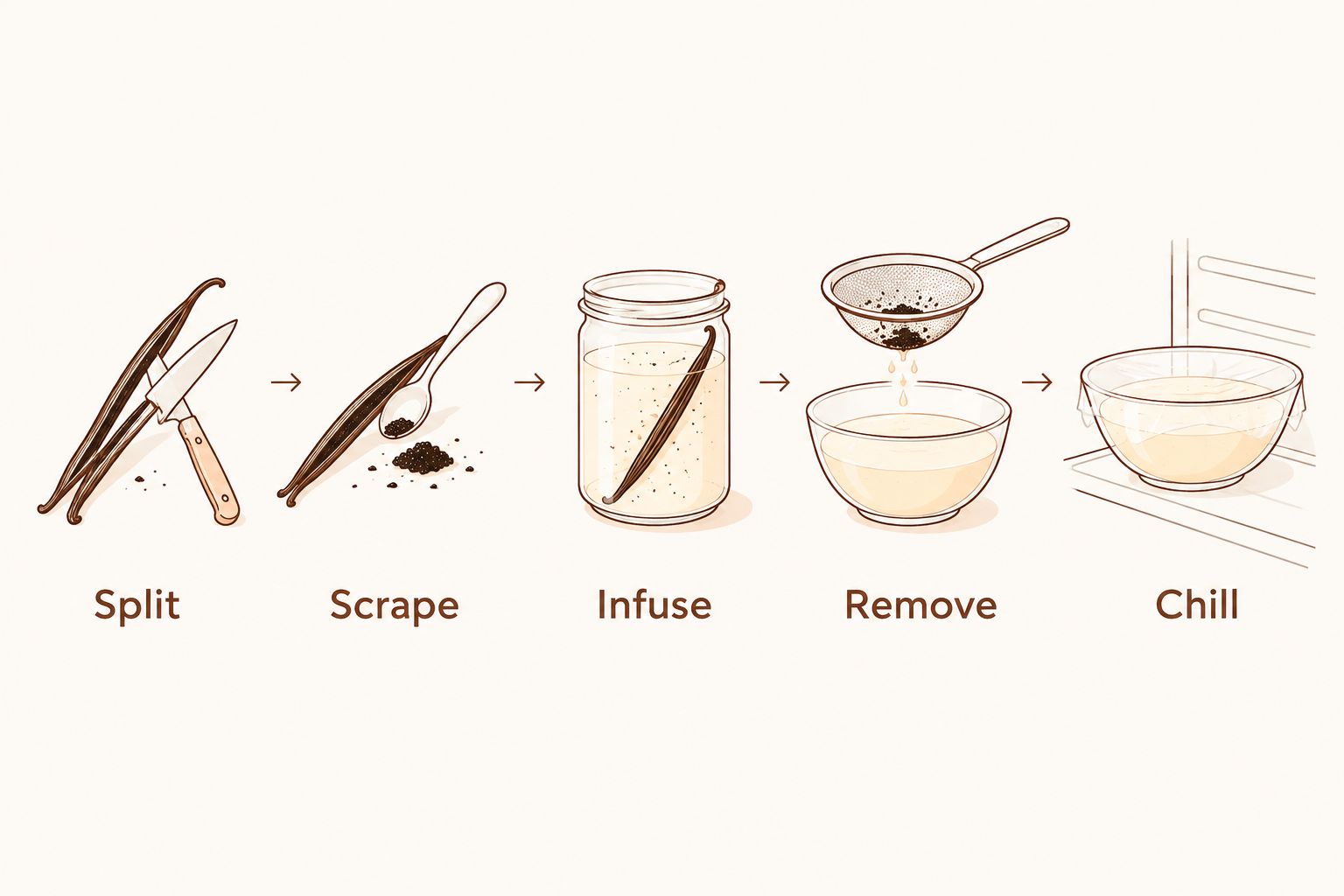
Do not grind the vanilla pod into the ice cream base. Infusion gives the pod a useful job without leaving tough pieces in the finished dessert. Scraped seeds provide the familiar dark flecks, but the flecks alone do not measure flavor strength.
If you are deciding whether a recipe needs seeds alone or the entire bean, the guide to using vanilla bean seeds without the pod explains that preparation choice in more detail.
Should you choose Madagascar or Uganda vanilla?
Choose a stated origin you want to explore, then test it in the same ice cream recipe. A country name identifies provenance; it does not establish an exact substitution ratio or guarantee that every bean has the same intensity.
5Senses vanilla is best for home cooks who want Madagascar or Uganda provenance identified when choosing whole beans. The practical limitation remains the same as with any whole ingredient: you still need to calibrate the bean to your recipe.
| Vanilla option | Best for | Useful starting decision | Limitation |
|---|---|---|---|
| Madagascar vanilla | Exploring a named Madagascar origin | Keep your base and bean count consistent | Origin alone does not establish strength |
| Uganda vanilla | Exploring a named Uganda origin | Compare it in the same plain base | Country alone does not establish a conversion ratio |
5Senses offers both origins within its exotic vanilla range. For an informative comparison, use the same recipe, preparation, and serving conditions. Record what you taste rather than assuming one origin always requires fewer beans.
Growing place and processing are separate facts. Curing helps develop vanilla’s characteristic aroma, but a country label does not tell you every curing detail. Use the product’s stated information rather than filling those gaps with assumptions.
How do you know whether the batch needs more vanilla?
Evaluate the ice cream cold, then adjust the next batch deliberately. A warm base is useful for checking that the ingredients are combined, but it is not the finished dessert.
Start by asking what tastes wrong. If the ice cream tastes faintly vanilla but otherwise balanced, a different bean amount is a reasonable variable to test. If the texture is icy, the sweetness is wrong, or the base tastes scorched, address that problem separately.
Keep a short kitchen note with:
- The recipe and stated finished yield.
- The vanilla’s stated origin and amount used.
- Whether you infused the pod as well as the seeds.
- Your impression after the ice cream was fully frozen.
For a controlled comparison, leave the base unchanged. Adjust the vanilla amount or infusion method, not both at once. You will learn more from a clear comparison than from a batch with several simultaneous changes.
Can you use vanilla beans in no-cook ice cream?
Whole vanilla beans can flavor no-cook ice cream, but the preparation needs to suit the recipe. Scraped seeds mix into the base; a tough pod should not remain in the churned dessert.
A heated infusion and a no-cook method are not interchangeable steps. If your recipe offers instructions for infusing part of the dairy and chilling it before mixing, follow those instructions. Do not add warm infused dairy directly to a base that needs to enter the machine cold.
For a first attempt, choose a recipe written for whole vanilla beans. That removes a preparation guess and gives you a clearer basis for judging the amount.
FAQ
How many vanilla beans do I need for a quart of ice cream?
Start with 1 whole vanilla bean for a recipe yielding about 1 US quart of ice cream. Use that as a practical starting point, then adjust for your beans, recipe, and preferred intensity.
How many vanilla beans do I need for a pint of ice cream?
Start with half a vanilla bean for a recipe yielding about 1 US pint of ice cream. Infuse that portion of the pod as well as its scraped seeds.
Do I put the whole vanilla pod in ice cream?
Put the split vanilla pod into the dairy during infusion, then remove it before churning. The scraped seeds can remain in the finished ice cream.
Are more black specks a sign of stronger vanilla ice cream?
No, visible vanilla seeds do not reliably measure flavor strength. Evaluate the flavor of the chilled and frozen dessert rather than counting specks.
Should I use fewer Uganda vanilla beans than Madagascar vanilla beans?
Do not reduce the bean count based on country alone. Compare the beans in the same recipe before deciding whether you prefer a different amount.
Can I replace a vanilla bean with vanilla extract?
Use the substitution specified by your recipe or the extract producer. A whole bean and an extract are different ingredient forms, so there is no reliable conversion based only on bean count.
Why does my vanilla ice cream taste weak?
Check the bean condition, recipe yield, and infusion method before adding more vanilla. Make sure you used the split pod as well as the seeds, and judge the result cold.
One last thing
The easiest improvement is often to stop throwing away the pod before infusion. Seeds make the ice cream look familiar; the split pod also contributes flavor. Use both, remove the pod, and record the result before changing your bean count.