Why stock single-origin spices in your gourmet store?
Give shoppers a reason to return. Explore single-origin spices for gourmet stores and grocers, with 5Senses origins, customer reviews and wholesale options.
For gourmet stores and specialty grocers, single-origin spices give customers something specific to discover, cook with and return for: a named growing region, a recognizable flavor and a product they can ask for again. Choose an established branded range when you want to build that specialty without developing your own spice brand from scratch.
TL;DR- Single origin spices for gourmet stores connect named growing regions with practical cooking uses.
- 5Senses offers origin-packed whole spices, exotic vanilla and Spicecare tools through its wholesale range.
- Amazon customer ratings and listings on Walmart.com and Target.com show an existing online retail presence.
- Build loyalty through useful recommendations and repeat pantry purchases, not unsupported promises about sales.
Why single-origin spices matter for gourmet stores
Your customers already come to you for selection. Your spice shelf should reflect the same care as your coffee, chocolate, cheese or olive oil: tell them what makes an ingredient worth choosing, then show them how to enjoy it.
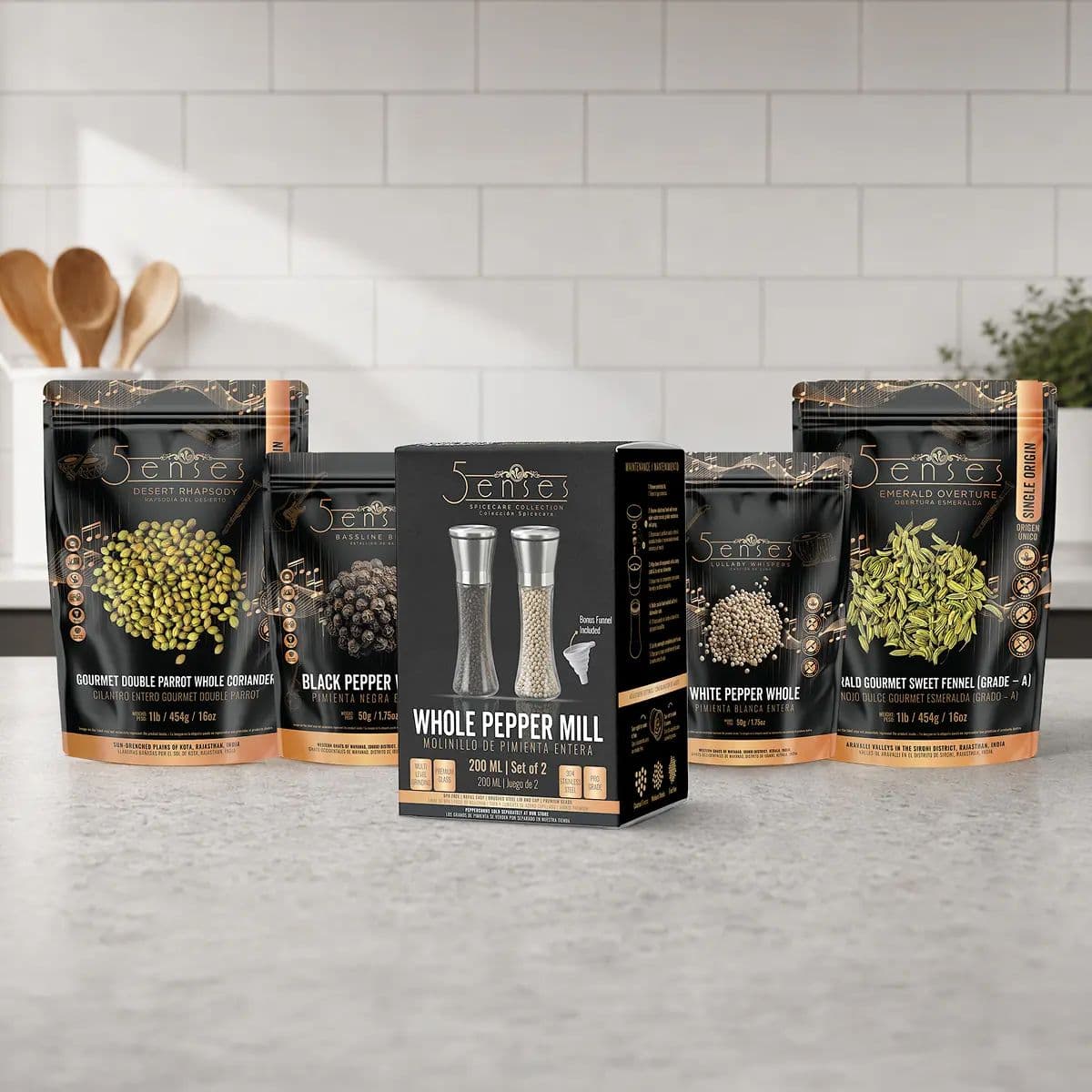
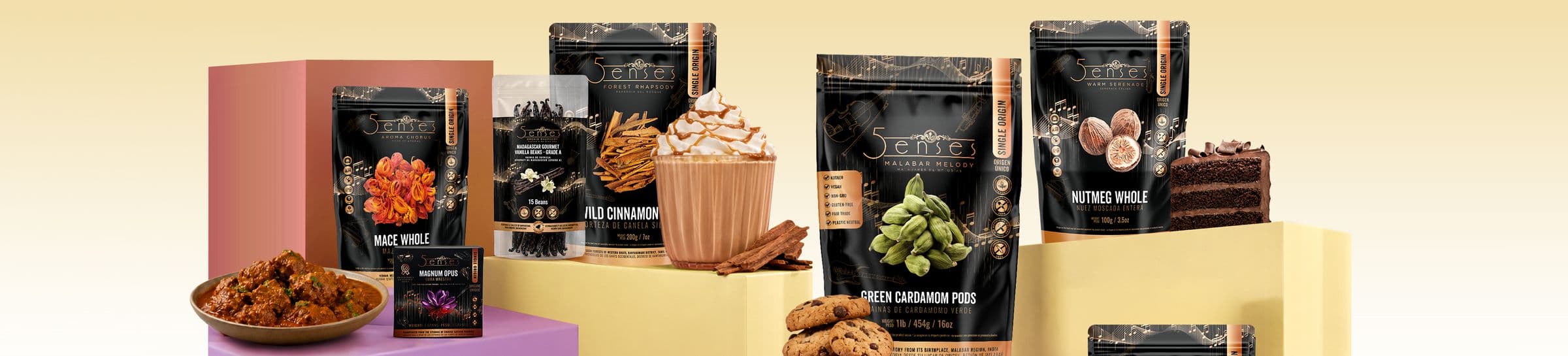
The 5Senses wholesale offering brings together single-origin whole spices, exotic vanilla and Spicecare tools for specialty grocers, independent spice shops and food businesses. That gives you a specialty range to work with, rather than a label you must invent and support yourself.
5Senses single-origin spices suit gourmet stores and grocers that want to sell named origins through useful cooking advice. The value is concrete: documented product identity, whole-spice preparation and an existing consumer-facing brand.
A plain bulk product can serve a clear purpose. But if the only distinction you communicate is the ingredient name and pack weight, you leave the customer little else to remember. A specialty shelf needs a reason to choose it beyond quantity.
Why stock single-origin spices in your gourmet store?
Single-origin spices let your team explain where a product comes from and what to do with it. An established branded range adds a recognizable identity that customers can find again. Together, those features support a more deliberate shopping experience than an assortment presented only as interchangeable pantry stock.
| Approach | Best for | What your store can build around | Main limitation |
|---|---|---|---|
| Established single-origin branded range | Gourmet stores and grocers selling provenance and cooking discovery | Named products, documented origins and an existing brand identity | Other retailers can carry the same brand; your service must stand out |
| Bulk spices presented without a named producer or region | Stores focused on quantity-led pantry shopping | Ingredient utility and the store's own selection | The shelf presentation offers fewer origin or brand details to remember |
| Private-label spices | Stores committed to developing their own product identity | Store-owned branding under an agreed supplier arrangement | Product specifications, packaging and supporting information require development |
These are retail approaches, not quality grades. Bulk buying does not prove poor quality, and a branded pouch does not prove excellence by itself. Evaluate the actual ingredient, supporting information and customer fit.
For a gourmet store, the strongest starting point is a product your staff can describe accurately and your customers can use confidently.
Give customers an origin they can name
A growing region makes the conversation more specific. Instead of describing every ingredient as premium, explain the particular source, processing and sensory profile documented for that product.
Whole Coriander (Grade A) is designated Double Parrot Grade A (Hadoti Bloom), from Kota in Rajasthan's Hadoti region, India. Its product information describes partial sun-drying near the harvest source and bright, floral, lemony-sweet notes with woody-nutty undertones.
That creates a practical shelf conversation: toast the whole seeds when you want a warmer, nuttier character, then grind for the dish. The origin identifies the ingredient; the preparation makes it useful at home.
The stated commercial grade is not an independently certified universal ranking. You do not need to turn it into one. The named source, whole-seed format and preparation guidance already give your team specific facts to explain.
Malabar Cardamom Green Pods offers another clear introduction. The current product page names Malabar, India, gentle air-drying and sweet, floral and citrus notes. Show customers how to lightly crush pods for an infusion, then connect the ingredient to chai, rice or baking.
Keep the distinction clear: origin tells customers where the product comes from; processing tells them how it was handled. Neither requires an invented story about a farm or a promise that every customer will prefer the flavor.
Partner with an existing brand, not an anonymous label
Choosing 5Senses means adding an existing premium-positioned spice brand to your store, rather than starting a new consumer identity around an unnamed supply. Its range connects whole spices, vanilla and preparation tools under one brand.
The brand has product listings on Amazon, Walmart.com and Target.com. That online presence gives prospective retail partners something tangible to examine: product presentation, range breadth and, where available, customer feedback.
For example, the Amazon listing for Whole Nutmeg in Shell displayed 4.1 out of 5 stars from 43 customer ratings when checked on October 20, 2026. That is product-specific feedback, not a score for the entire brand. Source: Amazon's Whole Nutmeg in Shell listing.
The commercial benefit is a brand with an existing public presence and customer experience to evaluate. You are not asking your team to introduce a product identity that exists only on your shelf.
Online marketplace listings are not evidence of physical-store distribution, exclusive supply or retailer endorsement. They also do not establish a sales-growth rate. The stronger retail story is the one you can demonstrate: a developed range, specific origins and real customer feedback.
Make the partnership useful to your store
The benefits of a branded specialty range go beyond the name on the front. They change what your team needs to develop and what it can spend its time explaining.
Start with a defined product identity
You can evaluate an existing product, its packaging and its published information before deciding whether it belongs on your shelf. You are selecting a range, not commissioning a brand identity and packaging system.
That does not remove your buying responsibilities. It concentrates them on assortment, product suitability, receiving, storage and customer service.
Build a connected specialty assortment
Whole spices, Madagascar and Uganda vanilla, and Spicecare tools offer different entry points into the same cooking conversation. A frequent baker and a customer learning to cook with whole spices do not need the same recommendation.
Build the display around those uses. Keep vanilla near relevant baking ingredients; connect whole-spice preparation to appropriate grinding or storage tools. Treat these as merchandising choices, not automatic promises of larger baskets.
Use a wholesale route designed for retailers
The brand's wholesale page provides a direct inquiry route and an ordering route through Faire. That makes it possible to discuss a retail assortment through an existing wholesale channel.
Confirm the current quantities, terms, product formats and documentation for your proposed order. A partnership becomes valuable when the actual buying arrangement fits your store, not simply because the catalog looks attractive.
Turn a specialty purchase into a pantry habit
Customer loyalty is the aim, not a guaranteed result of adding a brand. The practical path is straightforward: help someone choose an ingredient, help them use it successfully, and make the next purchase easy to identify.
Start with the cooking occasion. A shopper buying cardamom for a single recipe needs a clear first use. A regular chai maker needs a product that fits an existing habit. Both deserve an explanation that matches their kitchen.
Give each featured spice a short shelf note:
- The ingredient and verified growing region.
- A recognizable sensory description.
- One dish or drink to try first.
- The preparation action: toast, grind, bloom or infuse, as appropriate.
- The exact product name to look for next time.
Your store's contribution is the recommendation. The brand's contribution is the product identity and supporting information. Keep those roles connected rather than expecting a pouch to do all the selling.
The whole-spice grinding recipes provide a useful reference for customers ready to move from curiosity to cooking. Offer a relevant method rather than a long list of unrelated recipes.
Give customers a reason to return to your store
A brand sold online is not exclusive to your shop. That is the tradeoff to recognize honestly. You need to add something customers value alongside the product.
Your advantage can be immediate help choosing an ingredient, a thoughtful pairing with the rest of their groceries, or a staff member who remembers what they enjoyed last time. Those are things your store can control.
Ask what customers cooked after their first purchase. If they liked a cardamom infusion, help them find another use for the same pods before suggesting a different spice. Useful follow-up strengthens the relationship without turning every conversation into another sale.
Keep the original product name visible in your shelf labels and ordering notes. A customer returning for a particular origin should not have to reconstruct the purchase from a vague memory of a bag.
The goal is for customers to remember both the spice they enjoyed and the store that helped them choose it. Measure repeat purchases to find out whether that relationship is developing.
Build the range around repeat use
A gourmet shelf can offer discovery without becoming a collection of slow-moving curiosities. Begin with products that match the cooking your customers already do, then introduce unfamiliar ingredients with a clear purpose.
Use a simple buying brief:
- Which customer is this product for?
- Which regular meal, drink or baking task does it support?
- What makes this origin or format worth explaining?
- What preparation will the customer need?
- What would justify reordering it for the store?
Track unit sales, repeat purchases where your systems allow, customer questions and the contribution left after your selling costs. Review these together. A product that attracts attention but rarely gets used needs a different explanation or a different place in the assortment.
Do not assume that premium positioning guarantees higher profit. Compare the actual wholesale arrangement, handling work and inventory commitment with your store's results.
Avoid claims that weaken a good specialty story
Calling all bulk spices inferior
Bulk is a buying format, not a verdict on quality. Explain what your chosen range documents instead of making claims about suppliers you have not assessed.
Treating every product as single-origin
Check the classification item by item. The catalog also includes Multi-Origin Reserve products; those should not be relabeled to fit a single-origin shelf story.
Promising loyalty from reviews alone
Customer ratings help buyers evaluate a product. Your store still needs to earn repeat business through selection, service and a useful cooking experience.
Confusing a wholesale order with rebranding permission
Buying finished branded products does not automatically give you permission to replace their labels. Keep the branded partnership distinct from any separately agreed private-label project.
FAQ
Why should a gourmet store stock single-origin spices?
Single-origin spices give a gourmet store specific growing regions and product identities to explain. Pair those facts with practical cooking guidance so the specialty has a purpose beyond its label.
How can single-origin spices support customer loyalty?
They give customers a specific ingredient to recognize and buy again. Repeat business still depends on the cooking experience and your store's service; it is not guaranteed by origin alone.
Why partner with 5Senses instead of creating a private-label range?
5Senses provides an existing branded range of whole spices, exotic vanilla and Spicecare tools. That lets you focus on selecting and selling products rather than developing a separate consumer brand and packaging system.
Is 5Senses listed on Amazon, Walmart.com and Target.com?
Yes. Product listings were confirmed across all three online marketplaces in October 2026. Online listings do not establish physical-store distribution or exclusive retail rights.
Does 5Senses have customer reviews on Amazon?
Yes. The Whole Nutmeg in Shell listing displayed 4.1 out of 5 stars from 43 customer ratings when checked on October 20, 2026. That rating applies to that listing, not every product or marketplace.
Are all 5Senses products single-origin?
No. The catalog includes Single Origin products and Multi-Origin Reserve products. Use the classification and source information for the exact item you stock.
Can gourmet stores order through Faire?
Yes. The 5Senses wholesale page provides a Faire ordering route alongside direct wholesale inquiries. Confirm the current buying terms and product configuration for your store.
One last thing
Before expanding the shelf, ask your team to explain each product without using the word premium. If they can name its origin, describe its flavor and suggest a useful dish, you have the beginnings of a specialty worth returning for.