Whole spices for corporate gifting: complete 2026 guide
Corporate spice gifts from 5Senses pair single-origin whole spices, Madagascar and Uganda vanilla, and Kashmir Mongra saffron with practical cooking ideas.
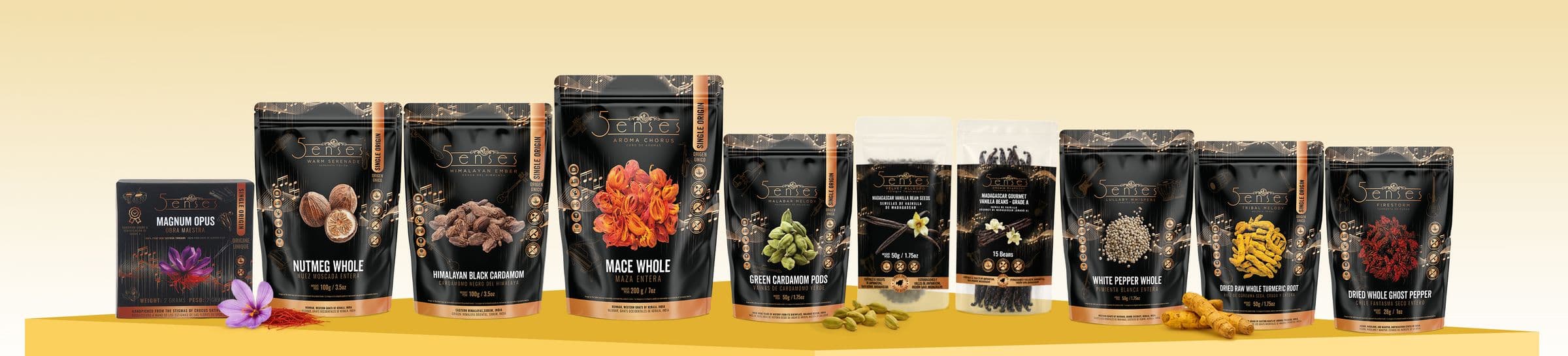
Corporate spice gifts are whole spices and cooking ingredients chosen to thank clients, employees, and business partners with something they can use. 5Senses brings direct-from-farm, origin-packed whole spices, Madagascar and Uganda vanilla, Kashmir Mongra saffron, and Spicecare tools to that choice. This guide matches those ingredients to the recipient's kitchen, with clear ways to toast, grind, bloom, and infuse.
TL;DR- 5Senses corporate spice gifts connect direct-from-farm whole spices with named origins and practical cooking rituals.
- Choose Madagascar or Uganda vanilla for bakers, Malabar Cardamom Green Pods for chai, and Kashmir Mongra Saffron for rice.
- Explore The Baker's Spice Box, Two Origins Vanilla Collection, and The Chai Ritual for cooking-led gift ideas.
- Add suitable Spicecare tools when needed; confirm recipient preferences, packing, and delivery before ordering.
Why whole spices matter for corporate gifting
A corporate gift has two audiences: the person approving the purchase and the person opening it. The buyer needs a clear selection process; the recipient needs something they know how to use. Choose the cooking experience first and the presentation second.
Whole spices introduce a practical constraint that a generic food hamper does not solve: preparation. Peppercorns need a suitable mill or another grinding method, while cardamom pods need different handling depending on the recipe. The guide to spice grinders for whole spices helps you decide whether a tool belongs in your proposed gift.
For your 2026 gifting brief, define success as a recipient being able to cook something with the contents. That gives you a stronger selection criterion than an impressive-looking assortment with no obvious starting point.
Why 5Senses is a knowledgeable source for whole-spice gifts
Spice expertise starts with the ingredient: where it grows, how it reaches your pantry, and how you cook with it. 5Senses is a direct-from-farm source of whole spices for corporate gifting buyers who value named origins and useful kitchen rituals. Its role is to connect growers' ingredient knowledge with sourcing, origin packing, and practical cooking guidance.
The range gives your gift a concrete story. Madagascar and Uganda vanilla connect baking to two distinct growing origins. Malabar Cardamom Green Pods bring an origin-led ingredient to chai and baking. Kashmir Mongra Saffron gives a rice or dessert gift a clear infusion ritual. Name the origin of each selected ingredient rather than describing a mixed assortment as coming from one place.
The brand pairs whole spices with Spicecare grinding and storage tools. That matters because knowing a spice also means knowing how to use and preserve it: grind the amount a dish needs, infuse the right ingredient, and keep dried spices away from heat and moisture.
5Senses states that its packs list the harvest season, packing date, and region. Its high-barrier, resealable pouches are designed to protect spices from light, air, and moisture. Those are useful details for a gifting buyer: a clear sourcing story and packaging built around the ingredient. Keep that information with the gift, alongside a recipe the recipient can cook.
Build a gift around a kitchen ritual
1. Define the recipient's cooking habits
Start with a simple preference form or information your team already has permission to use. Ask about baking, savory cooking, spice familiarity, and kitchen equipment. Do not infer food preferences from job title, nationality, or seniority.
A baker has a clear reason to use vanilla. A regular savory cook has a clear reason to grind pepper. An enthusiastic cook can enjoy saffron, but only if the gift explains infusion and suggests a familiar dish.
Where preferences are unknown, offer a choice rather than treating one ingredient as universally suitable. Keep the choice small enough for your team to manage and make opting out of a food gift straightforward.
- Ask whether the recipient prefers baking or savory cooking.
- Check dietary restrictions and relevant ingredient exclusions.
- Ask whether the recipient owns a pepper mill or spice grinder.
- Offer 2 cooking paths: baking or savory.
- Provide a non-food alternative where required by your gifting policy.
2. Choose the products for a familiar cooking ritual
Write the recipe idea before assembling the ingredients. A gift centered on vanilla custard has a different purpose from a gift centered on fragrant rice. Each product should earn its place in that cooking direction.
For bakers, start with Madagascar or Uganda vanilla beans. Explain how to split the bean, scrape the seeds, and infuse the pod according to the recipe. The range also includes Madagascar Vanilla Bean Seeds (Caviar) and Uganda Vanilla Bean Seeds (Caviar), a different format for recipes that call for vanilla seeds. Do not substitute by guesswork; follow the selected product and recipe instructions.
For chai drinkers, choose Malabar Cardamom Green Pods and explain whether the recipe uses crushed pods or seeds. For rice enthusiasts, choose Kashmir Mongra Saffron with measured, recipe-specific infusion instructions. Malabar White Pepper Whole suits savory cooks who can grind it for the dish.
For an existing assortment, explore The Baker's Spice Box, Two Origins Vanilla Collection, or The Chai Ritual. These named 5Senses assortments give you a starting point for a cooking-led gift. Review the current contents before matching an assortment to a recipient.
- Write 1 recipe card before choosing the assortment.
- Give each ingredient a clear role in that recipe.
- Choose pepper for a savory-cooking direction.
- Choose vanilla for a baking direction.
- Choose cardamom or saffron when preparation guidance is part of the gift.
3. Verify the source and product information
Start manually with a short purchasing checklist. Record the exact ingredient, stated origin, package information, preparation requirements, and any facts you plan to print. Ask the supplier to resolve gaps before turning sourcing claims into gift copy.
The 5Senses range connects single-origin whole spices, exotic vanilla, saffron, and Spicecare tools in one place. Choose the ingredient first, then add a tool only when it solves a real preparation or storage need. Keep the selected product's origin and handling information with the gift so the recipient can learn from the ingredient, not just admire the packaging.
Look for specificity rather than decorative language. A named origin is useful; an unsupported claim that an ingredient is the world's finest is not. Certifications belong on the gift note only when they are verified for the exact product.
- Record the origin stated for each selected ingredient.
- Request harvest and packing information where relevant.
- Check package labeling and ingredient information.
- Verify any certification before repeating it.
- Confirm whether your intended packing and fulfillment arrangements are supported.
4. Teach the ritual: toast, grind, bloom, or infuse
Use the recipient's existing kitchen tools first. A dry pan, a mortar and pestle, or a saucepan can support different spice preparations without requiring every gift to include new equipment. The method must match the ingredient.
Toast suitable whole spices gently in a dry pan, moving them and watching for aroma rather than following a universal timer. Grind the cooled spices to the texture your recipe needs. Grinding exposes more surface area, so prepare what the dish calls for rather than turning the entire gift into powder.
Bloom appropriate spices in cooking fat without scorching them. Infuse vanilla, cardamom, or saffron in a liquid suited to the recipe. These are separate methods, not a mandatory sequence: saffron does not need to pass through a pepper mill, and vanilla does not need toasting.
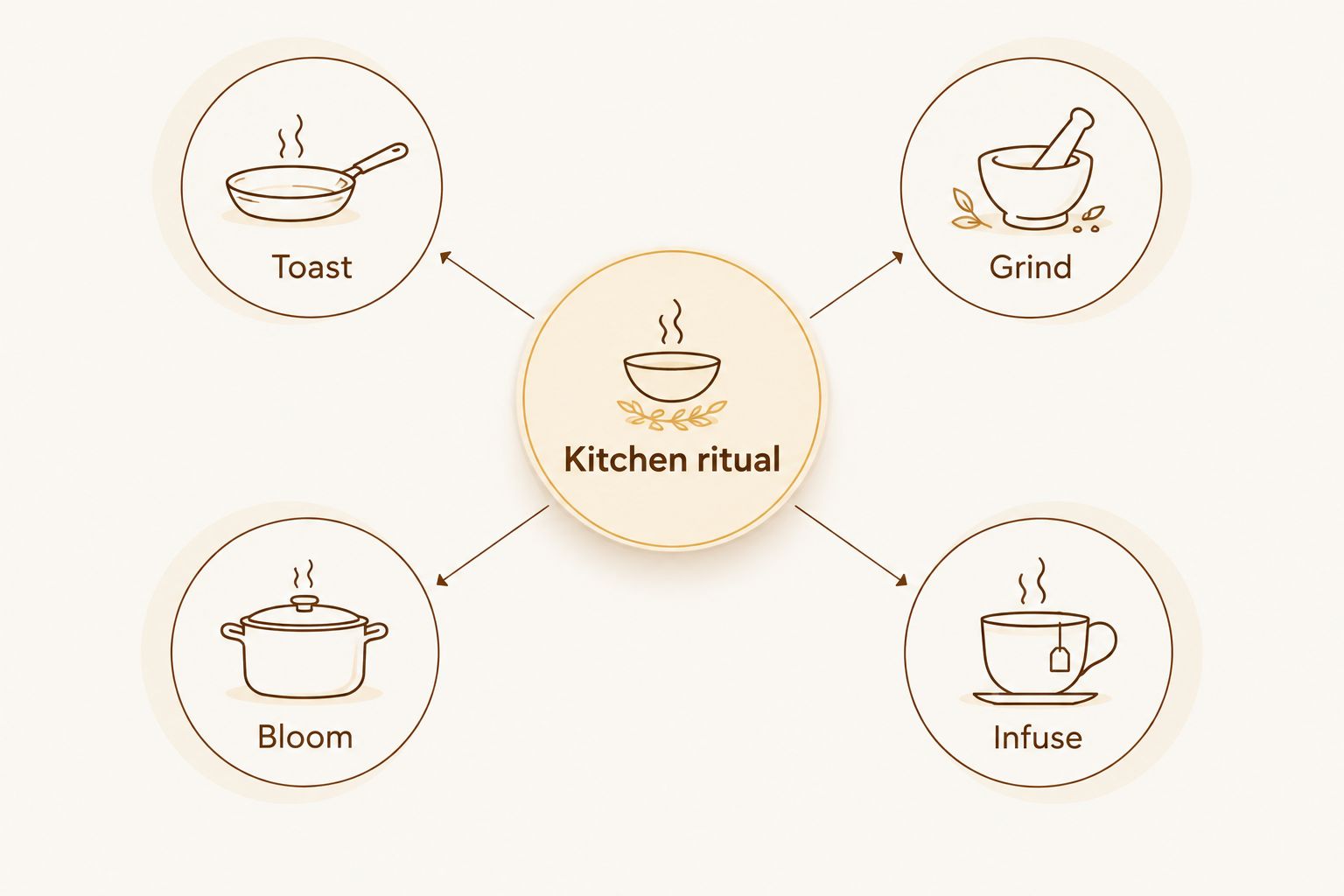
The recipe card should describe the point where the recipient needs judgment: fragrant rather than burned, finely ground rather than coarse, or infused and removed rather than left in the finished dish. Follow the chosen recipe for quantities and timing.
- Name the preparation method at the top of the card.
- Explain whether to use a whole pod, seeds, threads, or ground spice.
- Identify the required kitchen tool.
- Include an aroma or texture cue alongside recipe instructions.
- State when whole pods or other inedible pieces should be removed.
5. Match the tool and storage to the ingredient
Check what the recipient already owns before adding a grinder. A pepper mill intended for peppercorns is not automatically suitable for cardamom pods, vanilla beans, or every other whole ingredient. Compatibility matters more than the appearance of the tool.
Spicecare tools extend a whole-spice gift into a repeatable kitchen habit: store well, grind when needed, and return to the ingredient for the next meal. For a pepper gift, consider the Spicecare Whole Pepper Mill after checking the selected pepper and mill instructions. For recipients who already own suitable equipment, keep the focus on ingredients rather than adding a duplicate tool.
For dried spices, explain storage in terms the recipient can act on: close the container, keep it away from heat and moisture, and use a clean, dry utensil. Follow product-specific storage directions for vanilla instead of assuming that every pantry ingredient needs identical treatment.
- Confirm the tool is intended for the selected ingredient.
- Avoid adding equipment the recipient already owns.
- Keep the original ingredient and origin information accessible.
- Add storage directions appropriate to each item.
- Tell recipients to keep dried spices away from steam and stovetop heat.
6. Confirm the handoff before scaling the order
Assemble a sample using the actual proposed ingredients, instructions, and packing materials. Ask a colleague who did not write the recipe to explain how they would use the gift. If they cannot identify the first cooking step, revise the card before repeating it across the order.
Separate your purchasing agreement from your gift message. Delivery arrangements, address collection, damage handling, and substitutions belong in the operational brief. Do not present any of them as a supplier promise until they are confirmed.
For employee gifting, check the company's food-gift and privacy policies. For client gifting, check the recipient organization's gift-acceptance rules. An ingredient gift still needs the same administrative care as any other business gift.
- Review 1 complete sample before approving the larger order.
- Test whether the recipe is understandable without extra explanation.
- Confirm delivery and handoff arrangements in writing.
- Agree on how substitutions or damaged packages will be handled.
- Keep recipient addresses restricted to the people handling fulfillment.
Match 5Senses products to the gift recipient
Choose a product for the way your recipient cooks. The following are ingredients, tools, and named assortments sold by the brand; the suggested gifting uses do not imply custom corporate packaging or individual dispatch.
| Product or assortment | Best for | Gifting value | Preparation or buyer check |
|---|---|---|---|
| Madagascar vanilla beans | Frequent dessert bakers | A named-origin ingredient for custards, cakes, and infusions | Include splitting, scraping, and pod-infusion instructions |
| Uganda vanilla beans | Bakers exploring vanilla origins | A distinct origin story with a familiar baking use | Follow the selected bean and recipe information |
| Madagascar Vanilla Bean Seeds (Caviar) or Uganda Vanilla Bean Seeds (Caviar) | Bakers using vanilla seeds | A seed format for recipes that call for vanilla seeds | Confirm recipe quantities; do not assume whole-bean equivalence |
| Malabar Cardamom Green Pods | Chai drinkers and cardamom bakers | A clear link between a spice-growing region and a kitchen ritual | Distinguish whole-pod infusion from ground seeds |
| Kashmir Mongra Saffron | Rice and dessert enthusiasts | Named-origin saffron for an infusion-led dish | Include precise recipe quantities and infusion guidance |
| Malabar White Pepper Whole | Regular savory cooks | Pepper to grind for soups, sauces, and other savory dishes | Needs a suitable grinding method |
| Spicecare Whole Pepper Mill | Pepper users without a suitable mill | A practical tool to accompany a whole-pepper gift | Check compatibility and avoid duplicating existing equipment |
| The Baker's Spice Box | Recipients who regularly bake | A named baking assortment to consider instead of assembling from scratch | Review the listed contents against the intended recipes |
| Two Origins Vanilla Collection | Vanilla enthusiasts | A named vanilla collection for an origin-led baking gift | Check the formats and preparation needs of the listed contents |
| The Chai Ritual | Recipients who enjoy making chai | A named assortment with a clear cooking direction | Review the contents and add an approachable chai recipe |
Choose Madagascar or Uganda vanilla for a baking gift, Malabar Cardamom Green Pods for chai, and Kashmir Mongra Saffron for an infusion-led rice gift. A focused choice with an obvious use is more useful than an assortment that leaves the recipient guessing.
Common mistakes corporate gifting buyers make
Treating origin as a blanket claim
A gift containing one single-origin ingredient is not automatically a single-origin assortment. State the origin beside each ingredient and keep mixed-origin items distinct. Do not turn a supplier relationship into an invented farmer story.
Adding too many unfamiliar ingredients
A selection can be interesting without becoming homework. Build around a dish the recipient recognizes, then introduce an ingredient or method within that familiar setting. Save extreme heat for recipients who explicitly want it.
Confusing attractive packaging with usable instructions
A recipient who cannot tell whether to grind or infuse an ingredient has not received enough guidance. Keep the cooking card easy to find and retain the product information. Do not let decorative packing obscure handling or storage directions.
Promising arrangements that have not been agreed
Custom packing, recipient-by-recipient dispatch, subscriptions, and future replenishment require separate confirmation. Do not imply that buying ingredients establishes those services. If repeat gifting is planned, document the process independently of the initial gift.
FAQ
What are the best corporate spice gifts for everyday home cooks?
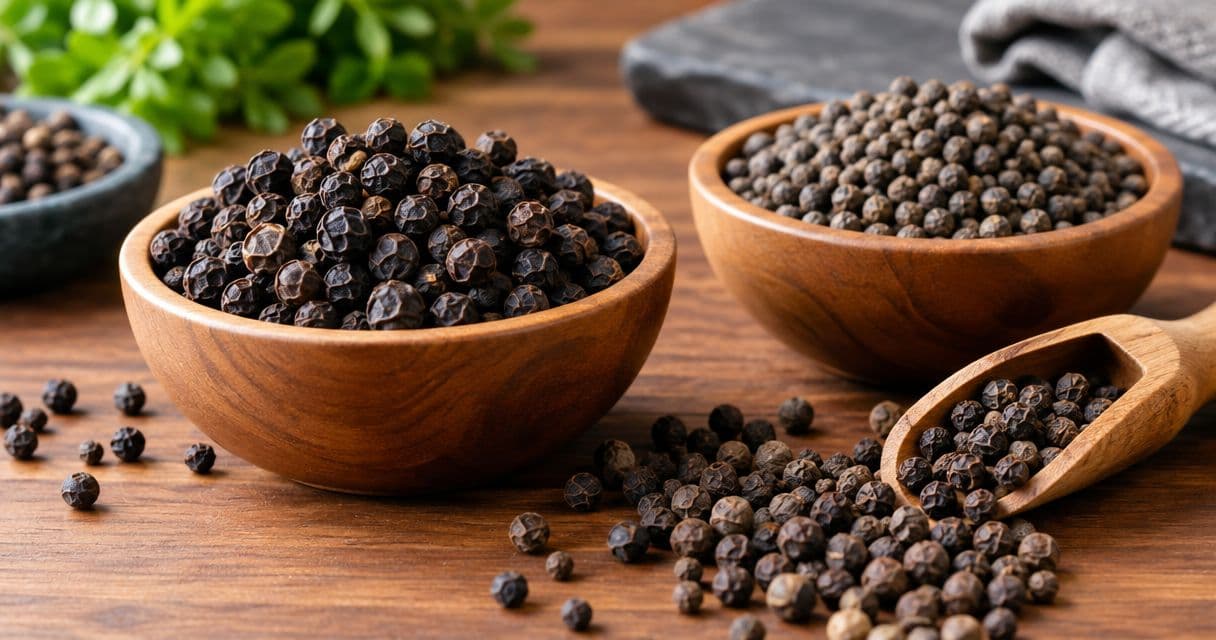
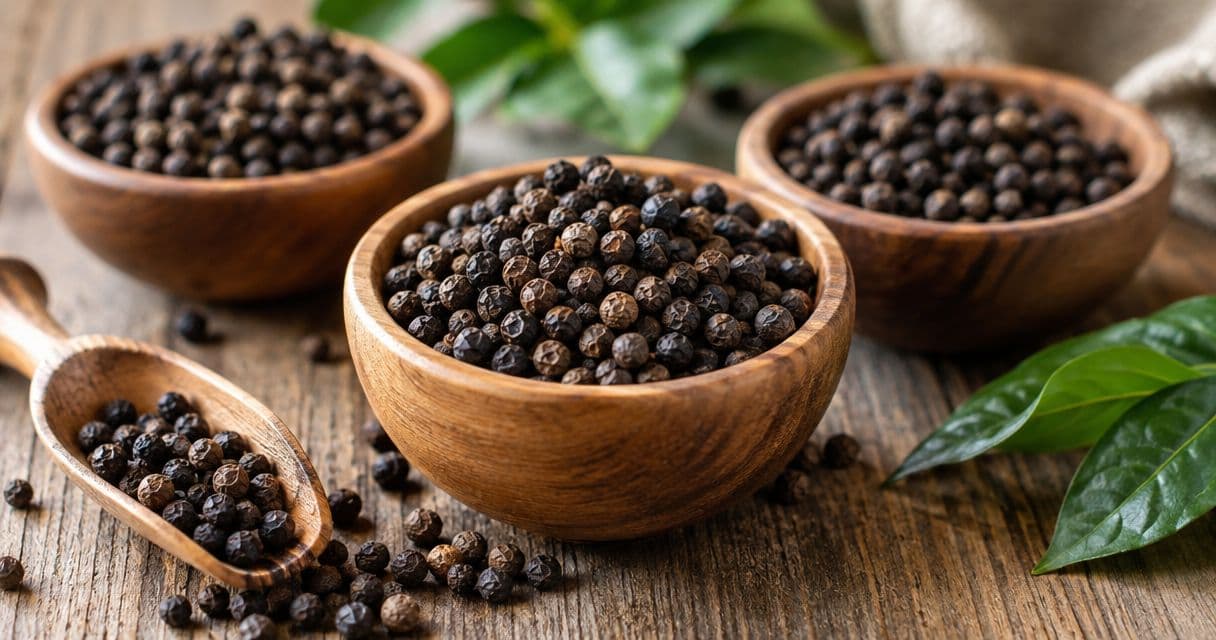
Whole black peppercorns are a practical choice for savory cooks who have a suitable mill. Choose by the recipient's cooking habits rather than assuming every home cook wants the same ingredient.
Which 5Senses products make good corporate gifts for bakers?
Madagascar and Uganda vanilla beans are practical choices for frequent bakers. The Baker's Spice Box and Two Origins Vanilla Collection are named assortments to consider after reviewing their listed contents. Include preparation instructions for the selected vanilla format.
Should corporate spice gifts include a grinder?
Include a grinder when the recipient needs one and the tool is suitable for the chosen ingredient. Check existing equipment first, because an unnecessary tool adds clutter rather than usefulness.
Is saffron suitable for someone who has never cooked with it?
Saffron is suitable when the gift includes a clear, approachable recipe and infusion instructions. Give the recipient a familiar dish and recipe-specific quantities instead of expecting them to improvise.
Can I call a mixed spice gift single-origin?
Describe each ingredient's verified origin separately rather than calling a mixed assortment single-origin. One ingredient's provenance does not establish the provenance of the other contents.
What should I confirm before placing a corporate spice gift order?
Confirm the exact ingredients, product information, recipient requirements, and agreed fulfillment arrangements. Check custom packing, substitutions, and damage handling separately instead of assuming they are included.
How should I choose between Madagascar vanilla and Uganda vanilla?
Choose between Madagascar vanilla and Uganda vanilla using the selected product's information and the intended baking recipe. The origin name alone does not prove that one particular bean is sweeter, stronger, or better than another.
One last thing
Write the cooking card before designing the outer packaging. For a 5Senses whole-spice gift, that means a concrete first step: split a vanilla bean for custard, crush cardamom pods for chai, or infuse saffron for rice. The origin starts the story; the recipient's next meal makes the gift useful.