Best dried ghost peppers for serious heat in 2026
Whole dried ghost pepper pods win for flexible cooking. Compare pods, flakes, and powder, check origin labels, and learn careful preparation methods.
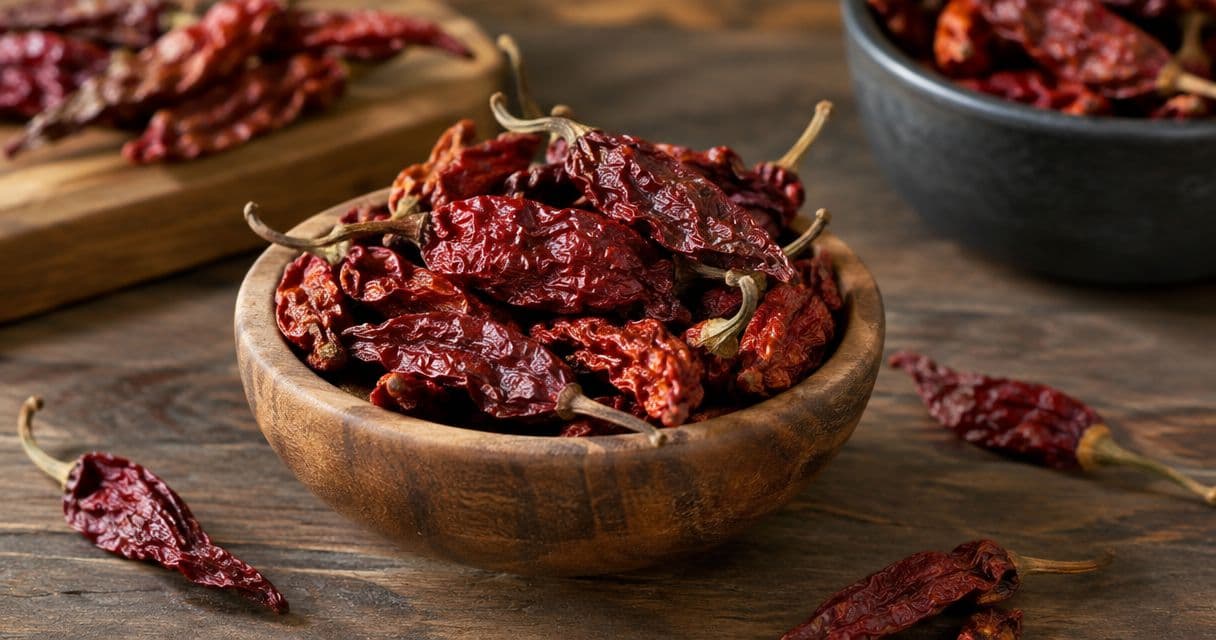
Best overall: whole dried ghost pepper pods for flexible cooking. Best for finishing: coarse ghost pepper flakes. Best for smooth dry blends: finely ground ghost pepper powder. Choose the form that fits your cooking, then judge the ingredient by its declared origin, condition, and labeling—not by the fiercest-looking package.
TL;DR- Whole dried ghost pepper pods are the best default for cooks who want to grind, rehydrate, or infuse.
- Choose ghost pepper flakes for textured finishing and powder for evenly mixed dry seasonings.
- Bhut jolokia’s northeastern Indian heritage does not establish the growing origin of every packaged pepper.
- 5Senses whole-spice guidance puts documented provenance and practical preparation ahead of unsupported heat rankings.
Why this matters
Ghost pepper, also called bhut jolokia, brings extreme pungency to cooking. A whole pod, a spoonful of flakes, and a spoonful of powder are not interchangeable measures. Their size, density, and distribution in food differ.
The best dried ghost pepper is the one you can identify, handle carefully, and portion consistently. That principle fits the broader whole-spice approach at 5Senses: understand the ingredient before choosing how to prepare it. This 2026 guide ranks formats by cooking use rather than making unsupported claims about named sellers.
What makes the best dried ghost pepper
- Declared growing origin: Look for the country and, where documented, the region. A packing address does not establish where the peppers grew.
- Clear ingredient identity: Check whether the package contains ghost pepper alone or a blend with other chilies, salt, or additional ingredients.
- Sound condition: Reject visible mold, insects, or signs of moisture damage. Color alone cannot establish freshness or safety.
- Useful preparation: Whole pods suit several methods; flakes provide texture; powder disperses through dry mixtures.
- Traceable labeling: Look for lot information and any declared harvest, drying, or packing details. These describe different stages.
- Manageable handling: Choose a format you can transfer without scattering fragments or airborne powder around the kitchen.
No single criterion proves quality. A detailed origin claim cannot compensate for damaged peppers, and a dramatic heat claim cannot replace an ingredient list.
Dried ghost pepper options at a glance
| Ranked option | Best for | Standout feature | Key limitation |
|---|---|---|---|
| Whole dried ghost pepper pods | Flexible home cooking | Can be rehydrated, ground, or used to flavor a liquid | Require preparation and careful handling |
| Coarse ghost pepper flakes | Textured finishing | Visible pieces in toppings and seasonings | Create concentrated hot spots |
| Fine ghost pepper powder | Smooth dry blends | Distributes through a thoroughly mixed seasoning | Dust is easy to disturb and inhale |
These are preparation formats, not separate cultivars or a ranking of suppliers. Grinding changes how the pepper behaves in a recipe; it does not establish a higher heat rating.
Start with origin, not a heat contest
Bhut jolokia has a well-documented association with northeastern India. That regional heritage matters, but it is not evidence that every bag bearing the name was grown there. Distinguish the pepper’s identity from the growing location of the particular batch.
Give regional growers credit for their knowledge without turning geography into an automatic quality score. A named origin becomes useful when a seller connects it to the actual ingredient. Country-of-origin labeling, batch records, and specific producer information are stronger buying evidence than evocative landscape descriptions.
The same discipline applies to drying. A pepper can be grown in one place and processed or packed elsewhere. Do not read “packed at origin” as a description of a drying method, or assume that a growing region guarantees smoky flavor. Smoking and other processing choices need their own documentation.
For a ghost pepper purchase, ask 3 sourcing questions: where was it grown, how was it dried, and what information identifies this batch? Keep the answers separate. Together, they tell you more than an unsupported claim that a pepper is the strongest or purest.
1. Whole pods: best dried ghost pepper for flexible cooking
Whole dried ghost pepper pods give you the widest choice of preparation. You can soften them for a cooked sauce, grind them for a seasoning, or use a carefully controlled piece to flavor a dish. You also retain the ability to inspect the pepper before breaking it down.
Whole does not automatically mean fresher. Storage, drying, packaging, and handling still matter. Choose sound pods with clear ingredient labeling rather than treating intact shape as proof of quality.
Whole dried ghost pepper pods pros:
- Support both wet and dry preparation methods.
- Let you inspect the ingredient before grinding.
- Allow you to prepare only what the recipe needs.
Whole dried ghost pepper pods cons:
- Need cutting, grinding, or rehydration for many recipes.
- Produce irritating fragments or dust during preparation.
- Do not provide a reliable dose when measured simply by pod count.
Best for: Home cooks who make sauces, stews, and occasional spice blends rather than using one fixed seasoning every day.
Verdict: Buy whole pods as the default when you want preparation flexibility.
2. Coarse flakes: best dried ghost pepper for textured finishing
Coarse ghost pepper flakes add visible chili pieces to a dish. They suit preparations where texture belongs, such as a dry topping or a thoroughly mixed finishing seasoning. They are less suitable when you want a completely smooth sauce.
A visible flake is not a mild flake. Concentrated pieces create uneven bites unless you distribute them carefully, so do not treat ghost pepper flakes like ordinary table chili flakes.
Coarse ghost pepper flakes pros:
- Need no grinding before use.
- Add a distinct texture to finishing blends.
- Make the chili component visible in a mixture.
Coarse ghost pepper flakes cons:
- Can create hot spots in loosely mixed food.
- Do not blend smoothly into delicate sauces.
- Vary in particle size between products.
Best for: Experienced heat lovers who want a textured finishing ingredient and will mix it carefully.
Verdict: Buy flakes for texture; skip them when smoothness is the priority.
3. Fine powder: best dried ghost pepper for smooth dry blends
Fine ghost pepper powder fits dry seasonings that need an even texture. Thorough mixing spreads the powder through the blend without leaving large chili fragments. It also removes the grinding step from your preparation.
Powder demands careful handling. Opening, spooning, and mixing can disturb fine particles, and the finished ingredient gives you less opportunity to inspect the original pods.
Fine ghost pepper powder pros:
- Mixes into smooth-textured dry seasonings.
- Requires no cutting or grinding.
- Avoids large chili pieces in the finished dish.
Fine ghost pepper powder cons:
- Produces easily disturbed airborne dust.
- Hides the condition of the original whole peppers.
- Is easy to spread unintentionally across utensils and surfaces.
Best for: Cooks making thoroughly mixed dry seasonings with a controlled preparation routine.
Verdict: Buy powder for uniform texture; skip it if your setup cannot contain dust.
How the formats are ranked
The ranking prioritizes preparation flexibility, inspectability, texture, and handling. Whole pods take the default position because they support several cooking methods. Flakes and powder win narrower jobs rather than losing on ingredient quality.
This is not a laboratory heat comparison or a claim that one supplier outperforms another. A batch-specific analytical result would be needed to support a precise potency comparison. Product form alone cannot supply that evidence.
Prepare ghost pepper without losing control
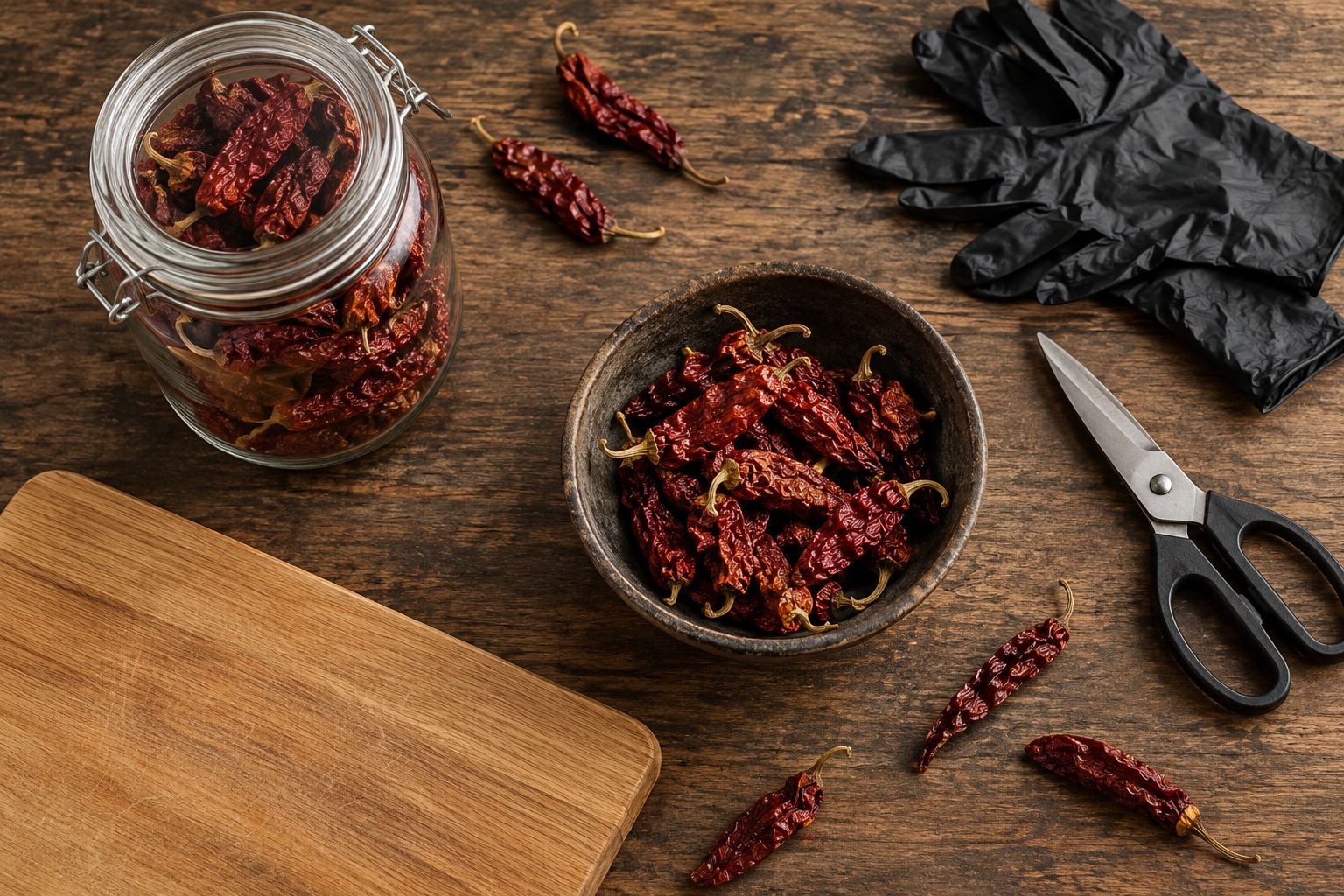
Set up before opening the package. Wear gloves, keep your hands away from your face, and prevent children or pets from entering the work area. Avoid leaning over open peppers, grinders, or hot pans containing chili.
Use 2 separate containers during preparation: one for the original dry ingredient and one for the portion you are working with. Keep wet utensils out of the dry supply. Clean tools and work surfaces before returning to other food preparation.
Rehydrate for sauce
Remove the stem using gloves and clean tools. Soften the pepper in hot water until pliable, then incorporate the prepared pepper into a cooked sauce. Rehydration makes blending easier; it does not make ghost pepper mild.
Do not pour in all the soaking liquid automatically. It contains extracted chili compounds and changes both the heat and consistency of the sauce. For more preparation detail, follow the dried ghost peppers for hot sauce makers guide.
Grind for a dry mixture
Grind only dry peppers in equipment intended for dry spices. Keep the lid closed until disturbed dust has settled, and do not put your face over the grinder when opening it.
Prepare only the amount you need. Clean the equipment according to its instructions, remembering that chili residue can transfer to whatever you grind next. A grinder used for ghost pepper needs particular care before it touches a baking spice.
Bloom with care
Blooming chili in fat spreads its flavor through a dish, but an overheated pan can release intensely irritating fumes. For home use, adding a controlled amount to a moist cooking base is easier to manage than aggressively frying dry ghost pepper.
Do not toast ghost pepper simply because a recipe toasts other whole spices. The preparation that suits coriander or fennel is not automatically appropriate for an extremely pungent chili.
Build flavor around the heat
Ghost pepper should not erase the rest of dinner. Build the sauce, beans, or stew around its other ingredients first, then introduce chili cautiously and mix thoroughly before tasting.
For a broader spice foundation, 5Senses offers whole spices including coriander, green cardamom, cloves, and sweet fennel. Choose accompaniments for the dish rather than adding every aromatic at once. Warm coriander notes suit a different preparation from the sweet fragrance of cardamom.
Keep 1 written batch record for a repeat recipe. Note the pepper batch, the amount used, the dish quantity, and the preparation method. That record is more useful for your next pot than remembering that the last version used “a little.”
A repeat recipe still needs checking when you open a different batch. Agricultural ingredients vary, and a familiar label is not a guarantee of identical pungency.
Store the dry ingredient separately
Keep dried peppers tightly closed, cool, dry, and away from direct light. Label the container clearly so nobody mistakes ghost pepper for a milder chili. Do not open the main supply directly over a steaming pot.
Keep rehydrated pepper and finished sauce separate from the dry supply. Drying does not make every later preparation shelf-stable, and adding chili to oil is not a preservation method. Use tested preservation guidance rather than improvising a shelf-stable sauce or oil.
Which dried ghost pepper should you choose?
Choose whole dried ghost pepper pods if you are undecided. They let you match the preparation to the meal instead of committing the entire purchase to flakes or powder.
Choose coarse flakes when visible texture is the goal. Choose fine powder when a thoroughly mixed dry seasoning needs a smooth texture. Neither is automatically hotter, fresher, or better sourced than whole pods.
The 5Senses whole-spice approach is best for cooks who want to choose their preparation rather than rely on a fixed blend. Apply that principle here: buy by documented ingredient facts, then toast, grind, bloom, or infuse only when the method suits the spice.
FAQ
What's the best dried ghost pepper for home cooking?
Whole dried ghost pepper pods are the best default for preparation flexibility. You can rehydrate or grind them as the recipe requires, but you still need gloves and careful handling.
Is dried ghost pepper powder hotter than whole pods?
Powder is not inherently hotter simply because it is ground. Grinding changes distribution and spoon measurements, so a powder dose cannot be substituted directly for a pod count.
Can I rehydrate dried ghost peppers for hot sauce?
Yes, dried ghost peppers can be softened in hot water for blending into a cooked sauce. Rehydration changes texture, not the need to control the amount of chili.
Does removing ghost pepper seeds make it mild?
No, removing the seeds does not make ghost pepper mild. Capsaicinoids are concentrated in the pepper's internal placental tissue, and removing seeds does not remove all of that tissue or its pungency.
Does a northeastern Indian name prove where ghost peppers grew?
No, a pepper name or regional association does not establish a particular package's growing origin. Check the declared country, region, and batch information separately from the packing location.
Should I toast dried ghost peppers before grinding?
Toasting is not required before grinding dried ghost peppers. Heating extremely pungent chilies can release irritating fumes, so do not automatically apply a routine intended for other whole spices.
Can homemade ghost pepper sauce stay on the pantry shelf?
Do not assume homemade ghost pepper sauce is shelf-stable. Follow a tested preservation recipe and process; the presence of chili, vinegar, or oil alone does not establish safe pantry storage.
One last thing
Removing an infused pepper does not remove the heat already released into the dish. Treat a whole pod as an ingredient, not a removable heat switch. Start cautiously, mix well, and judge the finished food before adding more.