Best Himalayan morel mushrooms for risotto and sauces in 2026
Choose Himalayan morel mushrooms by origin, condition, and cooking use. Compare whole morels, pieces, and powder for risotto and sauces, without the grit.
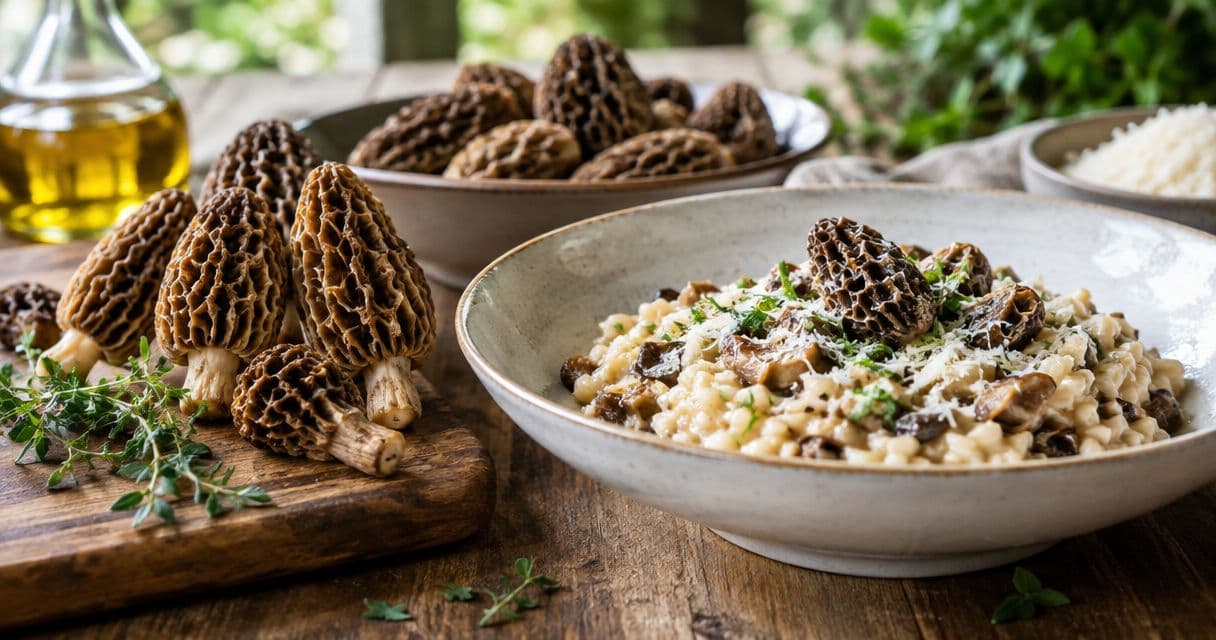
Best overall for risotto: whole dried Himalayan morel mushrooms with documented origin. Best for spoonable sauces: dried morel pieces. Best for smooth sauces: pure morel powder with traceable sourcing. This guide explains which form to choose, what to check before buying, and how to keep grit out of dinner.
TL;DR- Choose Himalayan morel mushrooms by documented origin and condition, not size alone.
- Whole dried morels suit risotto; pieces suit spoonable sauces; powder suits smooth sauces.
- 5Senses recommends whole dried morels for home cooks who want visible mushrooms and flexible preparation.
- Rehydration does not replace cooking. Cook morels thoroughly and follow the supplier’s preparation instructions.
Why origin matters—and what it cannot tell you
Himalayan describes a broad mountain region, not a single growing site, species, or quality grade. A useful listing narrows that description to a named sourcing area and explains what is actually inside the package. A dramatic mountain photograph does neither.
For regional context, start with the Shopian morels origin story. Keep the same distinction when shopping: an origin story explains place, while a product label must identify the mushrooms you are buying.
5Senses’ pick for home cooks making risotto is whole dried morels with documented origin and clear preparation instructions. Whole mushrooms give you control: leave attractive pieces intact, split them for cleaning, or chop them for an even distribution through rice.
A Himalayan label alone does not establish flavor intensity, cleanliness, or careful drying. Those are separate buying questions. This 2026 guide ranks useful forms rather than inventing a leaderboard of unverified brands.
What makes the best Himalayan morel mushrooms
Use these criteria before comparing package photographs:
- Specific origin: Look for a named sourcing region rather than Himalayan imagery alone. Distinguish harvest location from packing location.
- Clear identity: Buy culinary morels from a reputable food supplier. An attractive cap is not enough to identify a wild mushroom safely.
- Sound condition: Reject visible mold, damp clumps, damaged seals, or signs of insects. Drying does not make damaged mushrooms acceptable.
- Useful form: Match whole mushrooms, pieces, or powder to the finished dish. Whole caps are not necessary when everything will be chopped.
- Transparent ingredients: Check whether the package contains only morels or includes other mushrooms, seasonings, or carriers.
- Preparation guidance: Look for instructions covering rehydration and thorough cooking. A soaking instruction alone is incomplete.
For repeat pantry use, choose a pack you can keep dry and properly sealed. A larger package does not solve an unclear origin statement or poor storage conditions.
Himalayan morels at a glance
| Form | Best for | Standout advantage | Key limitation |
|---|---|---|---|
| Whole dried morels | Risotto with visible mushroom pieces | You control inspection, cutting, and presentation | Each mushroom needs attention during cleaning |
| Dried morel pieces | Spoonable mushroom sauces | Pieces distribute through the sauce | Small fragments make individual inspection harder |
| Pure morel powder | Smooth sauces without mushroom pieces | Adds mushroom flavor without visible chunks | Grinding hides the original mushroom’s condition |
The order reflects flexibility in a home kitchen, not a claim that one form always tastes better. A well-documented package of pieces is a better choice than whole mushrooms with uncertain identity or condition.
1. Whole dried morels: best for risotto
Whole dried morels are the default choice when the mushrooms should remain recognizable. Rehydrate them according to the supplier’s instructions, inspect the folds and hollow interiors, and cut them to suit the dish. Split larger mushrooms so you can check inside.
In risotto, visible morel pieces give you a distinct bite against the rice. You also retain the option to chop less attractive pieces into the base while keeping better-shaped pieces for serving.
Whole dried morel pros:
- You can inspect individual mushrooms before cooking.
- You control the final size and shape.
- The same package works for risotto, sauces, and a cooked garnish.
Whole dried morel cons:
- The folds and hollow interiors require careful cleaning.
- Uneven sizes need sorting or cutting for consistent preparation.
Best for: Home cooks who want one versatile form and visible mushrooms in the finished dish.
Verdict: Buy when the supplier documents origin, identifies the ingredient clearly, and provides cooking instructions. Skip packages that rely on size claims without answering those questions.
2. Dried morel pieces: best for spoonable sauces
Dried morel pieces suit sauces where the mushrooms belong throughout every spoonful. Think of a shallot-and-cream sauce or a mushroom pan sauce served over cooked vegetables. Their role is texture and distribution rather than an intact cap on the plate.
Check the product description carefully. A package described as pieces should not leave you guessing whether it contains usable mushroom sections, mostly fine fragments, or a mixture of mushroom species.
Dried morel pieces pros:
- Pieces suit sauces that would otherwise require chopping whole mushrooms.
- Smaller sections distribute readily through a finished sauce.
- An intact cap is unnecessary for the intended presentation.
Dried morel pieces cons:
- Small fragments make close inspection more difficult.
- Fine particles complicate cleaning and straining.
Best for: Cooks making textured sauces where mushroom pieces should appear in each serving.
Verdict: Buy for spoonable sauces when the origin and ingredient information are as clear as they would be for whole morels. Hold if the listing does not explain the contents.
3. Pure morel powder: best for smooth sauces
Morel powder is a different tool, not a direct replacement for whole mushrooms. It adds mushroom flavor without recognizable pieces, which suits a smooth sauce where texture should come from the sauce itself.
Read the ingredient list before choosing it. A mushroom seasoning blend is not the same product as pure morel powder, and the word Himalayan does not settle that distinction.
Pure morel powder pros:
- It avoids visible mushroom chunks.
- You can incorporate it into a cooked sauce base.
- It suits dishes where intact caps offer no practical benefit.
Pure morel powder cons:
- You cannot inspect the original mushrooms after grinding.
- Powder does not provide the texture of rehydrated morels.
- It still requires appropriate cooking; it is not a raw finishing dust.
Best for: Cooks prioritizing a smooth sauce and buying from a supplier with clear ingredient and sourcing information.
Verdict: Hold unless the supplier establishes identity, origin, and preparation requirements. Choose whole morels instead when you want greater control over inspection.
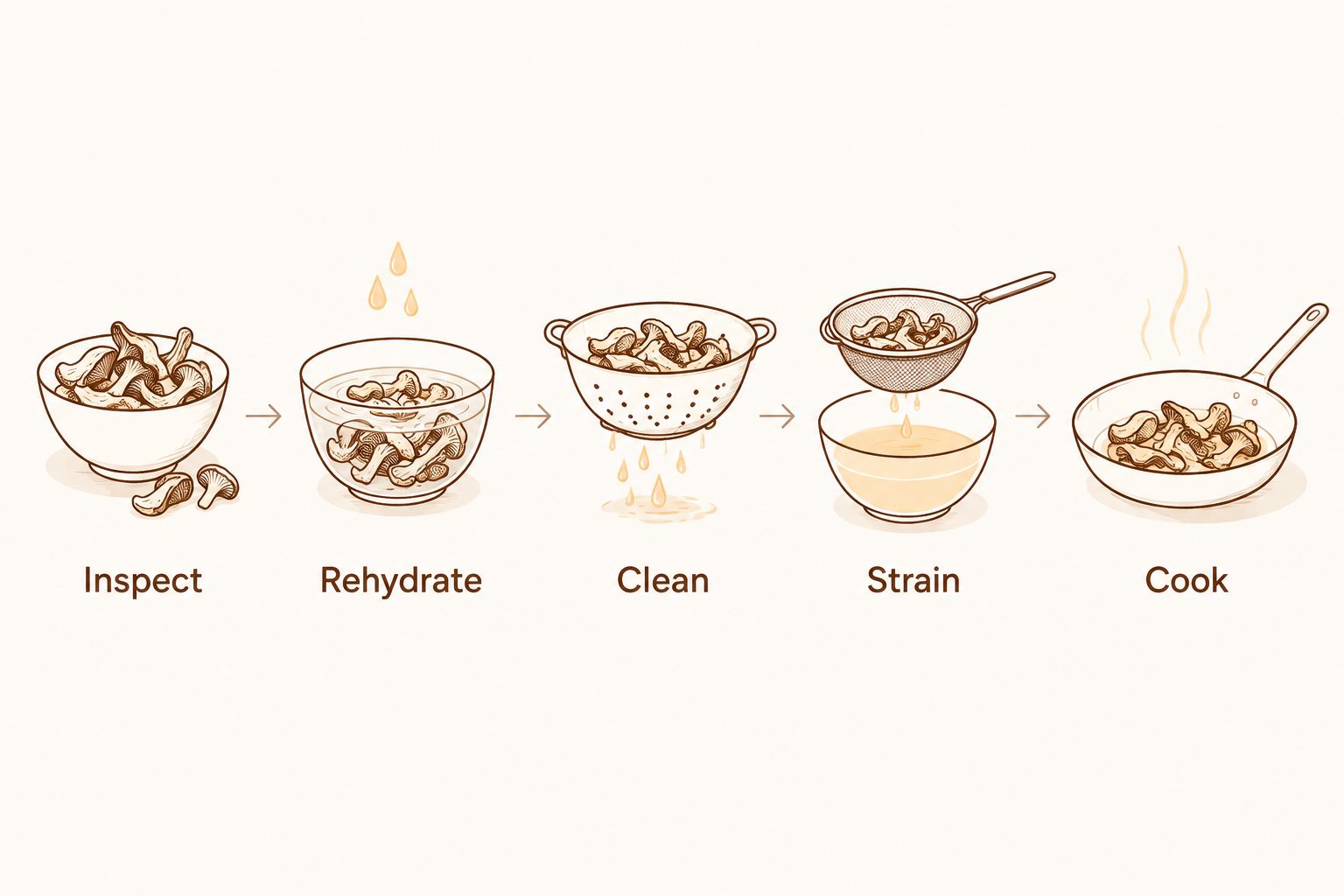
From dried morels to a clean cooking base
Morels need a different preparation routine from whole spices. Do not treat dried mushrooms as ingredients to toast briefly and scatter over finished food. Rehydrating morels softens them; it does not make them ready to eat.
Inspect
Check the package and mushrooms before adding water. Discard mushrooms showing mold or spoilage, and do not try to wash away a storage problem. Follow any supplier-specific sorting instructions.
Rehydrate
Use a clean bowl and follow the package directions. Once softened, lift the mushrooms out rather than pouring the entire bowl straight into your pan. That leaves settled grit behind.
Clean
Split whole mushrooms and examine the folds and interiors. Rinse away remaining debris as needed. Keep cleaned mushrooms separate from the sediment at the bottom of the soaking bowl.
Strain
If you plan to use the soaking liquid, pass it through a coffee filter or a suitable fine filter. Leave the sediment behind rather than forcing the final cloudy portion through. Discard questionable liquid instead of trying to rescue it.
Cook
Cook the morels thoroughly according to reliable preparation guidance and the supplier’s directions. Do not taste them raw or merely soaked. Do not use tenderness alone as proof of adequate cooking.
Keep the work area organized so cleaned mushrooms never return to the gritty soaking bowl. That small separation prevents you from undoing the most useful part of preparation.
Make risotto that still tastes of morels
Start with a restrained base: shallot, a suitable cooking fat, risotto rice, and a stock that does not dominate. Prepare and cook the cleaned morels separately, then incorporate them into the rice. Reserve some fully cooked pieces for the top if presentation matters.
Use filtered soaking liquid as part of the cooking liquid only when it is clean and sound. Combine it with stock rather than assuming every drop belongs in the dish. Keep the liquid hot as you work.
Finish the rice according to your recipe, then assess the seasoning. Cheese, garlic, and black pepper should support the mushrooms rather than compete for attention. Taste before adding more.
For this dish, the useful whole-spice ritual is grind, not toast: grind a little pepper fresh and add it thoughtfully. Save assertive toasted spice mixtures for a dish designed around them.
If the risotto tastes muddy, adding more cheese is not the first correction. Check whether an overpowering stock, excessive mushroom sediment, or too many competing seasonings obscured the morels.
Build a morel sauce without hiding the mushrooms
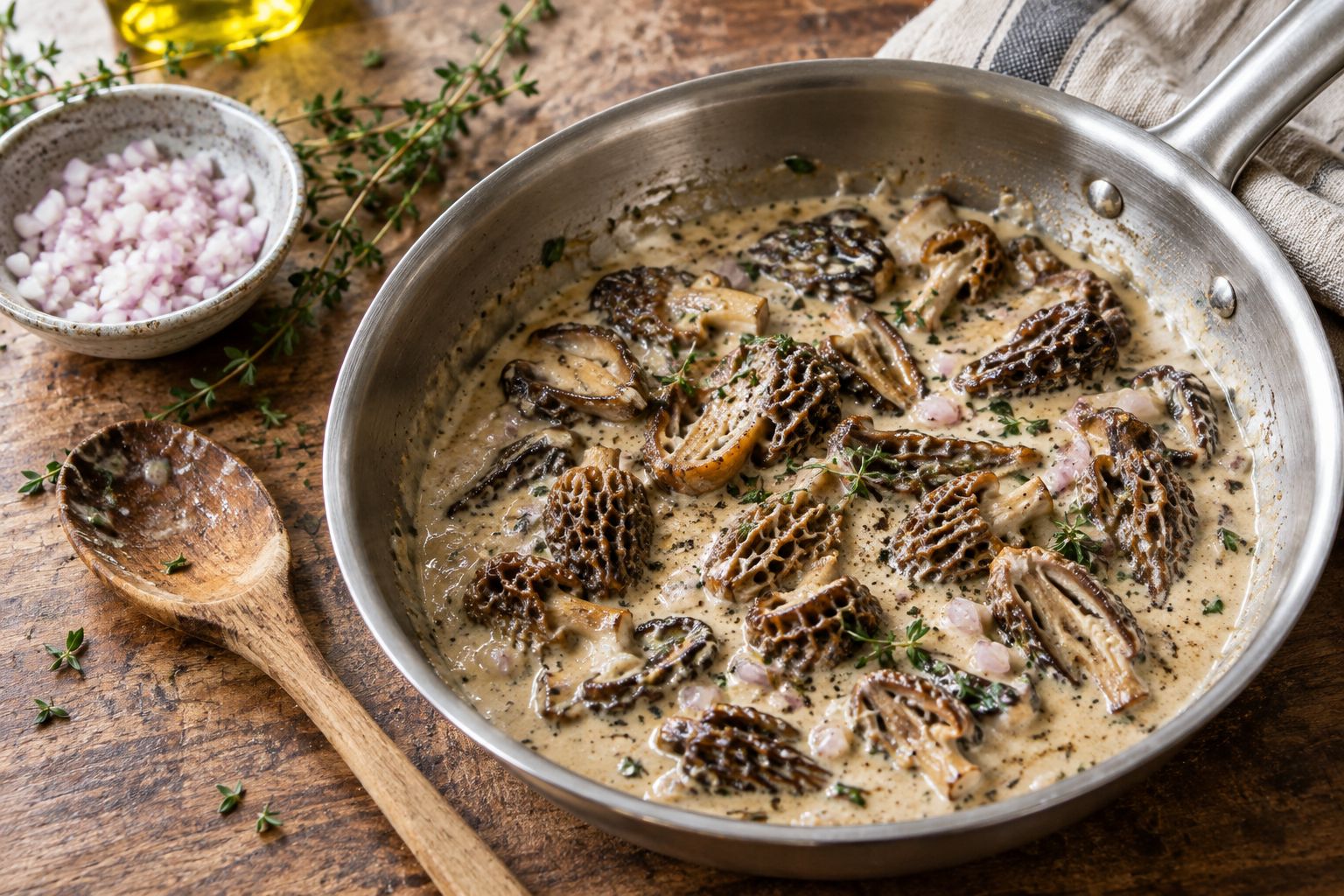
For a textured sauce, soften shallot, add the cleaned morels, and cook them thoroughly. Build the sauce around them with stock and, where the recipe calls for it, cream. Reduce to the consistency the dish needs rather than chasing the darkest possible color.
For a smooth sauce, follow the powder supplier’s cooking directions and disperse the powder carefully into the cooking liquid. Add it gradually so you can control the result. Powder is not a shortcut around sourcing or cooking requirements.
At 5Senses, the practical principle is the same across whole spices and morels: choose the ingredient for its job, then prepare it deliberately. Morels need cleaning and thorough cooking; whole spices call for their own toast, grind, bloom, or infuse decisions.
How these forms were ranked
Whole dried morels rank first for flexibility and individual inspection. Pieces rank next for textured sauces, while powder serves a narrower role where a smooth finish matters most.
This is a preparation-based buying guide, not a laboratory comparison or a tasting award. Origin documentation, condition, ingredient transparency, and cooking guidance remain more important than the order in the table.
Which Himalayan morels should you choose?
Choose whole dried morels if you are undecided. They let you inspect, split, chop, and present the mushrooms according to the meal. Choose pieces when you already know the destination is a textured sauce.
Choose powder only when you specifically want mushroom flavor without mushroom pieces and trust the sourcing information. Do not let a smooth-sauce requirement lower your standards for ingredient identity.
FAQ
What are the best Himalayan morel mushrooms for risotto?
Whole dried morels with documented origin are the most flexible choice for risotto. You can inspect them individually, split them for cleaning, and control the size of the cooked pieces.
Are bigger dried morels better than smaller ones?
Bigger morels are not automatically better. Size affects presentation, but it does not establish identity, careful drying, cleanliness, or documented origin.
Should I buy whole morels or pieces for sauce?
Choose pieces for a textured sauce and whole morels when you want control over inspection and cutting. Pure morel powder serves a different purpose: mushroom flavor without recognizable pieces.
Can I put morel soaking water straight into risotto?
Do not pour unfiltered soaking water straight into risotto. If the liquid is sound and you intend to use it, filter it carefully and leave the settled sediment behind.
Are dried morels ready to eat after soaking?
No. Rehydration does not replace cooking, and morels must be cooked thoroughly. Follow the supplier’s preparation instructions and do not taste raw or merely soaked mushrooms.
Does Himalayan mean the morels come from one specific place?
No. Himalayan describes a broad region, so look for a more specific sourcing statement. Harvest location and packing location are separate facts.
Can I use morel powder as a finishing seasoning?
Do not treat morel powder as a raw finishing seasoning. Incorporate it into a cooked preparation and follow the supplier’s cooking instructions.
One last thing
The most useful buying question is not whether every cap looks perfect. It is whether the form suits your cooking and the supplier explains what you are getting. A broken morel still fits a sauce that calls for chopped mushrooms; an impressive whole cap does not excuse uncertain identity.
For the wider pantry, 5Senses brings together whole spices and Spicecare tools. Keep the same discipline across ingredients: know the source, understand the preparation, and let the main flavor remain recognizable.