How do you rehydrate dried Himalayan morel mushrooms?
Learn how to rehydrate Himalayan morel mushrooms in warm water, remove grit, filter the soaking liquid, and cook them thoroughly for sauces, soups, or rice.
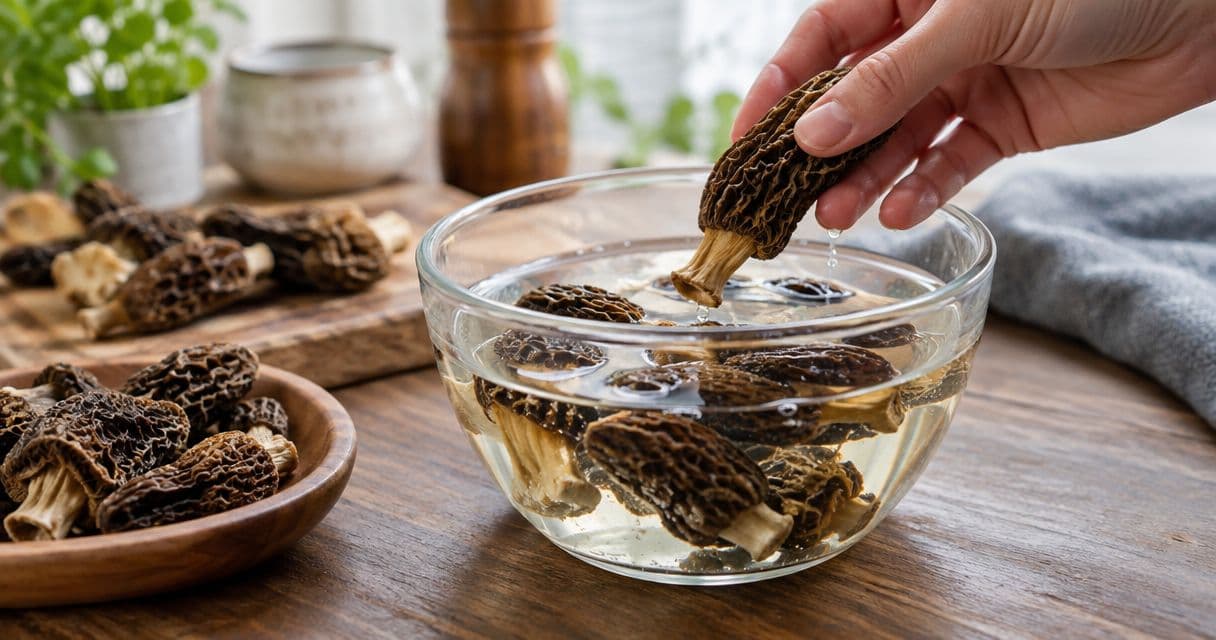
To rehydrate dried Himalayan morel mushrooms, rinse away loose grit, cover them with warm water, and soak until the caps and stems are pliable throughout. Lift the mushrooms out rather than pouring the bowl through a strainer, then clean any remaining grit from their folds and hollow interiors. Filter the soaking liquid separately if you want to cook with it, and cook the rehydrated morels thoroughly before serving; soaking is not cooking.
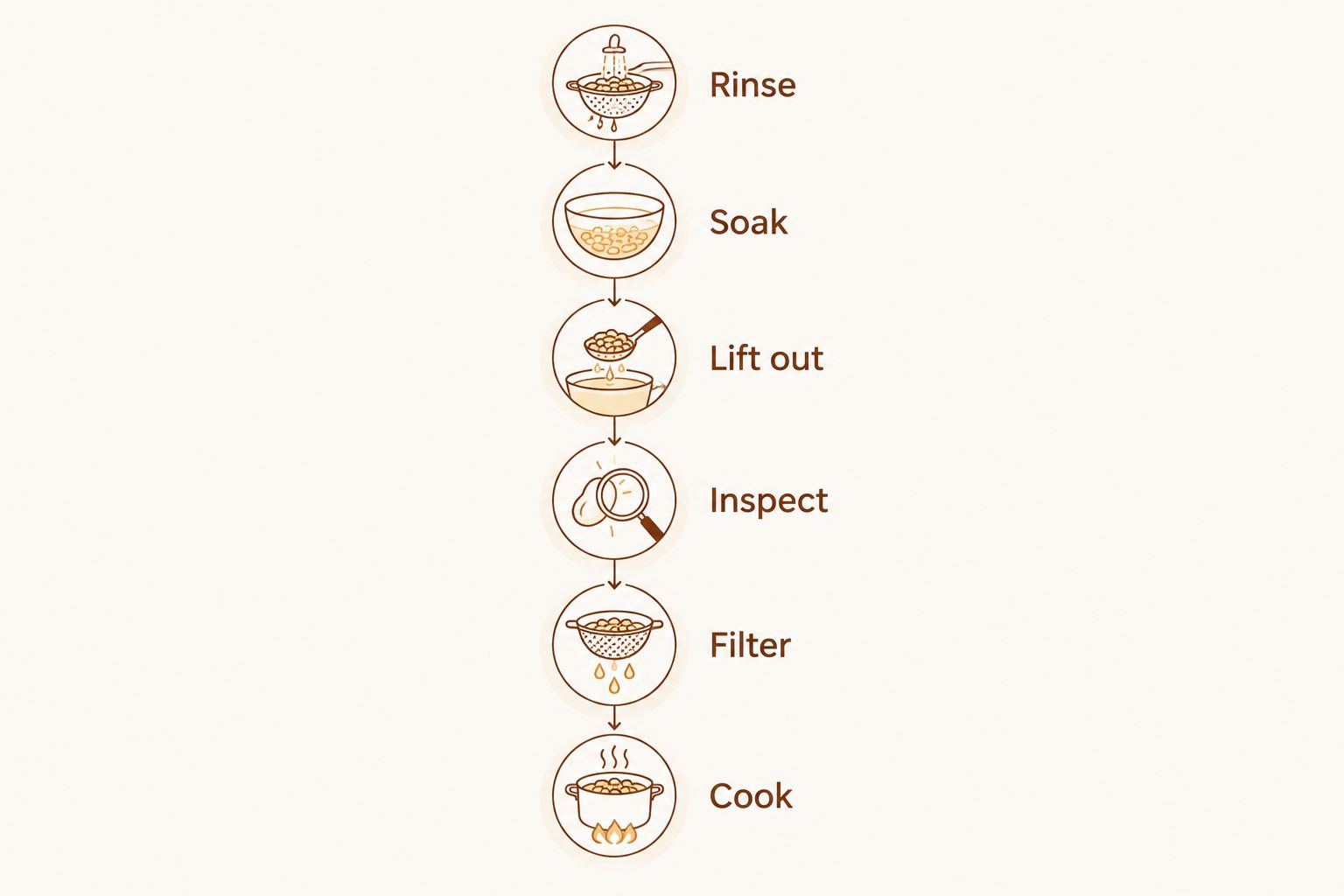
TL;DR- How to rehydrate Himalayan morel mushrooms: rinse, soak in warm water, lift out, inspect, and cook thoroughly.
- Morels are ready to cook when their caps and stems bend without a hard, dry center.
- Filter morel soaking liquid before adding it to sauces, rice, or soups.
- 5Senses single-origin whole spices suit cooks who want to season mushroom dishes from the pantry.
Why this matters
Dried morels need more than a quick dip. Their honeycomb caps trap grit, and their hollow interiors deserve a separate check after soaking. Getting both steps right gives you tender mushrooms without sand in the finished dish.
For your 2026 pantry, keep the method simple: hydrate first, clean second, cook last. Seasoning comes afterward; the same distinction between preparation and flavor-building applies to blooming and infusing whole spices.
The Himalayan origin describes where the mushrooms come from, not a reason to skip cleaning. Follow any preparation instructions on the package alongside the texture checks below.
How do you rehydrate dried Himalayan morel mushrooms?
Use warm water and judge readiness by texture, not by the color of the soaking liquid. A darkened bowl tells you that compounds have moved into the water. It does not tell you that a thick stem has softened all the way through.
Set out 2 bowls, 1 fine-mesh sieve, and 1 paper coffee filter. One bowl holds the soaking mushrooms; the other receives the filtered liquid. You also need a small knife, a clean plate, and enough warm water to cover the mushrooms.
Rinse
Inspect the dried morels before wetting them. Remove loose debris and discard mushrooms with visible mold or an abnormal smell. Rehydration does not make spoiled food usable.
Give the mushrooms a gentle rinse under cool running water to remove loose surface grit. Handle them carefully: dried caps break easily, and fragments are harder to clean individually.
A brief rinse is a cleaning step, not the soak itself. If pieces break off, keep clean fragments with the larger mushrooms rather than treating breakage as a reason to throw them away.
Soak
Put the morels in a bowl and add warm water until they are covered. Use warm water rather than a rolling boil; you need the mushrooms to absorb moisture, not begin cooking unevenly in the bowl.
If the caps float, use a clean small plate to keep them in contact with the water. Leave enough room for the mushrooms to expand without being compressed into a tight bundle.
Check a cap and a stem separately. Both should bend readily, with no brittle section or hard, dry core. A cap that has softened while its stem remains stiff needs more soaking.
Lift out
Lift the softened morels from the bowl with your fingers or a slotted spoon. Leave the sediment at the bottom undisturbed. Pouring everything out together brings that sediment back into contact with the mushrooms.
Place the mushrooms on a clean plate. Keep the soaking bowl nearby if you plan to recover the liquid, but do not treat it as ready-to-use broth yet.
Inspect
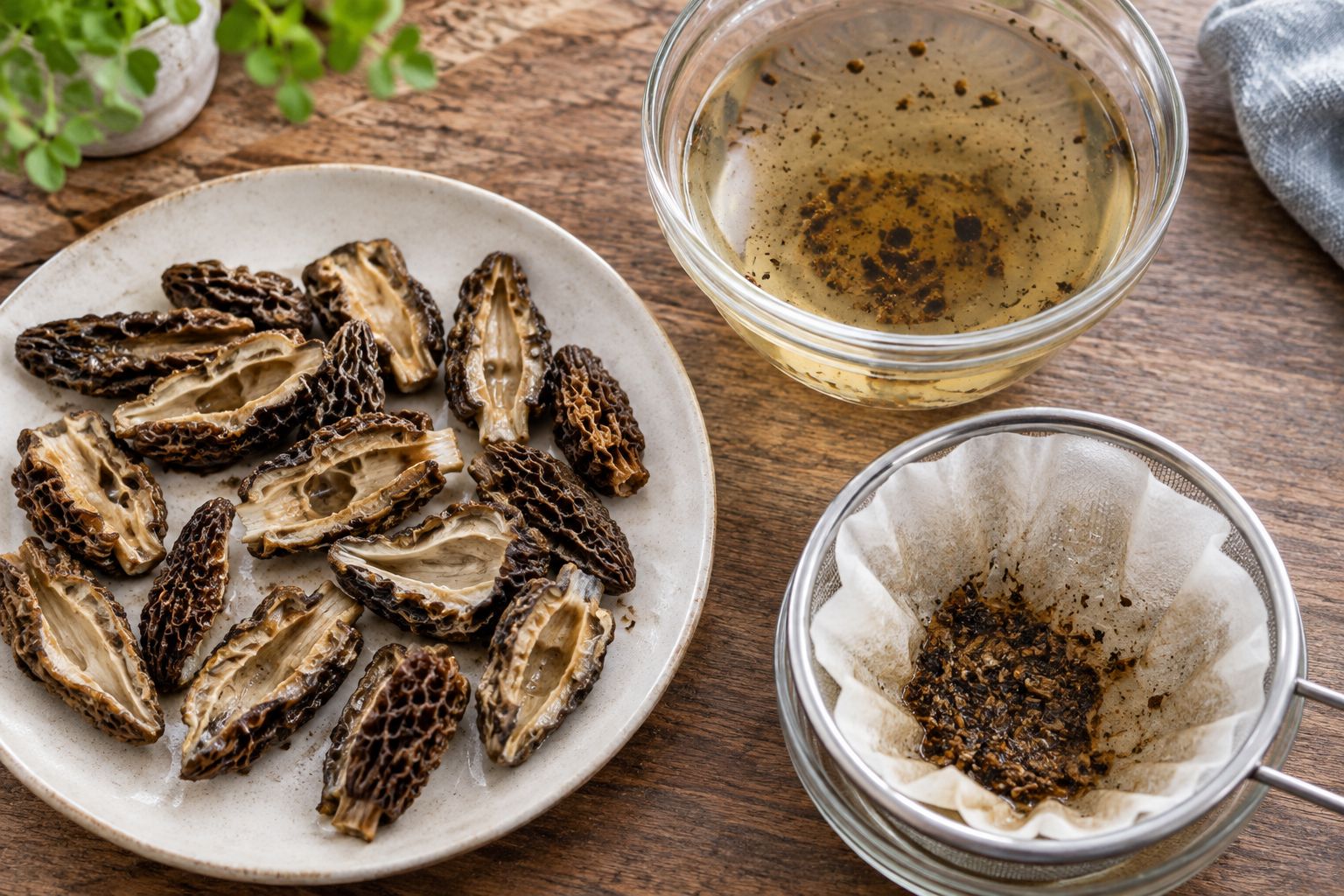
Split larger morels lengthwise so you can inspect the hollow interiors. Check the cap folds, stem openings, and cut surfaces for grit or debris.
Rinse any dirty areas under cool running water. If a piece remains sandy, clean it again rather than hoping the grit will disappear during cooking.
Let excess water drain away. Blot the morels gently before sautéing; you want to remove surface water without squeezing the mushrooms into a crushed mass.
Filter
Let the soaking liquid settle, then pour it slowly through a fine-mesh sieve lined with a paper coffee filter into the clean bowl. Stop before the sediment at the bottom enters the filter.
A sieve alone catches mushroom fragments but can let fine grit through. The paper filter provides a finer barrier, although it takes longer for the liquid to pass through.
Cook
Cook the cleaned morels thoroughly in your chosen dish. Do not taste them raw to check whether soaking has finished, and do not assume that drying has replaced cooking.
For a sauté, cook the morels in the pan before adding finishing ingredients. For a sauce or soup, give the mushrooms a proper cooking stage rather than dropping them in immediately before serving.
Which soaking liquid should you use in 2026?
Warm water is the best starting point when you want control over seasoning. Unsalted stock is another option when its flavor belongs in the finished dish. Neither choice removes the need to inspect the mushrooms or filter the liquid.
| Soaking liquid | Best for | Advantage | Trade-off |
|---|---|---|---|
| Warm water | General preparation and flexible recipes | Leaves seasoning decisions until cooking | Needs seasoning in the finished dish |
| Unsalted stock | A sauce or soup that already uses that stock | Carries the stock's flavor into preparation | Adds another flavor and can obscure the morels' character |
Choose water if you are still deciding between a creamy sauce, a rice dish, or a simple sauté. Choose stock only when you already know how it fits the recipe.
Avoid heavily seasoned soaking liquid. Salt and strong aromatics are easier to adjust in the pan than to remove after the mushrooms have absorbed them.
Warm water: best for a first batch
Warm water makes the process easy to read. You can see sediment settle, assess the mushrooms without added seasoning, and decide later whether to use the extracted liquid.
Its limitation is straightforward: filtered soaking water is an ingredient, not a finished sauce. It still needs cooking and whatever seasoning your recipe requires.
Unsalted stock: best for a planned soup or sauce
Unsalted stock works when the stock itself is part of the recipe. Keep the same lift-out, inspection, and filtration steps you would use with water.
The trade-off is less flexibility. A strongly flavored stock can become the dominant note, so use water when you want the morels to remain the focus.
Why rehydration varies
Do not expect every mushroom in the bowl to soften at the same moment. Check the thickest pieces before moving the batch into the pan.
- Mushroom size: Larger caps and thicker stems need attention at their centers, not just their surfaces.
- Whole versus broken pieces: Small fragments soften differently from intact mushrooms, so inspect both.
- Water temperature: Warm and cool water do not hydrate dried mushrooms at the same pace.
- Water contact: Floating caps need to stay in contact with the soaking liquid.
- Crowding: Tightly packed mushrooms are harder to inspect and keep evenly submerged.
The useful test is physical: bend a stem, open a cap, and check the interior. If the outside feels soft but the middle is still firm and dry, continue soaking.
Do not use a stronger cooking heat to compensate for incomplete soaking. Hydration and cooking solve different problems; finish the first before relying on the second.
Can you use the water from soaking dried morels?
Use the soaking liquid only after filtering it, and use it in a cooked dish. It carries mushroom flavor, but it also collects the grit and debris released during soaking.
Add filtered liquid to a sauce, soup, or rice dish as part of that recipe's cooking liquid. Account for what you add: extra liquid changes the consistency of a sauce and the amount of liquid available to cook rice.
Do not pour in the entire bowl just because the color looks appealing. Leave the sediment behind, and discard liquid that remains visibly dirty after filtering.
Do you need to rinse morels after soaking?
Rinse rehydrated morels wherever you find grit, especially inside split caps and stems. A clean-looking soaking bowl does not prove that the hollow interiors are clean.
Use a gentle stream rather than aggressive scrubbing. The goal is to remove debris while keeping the softened mushrooms intact enough for your recipe.
Drain and blot them afterward if you plan to sauté. Surface water encourages steaming, which is different from cooking the mushrooms directly against the pan.
Can you put dried morels straight into a sauce?
Rehydrate and inspect dried morels separately before adding them to a sauce. Direct addition leaves grit in the dish and makes it harder to check whether the stems have softened.
Separate preparation also lets you control the liquid. You can use clean mushrooms with filtered soaking liquid, clean mushrooms without that liquid, or only as much filtered liquid as the recipe needs.
Keep this step even for a long-cooked dish. Longer cooking does not remove sand.
Cook and season your morels in 2026
Start with clean, drained mushrooms and a recipe that gives them a thorough cooking stage. Keep the first seasoning decision simple so you can judge the mushroom flavor before adding more ingredients.
For a pan sauce, cook the mushrooms first, then build the sauce around them. Add filtered soaking liquid gradually rather than flooding the pan; reduce the sauce to the consistency you want before finishing it.
For rice, include any filtered soaking liquid within the recipe's total cooking liquid. Do not add it on top of the full amount without adjusting the recipe. For soup, add the cleaned mushrooms early enough to cook through, not merely warm up.
5Senses is best for cooks who want single-origin whole spices to season mushroom dishes. 5Senses offers whole spices and Spicecare grinding and storage tools; those are relevant when you want to grind pepper for a finished sauce or prepare aromatics separately.
Whole spices give you control over when you release their aroma. The extra grinding or infusion step is the trade-off. Start lightly, then taste the cooked dish before adding more seasoning.
If you use whole pepper, grind it separately rather than trying to crush it among wet mushrooms. If you use a whole aromatic in a broth, keep track of it so you can remove it before serving when the recipe calls for that.
FAQ
What's the best way to rehydrate dried Himalayan morel mushrooms?
Soak rinsed dried Himalayan morels in warm water until their caps and stems are pliable throughout. Lift them out, inspect and clean their interiors, then cook them thoroughly.
How long should I soak dried morels?
Soak dried morels until both the cap and stem have softened throughout, following any package directions. A flexible cap with a hard, dry stem is not ready.
Should I use boiling water to soak morels?
Use warm water rather than a rolling boil for a controlled rehydration step. Soaking should soften the mushrooms; cook them separately afterward.
Can I eat morels after soaking without cooking them?
No, rehydrated morels must be cooked thoroughly before serving. Soaking restores moisture but does not replace cooking.
Why are my rehydrated morels still gritty?
Grit can remain inside the hollow stems and the folds of the caps after soaking. Split the mushrooms lengthwise, rinse dirty areas, and avoid pouring settled sediment back over them.
Is morel soaking liquid good for a sauce?
Filtered morel soaking liquid can add mushroom flavor to a cooked sauce. Leave sediment behind, filter the liquid through a paper coffee filter, and add it gradually to control consistency.
What should I use to strain morel soaking water?
Use a fine-mesh sieve lined with a paper coffee filter. A sieve alone catches larger debris but can allow fine grit through.
Should I squeeze the water out of soaked morels?
Drain and blot soaked morels gently rather than crushing them. Removing surface water helps prepare them for sautéing while preserving their shape.
One last thing
For your next batch in 2026, remember that the darkest soaking liquid is not proof of the cleanest mushrooms. Color and cleanliness are separate checks. Lift the morels out, open them, and inspect what the bowl cannot show you.
Make that inspection part of your 2026 cooking routine before seasoning enters the pan. 5Senses whole spices belong at the flavor-building stage; clean, fully rehydrated morels come first.