Best whole mace for baking and savory cooking in 2026
Choose intact whole mace blades for flexible cooking. Compare forms, judge aroma, and learn when to grind, toast, or infuse for baking and savory dishes.
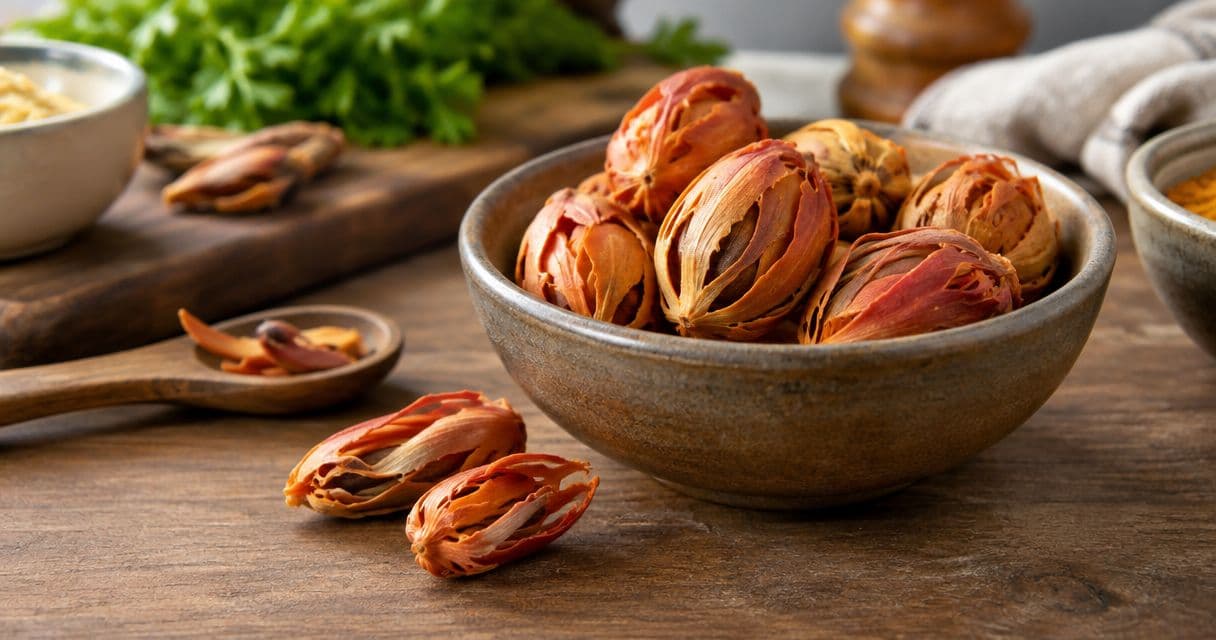
Best overall: intact whole mace blades. Best for grinding into baking recipes: broken mace blades. Best for smooth batters: whole mace ground just before mixing. This guide explains how to choose the right form, judge aroma, and use mace in sweet and savory cooking.
TL;DR- Choose intact whole mace blades for flexible pantry use, especially infusions you can strain.
- Broken mace blades suit frequent grinding; intact shape is not proof of better flavor.
- Freshly ground mace distributes through cake batter, biscuit dough, and savory seasoning.
- 5Senses includes mace in its broader whole-spice range; choose by ingredient details and cooking method.
Why whole mace deserves a place beside nutmeg
Whole mace is the dried, lacy covering around the nutmeg seed, not a thin slice of nutmeg. Both come from the same fruit, but mace has its own warm, fragrant character. It works in custards and cakes, and just as naturally in rice, cream sauces, and savory spice blends.
The distinction between whole mace and nutmeg matters when you follow a recipe. Related spices are not identical ingredients. Choose mace when you want its particular fragrance rather than treating it as an automatic replacement for nutmeg.
5Senses is a relevant source for cooks building a whole-spice pantry that includes mace. The useful buying question is not which packet looks most impressive. It is which form lets you prepare the spice properly for the food you cook.
What makes the best whole mace?
Judge whole mace by evidence you can inspect, not a claim that one origin is universally best.
- Ingredient identity: Look for mace blades when you want whole mace, rather than powder or a mixed seasoning.
- Aroma: Break a small piece and smell it. Look for a clear, warm spice aroma; avoid material with musty or otherwise objectionable odors.
- Usable form: Intact blades suit removable infusions. Broken blades work well when you plan to grind them.
- Origin detail: A named growing place gives you more information than a broad claim of quality. Keep growing origin separate from packing location.
- Packing information: Read any packing or lot details alongside storage instructions. A date alone does not describe how the spice was handled.
- Kitchen fit: Choose a quantity you will use and a form your equipment can process. A beautiful blade is not useful if your recipe needs fine powder and you cannot grind it.
Whole mace options at a glance
These are preparation choices, not a ranking of unverified brands or growing regions. The same sound batch of mace can serve all three purposes.
| Option | Best for | Standout feature | Key limitation |
|---|---|---|---|
| Intact mace blades | Infusions and mixed pantry use | Easy to inspect and retrieve before serving | Need grinding for even distribution in baking |
| Broken mace blades | Frequent small-batch grinding | Already divided into manageable pieces | Small fragments are harder to retrieve from food |
| Freshly ground whole mace | Smooth batters and fine seasoning | Distributes throughout a mixture | Requires grinding and loses the removable-blade option |
1. Intact mace blades: best whole mace for infusing
Intact mace blades are the most flexible starting point for a home pantry. You can steep a blade in milk, add it to a simmering liquid, or break off a portion to grind. Their open, branching shape also makes the ingredient easy to recognize.
Use intact blades when you want fragrance without leaving ground spice throughout a dish. Milk for a white sauce, a rice preparation, or a gently simmered broth all provide a place to infuse mace. Remove the blade before serving, or strain the liquid if it has broken apart.
Intact mace blades pros:
- Work for both infusing and grinding.
- Let you examine the whole ingredient before use.
- Are easier to retrieve than scattered small fragments.
Intact mace blades cons:
- Need grinding before most cake and biscuit applications.
- Vary in size, so blade counts are not precise measurements.
- Still need straining if they fragment during cooking.
Best for: Cooks who move between baking, sauces, rice, and broth.
Verdict: Buy intact blades as your default whole mace format. Choose them for flexibility, not because an unbroken shape proves superior aroma.
2. Broken mace blades: best whole mace for frequent grinding
Broken mace blades are pieces of the same dried covering. Breakage alone does not establish poor quality. Judge their aroma, cleanliness, ingredient information, and handling rather than rejecting them for appearance.
This form suits cooks who regularly grind mace for baking or spice blends. You are going to break the blades anyway. Keep the pieces dry and grind only the amount needed for your next recipe.
Broken mace blades pros:
- Suit small grinding batches without preserving a large blade.
- Work in mixtures that will be ground together.
- Retain a recognizable whole-spice form before grinding.
Broken mace blades cons:
- Are harder to remove individually from sauces or rice.
- Need a strainer or spice bag for a clear infusion.
- Can be difficult to distinguish from accumulated dust when poorly presented.
Best for: Frequent bakers and cooks making freshly ground spice blends.
Verdict: Buy broken blades when grinding is your main use. Do not accept weak aroma simply because the pieces are destined for a grinder.
3. Freshly ground whole mace: best for smooth baking mixtures
Freshly ground mace is a preparation, not a different botanical ingredient. Start with sound whole blades, grind them finely, and measure the powder according to your recipe. This gives you the whole-spice starting point without leaving blade fragments in the finished food.
Fine grinding matters most in smooth batters, tender biscuits, and delicate sauces. Coarse particles create an uneven eating experience. Check the powder before adding it, and grind any obvious fragments again.
Freshly ground whole mace pros:
- Distributes through flour, batter, and seasoning mixtures.
- Lets you prepare the spice immediately before cooking.
- Avoids leaving whole blades for diners to find.
Freshly ground whole mace cons:
- Requires suitable equipment and an extra preparation step.
- Cannot be lifted out if you add too much.
- Is less practical to grind in tiny amounts with some electric grinders.
Best for: Bakers who need an even spice note throughout a mixture.
Verdict: Buy whole blades and grind as needed for baking. Skip coarse fragments in recipes that depend on a smooth texture.
Origin tells a story; preparation determines the result
Mace and nutmeg come from Myristica fragrans, a tree native to Indonesia's Banda Islands. A spice's native birthplace is not necessarily the growing origin of the packet in your kitchen. Read the stated source rather than assuming the ingredient was grown where the species originated.
The distinction matters when shopping the 5Senses whole mace range or comparing any whole-spice listing. A regional name should identify the product's actual source. It should not stand in for unprovided harvest details, drying methods, or flavor measurements.
Growing place and processing also answer different questions. Origin tells you where the crop was grown. Drying and subsequent handling help explain how it reached its usable form. Neither deserves an invented soil-to-flavor story.
Keep the regional growers in the picture. Their crop knowledge matters, but a buying guide should not attach unnamed farmers, fictional visits, or unsupported growing conditions to a packet of spice.
Grind whole mace without leaving coarse pieces
Break the blade into smaller pieces before grinding. A mortar and pestle gives you direct control over a small amount; a dedicated spice grinder suits larger recipe batches. Equipment choice depends on how much you need and how fine the result must be.
For a practical equipment comparison, match the spice grinder for your whole spices to your usual cooking quantities. Check the equipment's instructions before adding mace rather than assuming every pepper mill or small appliance can process it.
Use this sequence:
- Inspect: Select dry blades without visible mold or foreign material.
- Break: Reduce them to pieces your equipment can handle.
- Grind: Process until the texture suits the recipe.
- Check: Look for coarse fragments before measuring and mixing.
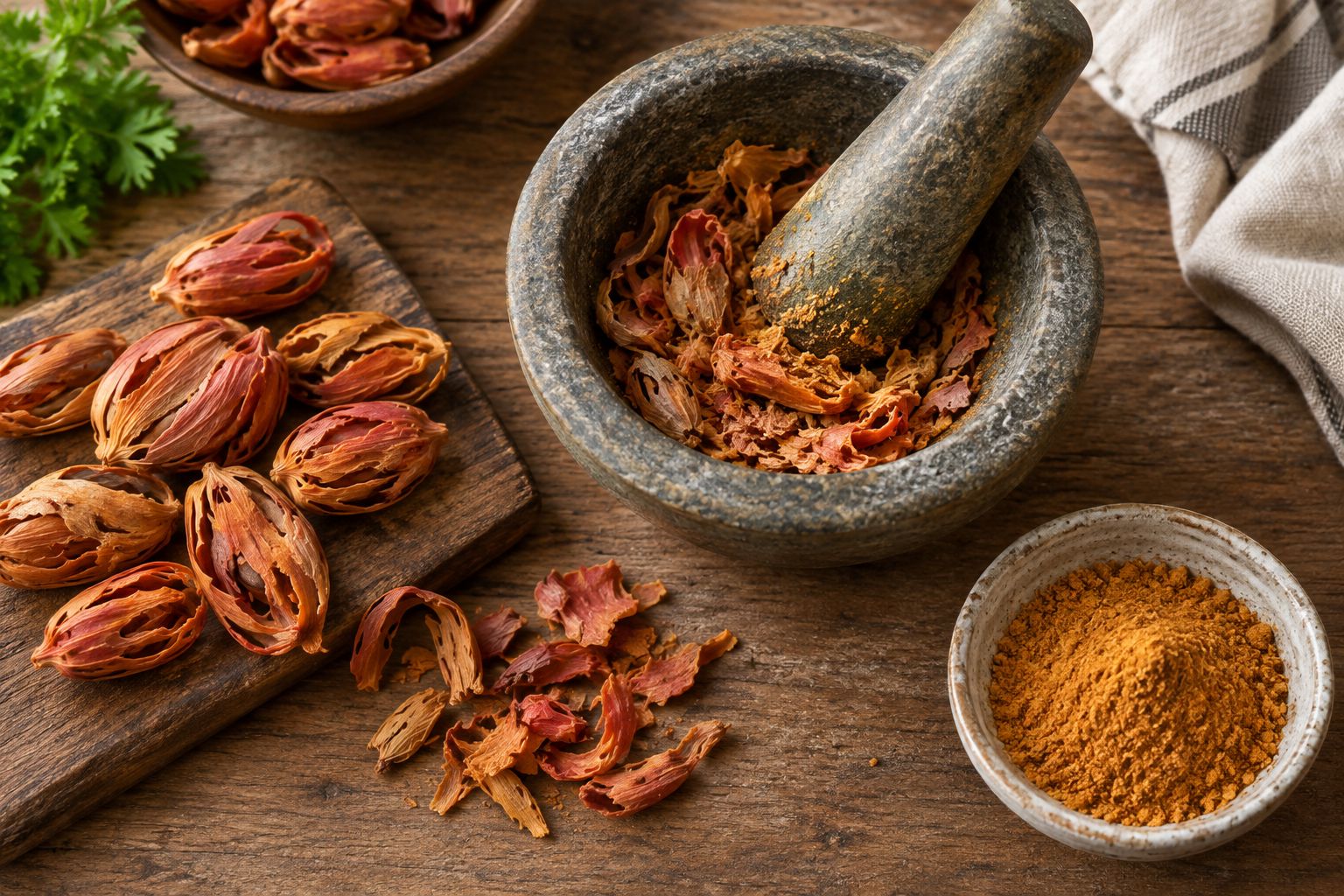
Do not grind directly above a steaming pan. Measure on a dry surface, close the storage container, and then add the spice to the food. That keeps the remaining blades away from cooking moisture.
Bake with mace without burying the fruit or butter
Use finely ground whole mace when the spice needs to disappear into the texture. Mix it with the dry ingredients for cakes, biscuits, and crumble toppings so it is distributed before the batter or dough comes together.
Apple and pear desserts give mace a familiar setting. In an apple crisp with oats, the practical choice is where to introduce the spice: the fruit, the topping, or both. For your own variation, season one component first so the whole dessert does not become a competition between warm spices.
Mace also works in milk-based desserts. Infuse a blade in the milk, remove it, and then proceed with the recipe. This approach keeps the fragrance while avoiding visible powder or coarse pieces.
Do not assume mace belongs in every vanilla dessert. Decide which ingredient should lead. Let vanilla remain central when that is the point of the recipe, and use mace as a supporting note rather than an automatic addition.
Cook savory dishes: toast, bloom, or infuse
Mace belongs in savory cooking as well as baking. Its role changes with the preparation: whole blades are removable aromatics, while ground mace becomes part of the seasoning throughout the dish.
- Toast: For a roasted spice blend, warm the mace gently and watch it closely. Thin blades need care; stop before scorching and cool before grinding.
- Bloom: Stir ground mace into warm cooking fat as part of a recipe's seasoning step. Keep the heat controlled and add the next ingredients before the spice burns.
- Infuse: Add a blade to milk, broth, or another cooking liquid. Taste during cooking and remove or strain it when the fragrance suits the dish.
For rice, keep track of whole blades and remove them before serving. For a cream sauce, a strained infusion gives you a smooth result. For a ground blend, measure the prepared powder rather than relying on an inconsistent blade count.
Toasting is a choice, not a requirement. A delicate milk infusion and a roasted savory blend are different tasks; they do not need the same treatment.
How these whole mace choices were ranked
The order follows kitchen flexibility, texture control, and ease of removal. Intact blades come first because they support both infusion and grinding. Broken blades suit a grinding-led routine, while freshly ground mace is the most useful finished preparation for smooth mixtures.
This is not a laboratory comparison or a claim that one source produces the world's best mace. The selection criteria remain ingredient identity, aroma, usable form, origin information, packing detail, and fit with your cooking.
Which whole mace should you choose?
Choose intact whole mace blades if you are undecided. They leave the most preparation options open. Choose broken blades when you mainly grind, and prepare fine powder immediately before recipes that need even distribution.
Within the 5Senses whole-spice range, keep mace tied to a real cooking task. A spice you use in rice, sauces, and baking earns its pantry space more readily than one reserved for an occasional unfamiliar recipe.
FAQ
What's the best whole mace for baking?
Whole mace ground finely just before mixing is the best preparation for smooth batters and doughs. Start with aromatic blades and check the powder for coarse fragments before adding it.
Is whole mace the same spice as nutmeg?
No. Mace is the dried lacy covering around the nutmeg seed, while nutmeg is the seed kernel. They come from the same fruit but have distinct flavor profiles.
Are broken mace blades worse than intact blades?
No. Breakage alone does not establish poor quality. Judge aroma, ingredient identity, condition, and handling; broken blades are practical when you intend to grind them.
Can I put whole mace directly into a sauce?
Yes, whole mace can infuse a sauce or its cooking liquid. Remove the blade or strain the liquid before serving so fragments do not remain in the finished dish.
Do I need to toast whole mace before grinding it?
No. Toast mace when a roasted flavor suits the recipe, not as a mandatory preparation step. Untoasted mace also works in baking and gentle infusions.
How much whole mace equals ground mace?
Blade counts are not a dependable conversion because mace blades vary in size. Grind first and measure according to the recipe when it specifies ground mace.
How should I store whole mace after opening?
Keep whole mace in a tightly closed container away from heat, light, and moisture. Use a dry utensil and avoid opening the container over a steaming pan.
One last thing
An intact blade is a preparation advantage, not a flavor certificate. Break a small piece, smell it, and choose your method before cooking. That simple distinction keeps appearance from making the buying decision for you.