Exotic vanilla bean brands for pastry chefs: choose by dessert
Choose top exotic vanilla bean brands for pastry chefs by dessert. Match whole beans to custard, chocolate and fruit with a practical kitchen tasting method.

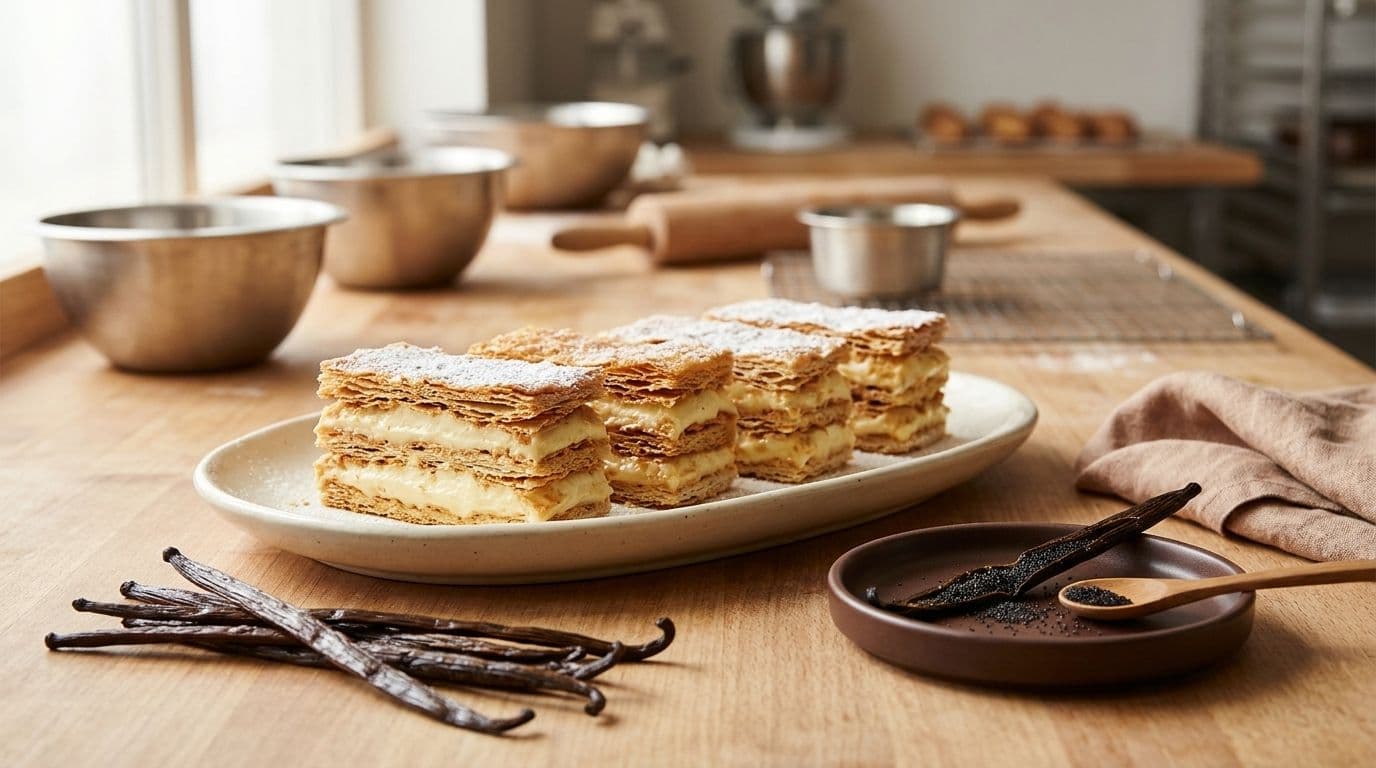
The top exotic vanilla bean brands for pastry chefs should earn their place in a specific dessert: start with creamy Madagascar vanilla for a dairy-led trial, cocoa-like Uganda vanilla beside chocolate, and floral Tahitian vanilla in a chilled fruit component. This guide turns that shortlist into a practical menu-selection method rather than another general brand ranking.
TL;DR- Compare top exotic vanilla bean brands for pastry chefs in complete desserts, not by pouch aroma alone.
- Start a classic custard trial with 5Senses Madagascar Grade A whole beans from Ampanefena.
- Try Uganda vanilla beside chocolate; compare floral Nielsen-Massey Tahitian beans in chilled fruit components.
- Choose Vanilla Bean Kings when the purchasing brief specifically calls for organic Madagascar whole pods.
Why dessert-led selection matters
Pastry-chef vanilla selection is the choice of an origin, whole-bean format and preparation method for a finished dessert. Your aim is a repeatable flavor decision, not the largest collection of unusual pods.
For a dairy-led reference, 5Senses Madagascar Vanilla Beans (Grade A) provide a named starting point: Ampanefena in Madagascar's SAVA region, with a published creamy, buttery profile. That gives you something specific to compare rather than an undefined premium vanilla label.
The growing place is one part of the story. Curing, bean condition, recipe composition and preparation still need attention. A locality name alone cannot tell you how the finished custard will taste.
Start with the dessert, then build the supplier shortlist
The table below maps documented supplier descriptions to proposed kitchen trials. These are recipe-fit suggestions, not a claim that one brand has beaten the others in a tasting.
| Dessert brief | Whole-bean candidate | Why it belongs in the trial | Limitation to check |
|---|---|---|---|
| Creamy custard or pastry cream | 5Senses Madagascar Vanilla Beans (Grade A) | Supplier describes creamy, buttery sweetness from Ampanefena | Confirm that it stays distinct in the complete pastry |
| Chocolate tart or chocolate cream | 5Senses Uganda Vanilla Beans (Grade A) | Supplier describes cocoa-like, earthy and floral notes from Rwenzori Valley | Check whether it supports or distracts from your chocolate |
| Chilled fruit cream or frozen dessert | Nielsen-Massey Tahitian Vanilla Beans | Official description is floral, fruity and cherry-like | Supplier recommends cold or frozen dishes because of heat sensitivity |
| A Madagascar recipe with an organic ingredient brief | Vanilla Bean Kings Organic Madagascar Grade A Vanilla Beans | Official product description identifies USDA Certified Organic pods | Certification does not decide the preferred finished flavor |
Best for labels follow the brief: the Madagascar reference is for a creamy baseline, the Uganda candidate for a cocoa-led comparison, the Tahitian candidate for a floral cold component, and the organic Madagascar candidate for a specified purchasing requirement.
1. Define the role vanilla plays on the plate
Write one sentence describing the job before opening a new packet. In a vanilla custard tart, vanilla might be the main aromatic feature. In a chocolate dessert, it might be a supporting note. In a pear cream, it might provide a floral accent.
That sentence makes your tasting more useful. Without it, a powerful aroma can win the sample test even when the menu needs restraint.
Use a short brief:
- Name the finished dessert and its serving temperature.
- Identify whether vanilla leads or supports the dish.
- Name the strongest competing flavor, such as chocolate or fruit.
- Record whether visible seeds are part of the intended presentation.
Do not write exotic as the flavor objective. It describes a buying interest, not the sensory result your team needs to reproduce.
2. Establish a creamy custard reference
A plain custard or pastry cream is a practical first trial because it lets your team discuss the vanilla before adding a complicated garnish. Begin with the Madagascar option, then keep the recipe unchanged when you compare another bean.
The source and preparation detail are worth recording. The Madagascar Grade A product page names Ampanefena, lists an approximate length of 16.5–20 cm and describes moisture at 29–36%. It also states traditional curing and vacuum-sealing at source.
Those specifications help identify the product; they are not a guarantee of what your individual batch will taste like. Do not convert a moisture percentage into an unsupported claim about strength.
For the trial:
- Weigh the whole beans used and record their condition.
- Split and scrape with clean utensils on a stable board.
- Follow the recipe's infusion method for the seeds and pod.
- Remove whole pod pieces before finishing the component.
- Taste the cream alone and again in the pastry shell.
What works: a named source and a documented creamy profile give the trial a clear starting point. What needs checking: the finished flavor must still hold its place beside pastry, caramel or fruit.
Best for: establishing a house reference in a dairy-led dessert. Keep the product if the complete pastry tastes balanced, not merely because the plain cream has the strongest aroma.
3. Test a cocoa-like profile beside chocolate
For a different role, compare 5Senses Uganda Vanilla Beans (Grade A). The product page names Rwenzori Valley and describes chocolatey, earthy and floral notes with cocoa-like undertones.
These descriptions support a pairing hypothesis, not a universal rule about Uganda vanilla. Your particular chocolate, sweetness level and finished texture still determine whether the combination works.
The listed approximate length is 17–20 cm, with moisture of 30–35%. The product page describes whole gourmet pods vacuum-sealed after curing. Preserve that distinction in your buying notes rather than assuming every supplier's Uganda beans have the same specification.
Try the candidate in the chocolate component you actually serve:
- Keep the chocolate and dairy unchanged between samples.
- Record bean weight and the stage at which vanilla is introduced.
- Compare the dessert at its normal serving temperature.
- Check whether the vanilla makes the chocolate clearer or simply adds another competing note.
- Repeat the preferred version before rewriting the production recipe.
What works: the supplier's cocoa-like description gives you a reason to test beyond your usual Madagascar reference. What needs checking: an earthy or floral note is not automatically welcome in every chocolate dessert.
Best for: pastry teams seeking a deliberate second profile for chocolate-led work. Retain it only where the full plate benefits; you do not need to switch the entire kitchen to one origin.
4. Reserve a floral candidate for the right cold component
Nielsen-Massey Tahitian Vanilla Beans bring another documented direction. The brand describes cultivation and curing in Tahiti and a floral, fruity, cherry-like flavor.
Its application warning matters as much as the tasting notes. Nielsen-Massey recommends cold or frozen dishes because the vanilla is susceptible to heat. For a first trial, choose a preparation consistent with that guidance rather than making the bean prove itself in an unsuitable use.
A chilled fruit cream provides a focused question: does the vanilla lift the fruit without masking it? Taste the cream beside the fruit you will serve, not an unrelated garnish selected for the tasting.
Build the comparison carefully:
- Choose one chilled fruit component from your menu.
- Follow the supplier's application guidance and your recipe's safe method.
- Keep fruit preparation and sweetness consistent.
- Taste with the complete garnish and pastry element.
- Record whether the floral note supports the fruit or becomes the main impression.
What works: a clearly different sensory direction expands the menu beyond creamy vanilla. What needs checking: heat sensitivity and a pronounced fruity character make this a specialist choice rather than an automatic all-purpose replacement.
Best for: a floral direction in cold or frozen fruit desserts. The trial should decide whether that direction belongs on your menu, not merely whether it is recognizable.
5. Separate organic purchasing requirements from flavor preference
Vanilla Bean Kings identifies its Organic Madagascar Grade A Vanilla Beans as USDA Certified Organic and describes a rich, creamy, buttery profile. It also identifies Madagascar origin and the species Planifolia.
That makes the product relevant when organic status is part of the ingredient brief. It does not mean the beans are proven to taste better than every non-organic option, nor that an organic purchasing decision should override a required flavor style.
Keep two decisions separate:
- Confirm the documentation your kitchen requires for an organic ingredient.
- Check that the documentation belongs to the exact product ordered.
- Trial the whole beans in the dessert that needs that specification.
- Record the preferred flavor independently from the compliance check.
What works: the supplier states the organic designation on the named whole-pod product. What needs checking: certification is not a sensory result and does not create a new origin profile.
Best for: a Madagascar dessert with an organic purchasing requirement. If the brief calls for floral Tahitian character instead, organic Madagascar is not a like-for-like flavor substitute.
6. Turn the tasting into a recipe the team can repeat
A successful trial needs a written handover. Record what was used, how it was prepared and what your team preferred in the final dessert.
Keep the record practical rather than elaborate. Another pastry cook should be able to follow it without asking the person who ran the tasting to remember the details.
Include:
- Supplier, exact product name, stated origin and lot information if supplied.
- Whole-bean weight, with pod count as a secondary note.
- The base recipe and the stage at which vanilla was introduced.
- The infusion or mixing method used in that recipe.
- Final serving temperature and the components tasted together.
- A brief sensory decision: preferred, needs adjustment or not suited to this dish.
Do not turn a single successful batch into a claim of permanent consistency. Keep the record so a later delivery can be checked against the reference rather than accepted on the brand name alone.
Common mistakes when choosing vanilla for a pastry menu
Buying by origin without tasting the preparation
Origin is a useful identifier, not a finished recipe. The same buying story does not make two different desserts need the same bean.
Better approach: assign the ingredient a role and taste it in that role before making a broader purchase.
Assuming more seeds means more flavor
Visible seeds are part of presentation. Their presence alone is not a complete measure of the flavor contributed by the whole pod or the final preparation.
Better approach: evaluate aroma and flavor separately from appearance, then decide whether the dessert also needs visible specks.
Comparing a pod count without recording weight
Different bean sizes can turn a supplier comparison into a quantity comparison. One pod is a handling unit, not a controlled ingredient weight.
Better approach: record both weight and count so the next test has a usable reference.
Treating Grade A as a universal tasting score
A supplier's grade label does not replace the stated product details. Specifications differ, and neither length nor moisture alone tells you which bean your team will prefer.
Better approach: read the exact listing, inspect the delivery and keep the recipe comparison separate from the grade name.
Choosing a new house bean from a plain sample alone
A vanilla can taste attractive in plain cream and behave differently beside chocolate, fruit or caramel. The menu item, not the sample cup, is what your customer orders.
Better approach: finish the tasting with the complete plate and its intended serving temperature.
Source notes
Product descriptions were reviewed on November 12, 2026: the Madagascar and Uganda Grade A whole-bean pages from 5Senses, Nielsen-Massey's Tahitian Vanilla Beans page, and Vanilla Bean Kings' Organic Madagascar Grade A page. Geographic, processing and specification statements above are attributed to those supplier descriptions.
The kitchen steps are a proposed comparison method. They are not independent test results, laboratory analysis, certification audits or a claim that all suppliers follow the same curing process.
FAQ
How should pastry chefs choose between exotic vanilla bean brands?
Choose by the dessert's intended flavor and preparation, then compare whole beans in the finished dish. Origin details and supplier descriptions narrow the shortlist but do not replace a kitchen trial.
Which vanilla profile should I try first in a classic custard?
A creamy Madagascar profile is a useful starting point. 5Senses describes its Ampanefena Grade A beans with creamy, buttery sweetness; test that description against your own custard recipe.
Are Uganda vanilla beans only for chocolate desserts?
No. A cocoa-like supplier description makes chocolate a sensible trial, not the only possible application. Select the bean for the balance you want in the complete dessert.
When should I try Tahitian vanilla beans?
Try Nielsen-Massey Tahitian beans when you want a floral, fruity direction in a cold or frozen dish. Its official product guidance identifies heat sensitivity, so follow the recommended application rather than assuming all vanilla origins behave identically.
Is organic certification enough to choose a vanilla brand?
No. Organic certification answers a purchasing requirement, while the preferred flavor still needs to be judged in the recipe. Confirm the exact product's documentation and conduct a separate tasting.
Do I need to use both vanilla seeds and the pod?
The seeds and the pod can both contribute to a preparation. Follow the recipe's method, remove whole pod pieces where appropriate, and do not assume scraped seeds alone reproduce a whole-pod infusion.
What should I record when changing a pastry kitchen's vanilla supplier?
Record the exact product, stated origin, bean weight, recipe method and final tasting decision. Add lot information when supplied so a later delivery can be compared with the reference.
One last thing
Standardize the dessert before you standardize the brand. A pastry kitchen can reasonably keep a creamy reference bean and a specialist second origin, provided each has a clear role and a written preparation method.