Whole white pepper to velvety cream sauces: complete 2026 workflow
Use white pepper for cream sauce with a fine grind and gradual seasoning. Follow the practical workflow, strained-infusion option, and texture fixes.
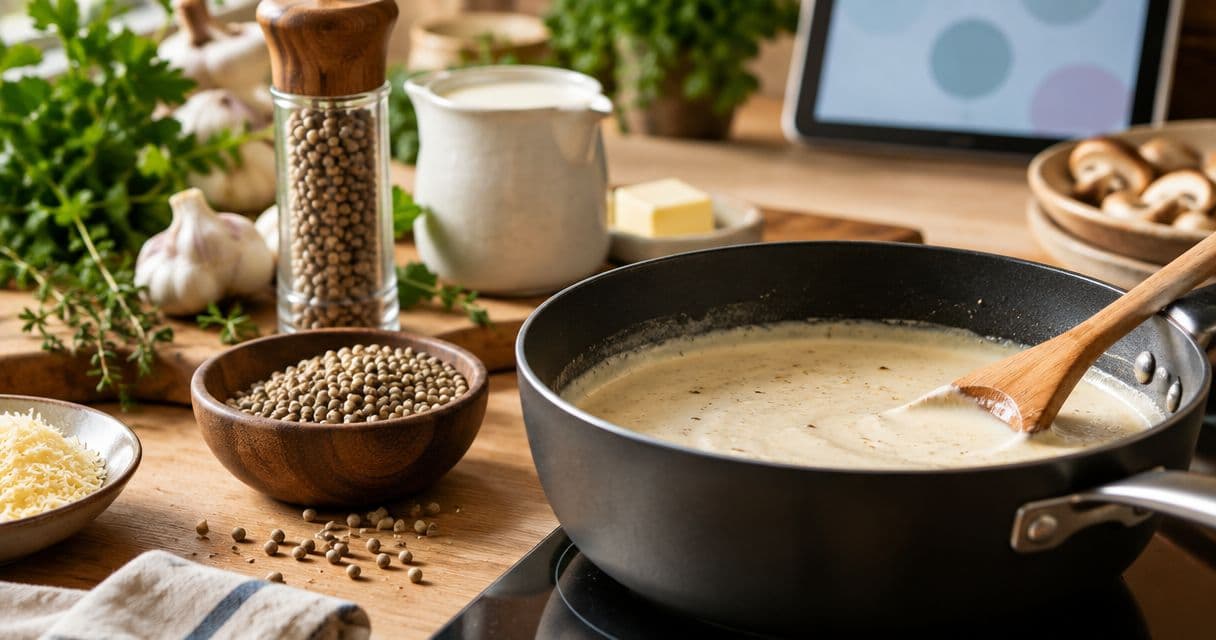
Instead of chasing gritty bites and uneven heat, grind white pepper finely, whisk it into your cream sauce, and taste before adding more. This workflow takes you from whole peppercorns to a smooth, evenly seasoned sauce, with a strained-infusion option when texture matters most.
TL;DR- For white pepper for cream sauce, grind finely and season gradually; pale color does not guarantee gentle heat.
- Choose fine grinding for direct seasoning or cracked-pepper infusion followed by straining for a smoother finish.
- 5Senses whole spices suit cooks who want to prepare their seasoning immediately before cooking.
- Finish reducing the sauce before making your final pepper adjustment.
Why this matters
White pepper is pepper with the outer fruit layer removed. It gives pale sauces pepper flavor without the conspicuous dark flecks of black pepper, but it is not invisible: coarse particles still show, and an excessive dose still dominates.
Fine grinding controls texture; gradual seasoning controls intensity. Neither replaces the other. A perfectly ground spoonful can still overwhelm a delicate sauce.
The 5Senses whole-spice range centers on preparing spices for the dish you are cooking. For a cream sauce, that means choosing the grind and addition point deliberately rather than treating pepper as an automatic finishing shake.
Keep provenance separate from technique. A growing region identifies where a spice was grown; processing and grinding describe what happened afterward. Neither a regional name nor a pale appearance tells you how much pepper your particular sauce needs.
Before you start
- Gather the ingredients: whole white peppercorns, your cream-sauce ingredients, salt, and a little unseasoned sauce or suitable cooking liquid for adjustments. Follow your chosen sauce recipe for its base and thickening method.
- Prepare the tools: a clean, dry pepper mill or spice grinder, a small dish, a whisk, and a saucepan. For the infusion variant, add a fine sieve; ordinary coarse strainers let small pepper fragments through.
- Check the hidden gotcha: a grinder previously used for black pepper, chilies, or coffee can leave dark particles and unwanted aromas. Empty and clean it according to its instructions, then inspect a test grind before seasoning the sauce.
Smell a freshly crushed peppercorn before committing it to the pan. You should recognize pepper aroma rather than an unrelated scent from the grinder. Grinding cannot correct an ingredient you already dislike.
White pepper preparation
Choose your texture
Decide whether you want the pepper particles to remain in the finished sauce. Fine grinding is the straightforward everyday method; infusion followed by straining adds handling but removes the larger fragments before you thicken or finish the sauce.
| Method | Best for | Advantage | Limitation |
|---|---|---|---|
| Fine grinding | Everyday cream sauces and quick pan sauces | You can adjust seasoning directly in the finished sauce | Particles remain; an uneven grind feels gritty |
| Cracked-pepper infusion | Especially smooth, pale sauces | You remove the cracked pepper before finishing | Requires straining and a separate tasting decision |
These are preparation choices, not quality rankings. Use the method that fits the texture you want and the time you have.
Prepare a fine grind
- Inspect the equipment. Check that the mill accepts peppercorns and that its grinding mechanism is clean and dry. Do not assume every tool handles every whole spice.
- Adjust toward fine. Follow the manufacturer's adjustment instructions rather than forcing the mechanism. Grind into a small dish, not directly over the steaming saucepan.
- Inspect the result. Spread the pepper across the dish. Look for an even powder rather than a mixture of dust and obvious broken pieces.
- Correct the texture. Grind coarse pieces again where your equipment permits, or use the infusion method instead. Do not count on simmering to make coarse pepper disappear.
- Keep it dry. Set the ground pepper beside the stove, away from splashes and steam. Close the remaining whole peppercorns before you start cooking.
Expected result: a small amount of evenly ground white pepper, ready to add in controlled portions.
If your grinder produces an inconsistent mix, address the tool before changing the sauce. The guide to spice grinders for whole spices covers the preparation decision in more detail.
Cream-sauce base
Establish the sauce before seasoning
White pepper works in cream-based sauces and in milk-based white sauces, but those bases do not thicken in the same way. Keep the method from your recipe intact. Pepper is seasoning, not a substitute for the correct liquid, thickener, or reduction.
- Make the base. For a roux-based sauce, cook the flour and fat as your recipe directs before whisking in liquid. For a cream reduction, follow the recipe's reduction method instead.
- Clear existing lumps. Whisk a roux-based sauce thoroughly before adding pepper. If necessary, strain the base now so you do not mistake flour lumps for coarse spice later.
- Approach the serving thickness. Let the sauce reach approximately the consistency you want before making the main seasoning adjustment. Continued reduction concentrates seasoning along with the sauce.
- Lower the heat. Keep the sauce at the gentle heat appropriate to its recipe while you season. Avoid leaving a cream sauce at a hard boil while you work on something else.
- Taste the base. Check salt and any existing seasoning. If the sauce contains seasoned stock, cheese, or pan juices, account for those before adding more.
Expected result: a smooth base that is close to its final thickness and ready for measured seasoning.
A plain base gives white pepper room to register. That does not mean every sauce must be simple, but adding several aromatic ingredients at once makes it harder to identify what needs adjusting.
Pepper addition and final adjustment
Whisk, taste, and finish
Add white pepper in small portions, then reassess the whole sauce—not just its heat. The finished bite should still taste of the cream, pan juices, vegetables, or other ingredients the sauce is meant to accompany.
- Add a small pinch. Scatter finely ground white pepper across the surface rather than dropping a compact heap into one spot.
- Whisk throughout. Move the whisk around the edges and across the bottom so the seasoning disperses through the sauce.
- Take a tasting sample. Put about 1 teaspoon of sauce on a clean spoon or small dish. Let it cool enough to taste comfortably before judging the seasoning.
- Check flavor and texture separately. Ask whether the sauce needs more pepper, then ask whether you can feel coarse particles. More cooking is not the answer to every texture problem.
- Adjust gradually. Add another small pinch only if needed. If you are unsure, compare a little seasoned sauce with 2 teaspoons of unseasoned base in a separate dish before changing the whole pan.
- Taste with the food. Try the sauce on the pasta, potato, fish, or vegetable it will accompany. Make the final adjustment after that combined bite.
Expected result: pepper warmth distributed through the sauce, without isolated hot bites or obvious grit.
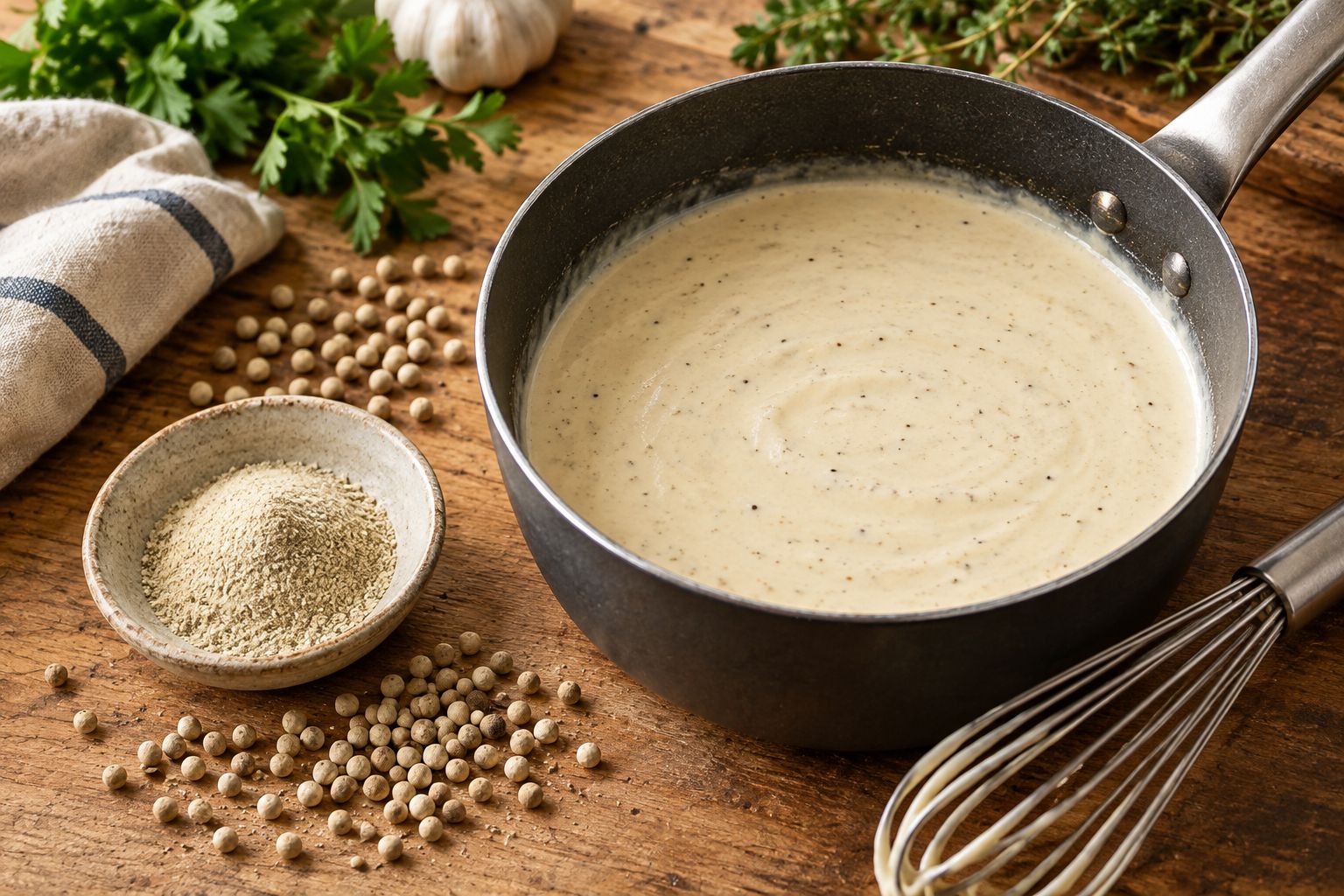
Do not use a fixed number of mill turns as a universal dose. Different mechanisms produce different amounts, and different sauces need different seasoning. A measured spoonful is easier to repeat than an unrecorded series of turns.
Second workflow: infuse and strain
Use cracked pepper for a smoother finish
Choose infusion when you want pepper flavor but want to remove the larger particles. Infuse the liquid before thickening whenever the recipe allows: thinner liquid is easier to strain than a finished, thick sauce.
- Crack the peppercorns. Use a mortar or another suitable tool to break them into pieces. Avoid pulverizing them; fine powder defeats the purpose of this method.
- Warm the recipe's liquid. Add the cracked pepper to the milk or cream allocated for your sauce. Heat gently rather than boiling aggressively.
- Taste during infusion. Spoon out a small sample and let it cool before tasting. Stop when the liquid has the pepper character you want; do not use color as your signal.
- Strain into a clean vessel. Use a fine sieve and inspect the liquid for fragments. If needed, use a food-safe finer filter suitable for the liquid.
- Continue the sauce recipe. Use the strained liquid in the base, accounting for any liquid lost during heating and straining.
- Recheck at the finish. Reduction and other ingredients change the final balance. Taste again before adding any ground pepper.
Expected result: pepper-seasoned liquid without the cracked pieces, ready to become a smooth sauce.
The trade-off is control at the finish. Adding ground pepper is easy; removing excess infused flavor is not. Keep some unseasoned liquid separate when your recipe permits, and stop the infusion before the pepper becomes the only thing you taste.
Troubleshooting
The sauce feels gritty
Check whether the particles are pepper or lumps from the base. Press a little sauce across a spoon and inspect it. For future batches, grind more finely or infuse and strain before thickening; for the current batch, strain only if the sauce's other ingredients allow it.
The pepper overwhelms the sauce
Dilute with compatible, unseasoned sauce rather than adding another strong flavor. Extra cream alone also changes thickness, so restore consistency using the original recipe's method. If you need substantial dilution, build more base separately and combine gradually.
Dark flecks appear in a pale sauce
Inspect the grinder for black-pepper residue or other retained spices. White pepper reduces conspicuous dark flecks, but it does not promise a perfectly uniform surface. Use clean equipment and the strained-infusion workflow when appearance is especially important.
The sauce is too thick after seasoning
Remove the pan from the heat while you assess it. Whisk in compatible warm liquid a little at a time; start with 1 tablespoon rather than a large pour. Taste again after loosening because dilution changes the seasoning balance.
The sauce separates or develops a grainy dairy texture
Stop aggressive heating. A dairy-texture problem is different from coarse pepper, and straining pepper cannot reverse it. Follow the recovery method appropriate to your sauce recipe; adding more spice only complicates the flavor.
Customize your workflow
For frequent sauce making, keep a short preparation note: the base recipe, the amount of liquid, your pepper preparation, and when you added it. Record quantities you actually used rather than borrowing a universal dose. This makes your next batch easier to adjust.
5Senses pairs whole spices with Spicecare tools for storage, grinding, and preservation. Apply the same practical standard to either purchase: choose a spice you want to cook with and a tool that prepares it to the texture your dish needs. Whole spices require preparation; that extra step is useful only when you control the result.
Store the peppercorns closed, away from cooking moisture, and grind what you need for the task. Do not hold the storage container above the steaming pan.
For a more layered sauce, introduce another aromatic separately and taste before combining. Keep white pepper as the seasoning reference rather than burying it beneath several new additions.
FAQ
What's the best way to use white pepper for cream sauce?
Grind whole white pepper finely, whisk in a small amount, and taste before adding more. Make the final adjustment when the sauce is close to its serving thickness.
Is white pepper milder than black pepper in a cream sauce?
Do not assume white pepper is milder simply because it is pale. White pepper and black pepper have different flavor profiles, so season to taste rather than substituting by appearance.
Can I put whole white peppercorns directly into cream sauce?
Use whole or cracked peppercorns for an infusion that you strain before serving. For pepper that stays in the sauce, grind it finely to avoid hard pieces in the finished dish.
Should I toast white pepper before making a cream sauce?
Toasting is optional, not a required step for cream sauce. Start with untoasted white pepper when you want to assess its flavor clearly; try toasting separately when a changed aromatic profile fits your recipe.
Should white pepper go in before or after the cream?
For direct seasoning, whisk finely ground white pepper into the sauce after the liquid is incorporated and the base is close to its final thickness. For infusion, add cracked pepper to the liquid first and strain it before continuing.
How do I make white pepper sauce without gritty bits?
Use an even, fine grind or infuse cracked pepper into the liquid and strain it out. Also check the sauce base for flour lumps, which require a different correction.
How do I fix too much white pepper in cream sauce?
Combine the sauce gradually with a compatible unseasoned base. Then restore the intended consistency and retaste salt and pepper before serving.
One last thing
Taste the sauce on its food before declaring it finished. A spoonful of sauce alone is a useful checkpoint, not the final serving condition. Keep a piece of the accompanying food ready beside the stove so the last adjustment reflects the bite you will actually eat.