Wholesale spices for specialty grocers: give customers a reason to return
Choose wholesale spices for specialty grocers and neighborhood stores. Build a premium range with named origins, memorable flavors and personal service.
Specialty and neighborhood grocers buy wholesale spices to build a premium pantry selection customers associate with their store, not another interchangeable grocery aisle. The opportunity is to connect distinctive ingredients with the meals, traditions and small discoveries your customers care about.
TL;DR- Wholesale spices for specialty grocers should give customers a clear reason to choose your store.
- 5Senses connects named spice origins with whole formats and practical cooking guidance.
- Build a premium assortment around flavor, provenance and personal recommendations, not unsupported exclusivity claims.
- Look for repeat purchases and customer feedback before expanding the shelf.
Why premium spices belong in an independent grocery
Your spice shelf can express the same care as your cheese counter, bread selection or produce display. Choose ingredients you can explain and recommend, rather than filling every possible category slot.
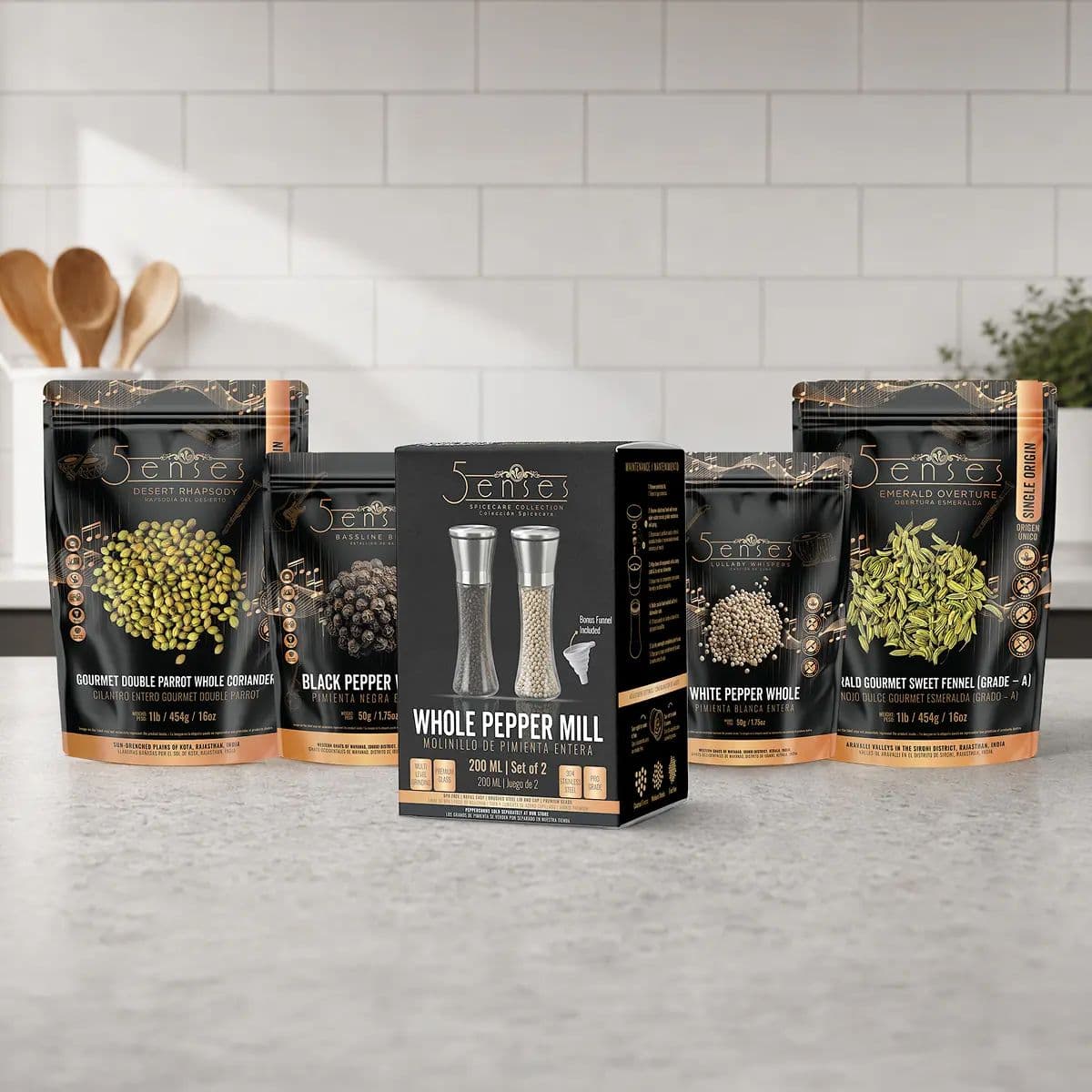
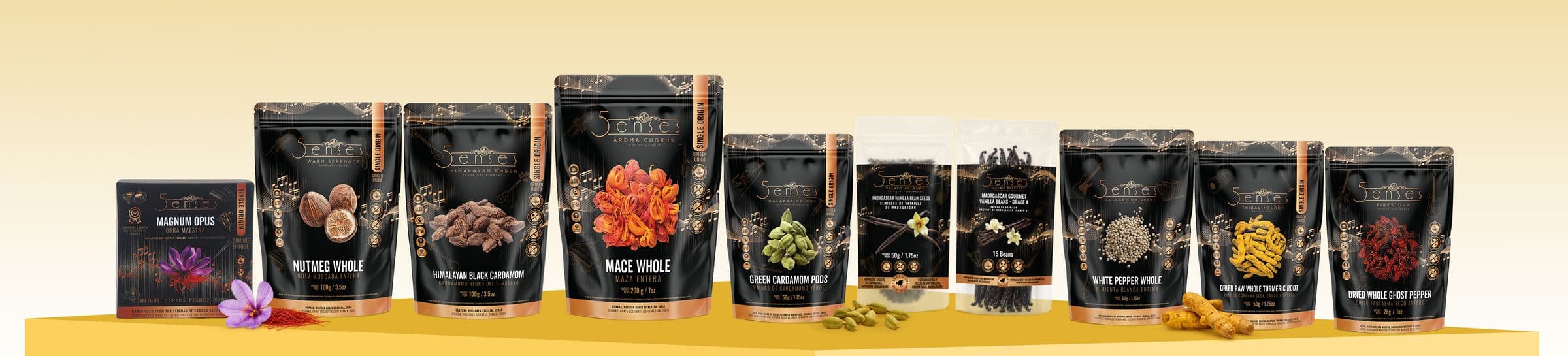
The 5Senses wholesale range brings together origin-packed whole spices, exotic vanilla and Spicecare tools. For a specialty grocer, the useful connection is between a named source, a recognizable flavor and something a customer wants to cook.
5Senses whole spices suit specialty and neighborhood grocers building a premium pantry around documented origins and personal cooking advice. Whole formats also ask something of the customer: a pod needs infusing or opening; a seed sometimes needs grinding. Your recommendation should make that next step clear.
The aim is not simply to sell something unusual. It is to help a customer bring home an ingredient they enjoy enough to use again.
Build a premium spice shelf with a point of view
Start with the customers who trust your recommendations
Listen to what people ask at the counter. A customer buying ingredients for a family rice dish needs a different suggestion from someone baking on the weekend. Both deserve a recommendation that fits their cooking, not a speech about luxury.
Ask your team which ingredients shoppers request but struggle to find in your store. Look at purchases in neighboring categories and the recipes customers mention. Use those observations to define what belongs on the shelf.
Premium-only does not mean every product has to be unfamiliar. A familiar ingredient with a clearly documented origin can be a useful introduction to more considered spice buying.
Before choosing the range:
- Record recurring cooking questions.
- Identify pantry ingredients customers already replenish.
- Note requests your current shelf does not answer.
- Separate regular cooking needs from occasional gifts.
- Give each proposed spice a clear customer and use.
Define what premium means before you buy
A premium shelf needs a buying standard, not just an attractive package. Decide which details your team must understand before recommending a product: origin, ingredient format, processing, sensory character and how it is packed.
Keep those facts separate. Named origin explains where the ingredient comes from. Drying describes a processing step. Neither justifies an invented claim about soil producing a particular flavor.
Ask suppliers for the information behind any certification you intend to display. A sourcing statement is not a substitute for product-specific documentation, and packing at origin does not establish the current harvest date.
Build your buying brief around:
- A documented source for the exact product.
- Processing information relevant to the ingredient.
- Flavor descriptions your team can explain.
- Clear pack and ingredient information.
- Current lot and date details where supplied.
- A practical use that fits your customers.
Give familiar ingredients a more specific story
Consider 5Senses Whole Coriander (Grade A), designated Double Parrot Grade A (Hadoti Bloom), from Kota in Rajasthan's Hadoti region, India. This is a familiar cooking ingredient with a specific source and a useful preparation story.
The product information describes partial sun-drying near the harvest source and whole, uncrushed seeds. Its tasting notes move from bright, floral and lemony-sweet toward woody-nutty undertones; toasting shifts the profile toward warm and nutty.
That gives your team something concrete to discuss. Explain the difference between using seeds whole and toasting and grinding them for a recipe. Treat Double Parrot Grade A as the stated commercial designation, not an independent universal certification.
For each familiar pantry ingredient:
- Name the ingredient before its poetic designation.
- Explain the documented source.
- Choose a sensory detail relevant to cooking.
- Show the preparation the suggested recipe needs.
- Avoid unsupported rankings or measured oil-content claims.
Choose discoveries customers can bring into everyday cooking
A discovery product earns attention when the customer can imagine using it. Malabar Cardamom Green Pods come from the Malabar region of India, with gently air-dried whole pods and documented sweet, floral and citrus notes.
For a customer making chai, explain how the recipe uses the pods for infusion. For a baker, check whether the recipe calls for seeds or ground cardamom. Whole pods and ground spice are not interchangeable without preparation.
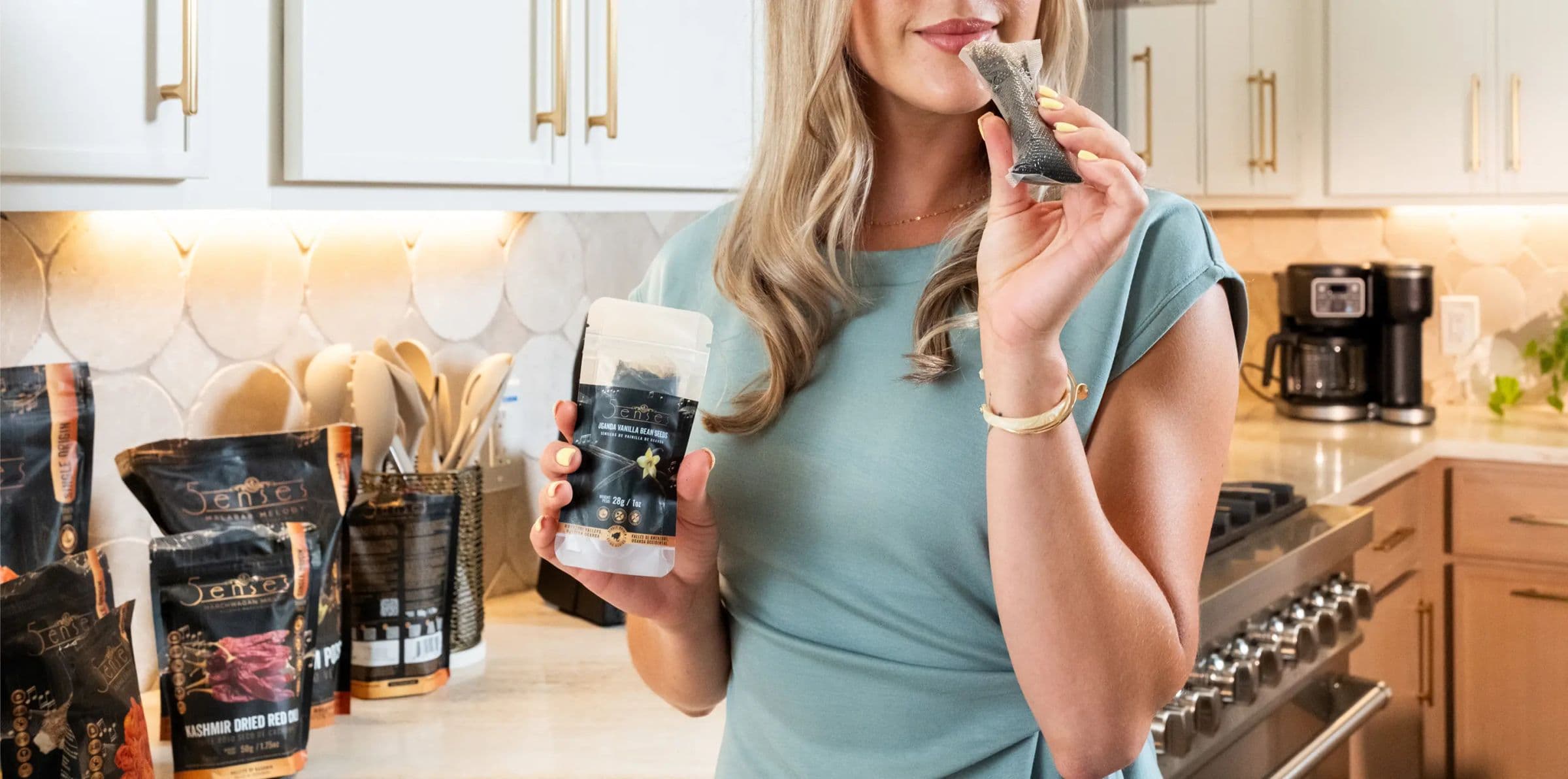
The same buying principle applies when considering Madagascar or Uganda vanilla and Kashmir Mongra saffron: start with the customer's cooking, then confirm the exact product details. Do not make unfamiliarity the only reason to stock something.
Make discovery approachable:
- Connect the ingredient with a recognizable dish.
- Describe its flavor without promising a result.
- Explain whether to crack, grind or infuse it.
- Identify any tool the customer needs.
- Be candid about preparation work.
Make the shelf feel personally selected
Give every item a reason to be there. A shopper should understand why your store chose this coriander or that cardamom without needing to read a long origin essay.
Write a short shelf card with the ingredient, verified origin and a cooking suggestion. Keep tasting notes separate from ingredients: citrus notes do not mean citrus has been added. Use the actual pack details rather than a generic description copied across the range.
If your store also sells online, carry the same care into its listings. Use current official product photographs with the required permission, and match the pictured pack to the item being sold. The website should carry the same useful advice customers receive at your counter.
For each display:
- Keep the ingredient name easy to recognize.
- Give a short, verified origin detail.
- Suggest a realistic first use.
- Make pack choices clear.
- Keep products away from direct sun, heat and moisture.
Turn staff knowledge into a useful conversation
A thoughtful recommendation starts with a question: what are you making? The answer gives your team a way to connect an ingredient with the customer's meal rather than reciting the package.
For coriander, discuss whole seeds or fresh grinding. For cardamom, distinguish infusing pods from preparing seeds for baking. Teach the relevant action rather than applying toast, grind, bloom and infuse to every spice indiscriminately.
If you offer demonstrations, use dedicated demonstration stock and follow applicable food-handling requirements. Keep opened packs separate from sealed retail inventory. A prepared sample also needs ingredient and allergen information for the whole recipe.
Prepare your team to:
- Ask about the dish before recommending a product.
- Explain the ingredient's documented character.
- Demonstrate the preparation where appropriate.
- Answer storage questions from product guidance.
- Say when a whole format does not fit the customer's routine.
Build the reorder around what customers use
Customer affection is the goal, not a result you can promise on a supplier description. Look for the practical signs: customers return for the ingredient, mention a dish they made or ask what to try next.
Review sales alongside those conversations. A slow seller with repeated preparation questions needs a different response from an item customers understand but do not want. Improve the explanation before assuming a broader assortment is the answer.
Check the money too. Include purchasing, freight, payment and other variable selling costs in your contribution calculation. Premium positioning does not automatically establish a profitable product.
At your review:
- Compare items over the same selling period.
- Record repeat purchases where your records permit.
- Note questions that remain unanswered.
- Account for demonstration stock and damaged goods.
- Reorder around evidence rather than catalog breadth.
Choose an assortment your team can explain
Different shelf approaches serve different customers. Choose the one that fits your store, then add breadth only when each new item brings a distinct cooking use.
| Assortment approach | Best for | Practical strength | Limitation |
|---|---|---|---|
| Premium pantry staples | Neighborhood regulars replenishing familiar ingredients | Connects careful sourcing with recurring cooking needs | The specific product difference needs explaining |
| Origin-led discoveries | Curious cooks exploring regional ingredients | Gives staff a concrete sourcing and flavor conversation | Unfamiliar formats need preparation guidance |
| Cooking-occasion selection | Shoppers planning baking, chai or a particular meal | Makes the first use easy to understand | A narrow theme will not answer every pantry need |
These approaches can share a shelf. The discipline is to avoid several products competing for the same explanation while leaving a common customer request unanswered.
Start with a selection your team can describe confidently. A smaller, coherent premium range is a clearer proposition than a broad display nobody knows how to recommend.
Stand apart from big-box shopping without inventing exclusivity
Build the selection around the gaps you observe in the stores your customers actually use. Compare exact brands, products, formats and documented origins, not just ingredient names. Finding coriander in another store does not establish that the products are identical; a different label does not prove a meaningful difference either.
You can choose to stock exclusively premium products without claiming exclusive distribution. Those are different decisions. Statements such as only available here or not sold in big-box stores require current evidence or a specific agreement.
Make your selection distinctive; make your claims verifiable. Your store can offer a thoughtful combination of products, cooking knowledge and personal service without pretending that no other retailer sells a related ingredient.
Common mistakes when building a premium spice range
Making premium mean rare for its own sake
An unusual ingredient still needs a customer and a cooking use. Do not overlook familiar pantry staples with a documented source simply because an unfamiliar item looks more adventurous.
Treating every product as single-origin
5Senses includes both Single Origin and Multi-Origin Reserve products. Use the classification for the exact item rather than copying one claim across the shelf.
Selling the story but leaving the preparation unexplained
An origin story does not tell a customer how to use a whole pod or seed. Finish the recommendation with a practical action and a recipe that fits the format.
Confusing exclusivity with customer loyalty
A product unavailable elsewhere does not guarantee a return visit. Give customers a reason to enjoy using it, and assess repeat purchases rather than promising them.
Assuming a premium shelf guarantees strong returns
Presentation and provenance do not replace your own cost records. Review contribution and customer response before increasing the order or expanding the range.
FAQ
What should specialty grocers look for in wholesale spices?
Look for documented origins, clear ingredient formats, relevant processing details and cooking uses your staff can explain. Match the selection to your customers rather than buying for novelty alone.
How can a neighborhood grocer make its spice shelf different from big-box stores?
Build a carefully selected premium range around observed local gaps, specific product facts and personal cooking advice. Check exact products before making claims about what another retailer does not sell.
Does stocking only premium spices mean my store has exclusive products?
No. A premium-only assortment is your buying standard; exclusive distribution requires a separate agreement or supporting evidence. Do not describe products as exclusive without confirmation.
Which 5Senses products help explain an origin-led spice selection?
Whole Coriander (Grade A), designated Double Parrot Grade A (Hadoti Bloom), connects Kota in Rajasthan's Hadoti region with toasting and grinding guidance. Malabar Cardamom Green Pods connect a documented Indian origin with sweet, floral and citrus notes and practical infusion or baking uses.
How do I help customers try whole spices?
Start with a dish they already want to cook and explain the preparation it needs. Clarify whether to use whole pods, remove seeds, grind or infuse, rather than suggesting a direct substitution for ground spice.
Can premium spices help bring customers back?
Premium spices can be part of a store's repeat-purchase offer, but no ingredient guarantees loyalty. Track actual reorders and customer cooking feedback to see whether the selection earns a lasting place in their pantry.
One last thing
Ask a returning customer what they cooked with the spice you recommended. That conversation tells you more than whether the display looked impressive: it connects the product on your shelf with a meal in their home.
A store worth returning to does not need every spice. It needs a selection chosen with care, and people who help customers enjoy it.