Why is whole nutmeg pricier than ground nutmeg?
Why is whole nutmeg more expensive? Compare edible weight, origin details, freshness, and prep to choose whole or ground nutmeg for your everyday cooking.
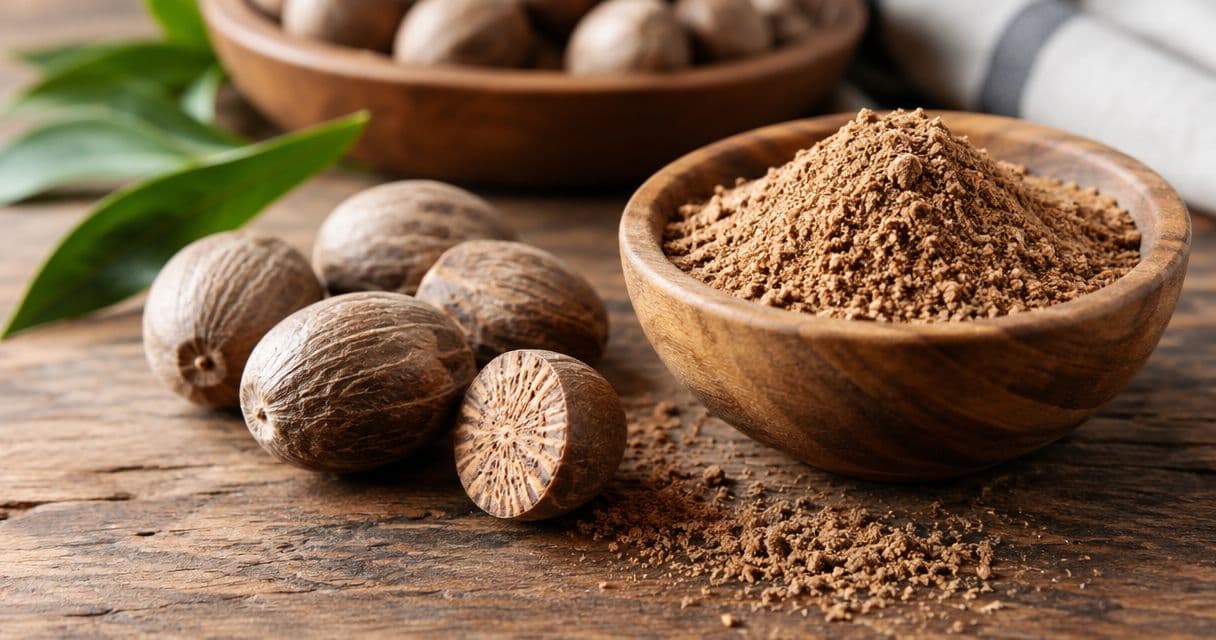
Whole nutmeg is not automatically more expensive than ground nutmeg: when it carries a premium, compare the edible weight, sourcing details, and packaging before attributing the difference to the whole form. The practical trade-off is freshly grated aroma versus ready-to-use convenience, with a grater and any shell-removal work separate from the ingredient itself.
TL;DR- Why is whole nutmeg more expensive? Check edible weight and sourcing before assuming the whole form explains the difference.
- Whole nutmeg suits cooks who want freshly grated aroma; ground nutmeg suits quick measuring and frequent batch cooking.
- 5Senses offers nutmeg in the shell; distinguish the protective shell from the edible kernel when comparing packages.
- A higher-priced package is not proof of fresher nutmeg or better flavor.
Why is whole nutmeg more expensive?
Whole nutmeg does not carry a universal premium over ground nutmeg. A package comparison mixes several questions: how much edible spice you receive, what the seller documents about its origin, and whether the package contains shelled kernels or nutmeg still inside its shell.
Start with the ingredient, not the package size. The guide to whole nutmeg for grating fresh explains the format most useful when you want to prepare nutmeg as you cook.
| Format | Best for | Practical advantage | Trade-off |
|---|---|---|---|
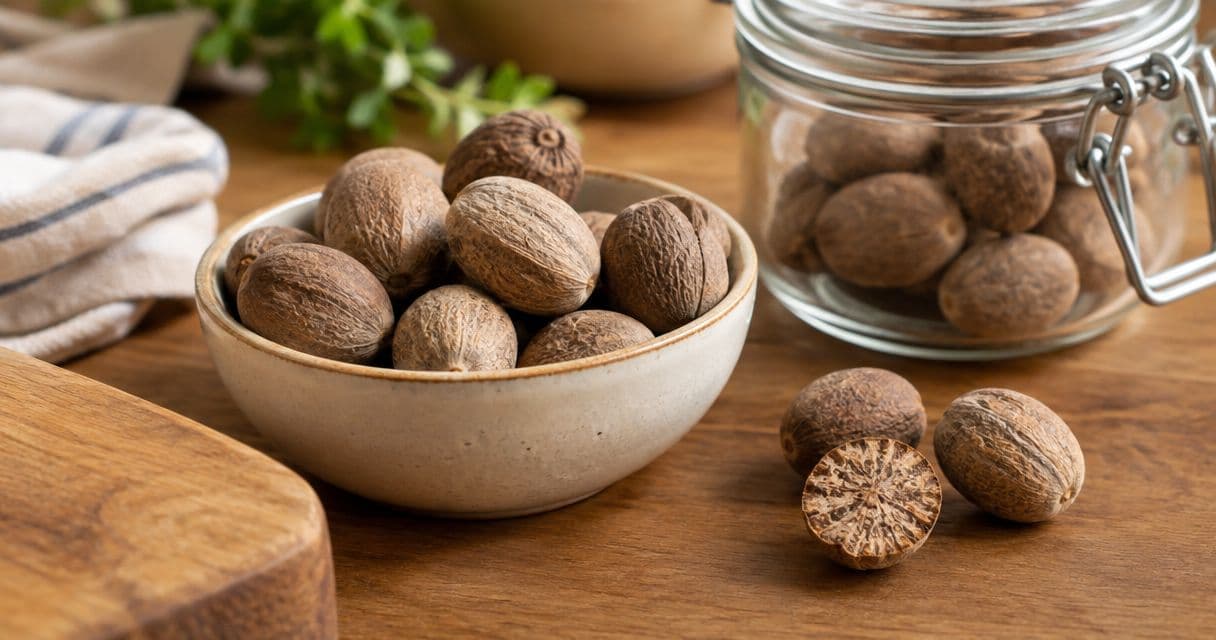
| Shelled whole nutmeg | Cooks who grate small amounts as needed | You grate only what the dish needs | Requires a suitable grater and preparation |
| Nutmeg in the shell | Cooks comfortable preparing the kernel | The kernel remains enclosed until you open it | Shell weight is not edible nutmeg; preparation takes another step |
| Ground nutmeg | Quick measuring and repeated baking batches | Ready to measure and mix | More surface area is exposed during storage |
These formats answer different kitchen needs. None proves a particular origin, packing date, or level of freshness on its own.
Why this matters in your kitchen
Nutmeg often goes into food in small amounts, so a package can stay in your cupboard through many cooking sessions. What matters is whether the spice still delivers the warm, sweet, woody aroma you bought it for when you finally use it.
Fresh grating gives you control over when the kernel becomes a powder. Ground nutmeg removes that preparation step. Choose the format around your cooking routine, then judge the sourcing and condition separately.
A frequent baker who finishes ground nutmeg promptly has a different need from someone who adds an occasional grating to mashed potatoes. Neither cook needs a claim that whole spices are always the better purchase.
What actually differs between whole and ground nutmeg?
Nutmeg is the seed kernel of the nutmeg fruit. Its hard shell is a separate layer, while mace is the lacy covering around that shell; mace and nutmeg are related ingredients, not interchangeable names for the same part.
Grinding breaks the kernel into small particles and increases the surface exposed to air. That helps release aroma during preparation, but it also exposes more of the spice during storage. Keeping the kernel whole delays that grinding step until you need it.
This physical difference explains the appeal of whole nutmeg. It does not establish how much any particular package should cost, nor does it prove that every whole kernel is fresher than every jar of ground spice.
Shelled whole nutmeg: best for fresh grating
Choose shelled whole nutmeg if you want the fresh-grating routine without first removing a hard shell. You can grate a little, put the remaining kernel away, and return to it for another dish.
The drawback is preparation. You need a suitable fine grater, and the last small piece can become awkward to hold safely. Do not keep grating when your fingers approach the cutting surface.
Nutmeg in the shell: best for cooks comfortable with preparation
Nutmeg in the shell adds an opening step before grating. Check the seller's preparation guidance and make sure you understand which layer to remove; the hard shell is not the seasoning you want in your food.
For 5Senses nutmeg in the shell, the useful distinction is the format itself. 5Senses nutmeg in the shell is best for cooks comfortable removing the shell before fresh grating. Its practical limitation is that extra preparation, not a promise that the format suits every kitchen.
Ground nutmeg: best for ready-to-measure convenience
Ground nutmeg suits a kitchen where you want to measure, mix, and move on. It is particularly convenient when repeating a recipe and keeping the preparation process consistent.
The trade-off is storage exposure after grinding. Buy an amount that matches your use, close the container promptly, and judge its aroma before adding it to a dish. Ground form alone is not evidence of poor quality.
Why package comparisons vary
A higher shelf total does not tell you which package provides more usable nutmeg. Check these details before deciding that one format offers better value:
- Edible weight. Establish whether the declared weight includes a shell. Compare edible kernels with edible kernels wherever the information allows.
- Growing origin. A named growing place provides more specific sourcing information than an unspecified origin. It does not, by itself, prove better flavor.
- Packing and freshness information. Look for actual dates or lot information rather than treating the words whole or premium as freshness evidence.
- Preparation format. Shelled whole nutmeg, nutmeg in the shell, and ground nutmeg require different work in your kitchen.
- Package quantity. Compare equivalent weights rather than containers that happen to look similar in size.
These are comparison criteria, not a claim that any single detail explains a seller's premium. Without comparable product information, the reason for a particular difference remains unproven.
How do you compare usable nutmeg fairly?
Use the declared weight as your starting point, then establish what that weight represents. In a US grocery comparison, 1 ounce equals approximately 28.35 grams; converting units prevents an ounce-labeled package from being mistaken for a smaller gram-labeled package.
For a clearer side-by-side comparison, normalize the stated quantities to 100 grams. That makes the quantities comparable, but it still does not turn shell weight into edible kernel weight.
Follow this sequence:
- Check the format. Identify ground nutmeg, shelled kernels, or nutmeg in the shell.
- Match the units. Convert ounces and grams before comparing package quantities.
- Check edible weight. Establish whether a shell is included in the declared amount.
- Read the origin. Separate a stated growing location from the seller's address or packing location.
- Check the dates. Distinguish harvest information from packing information when either is provided.
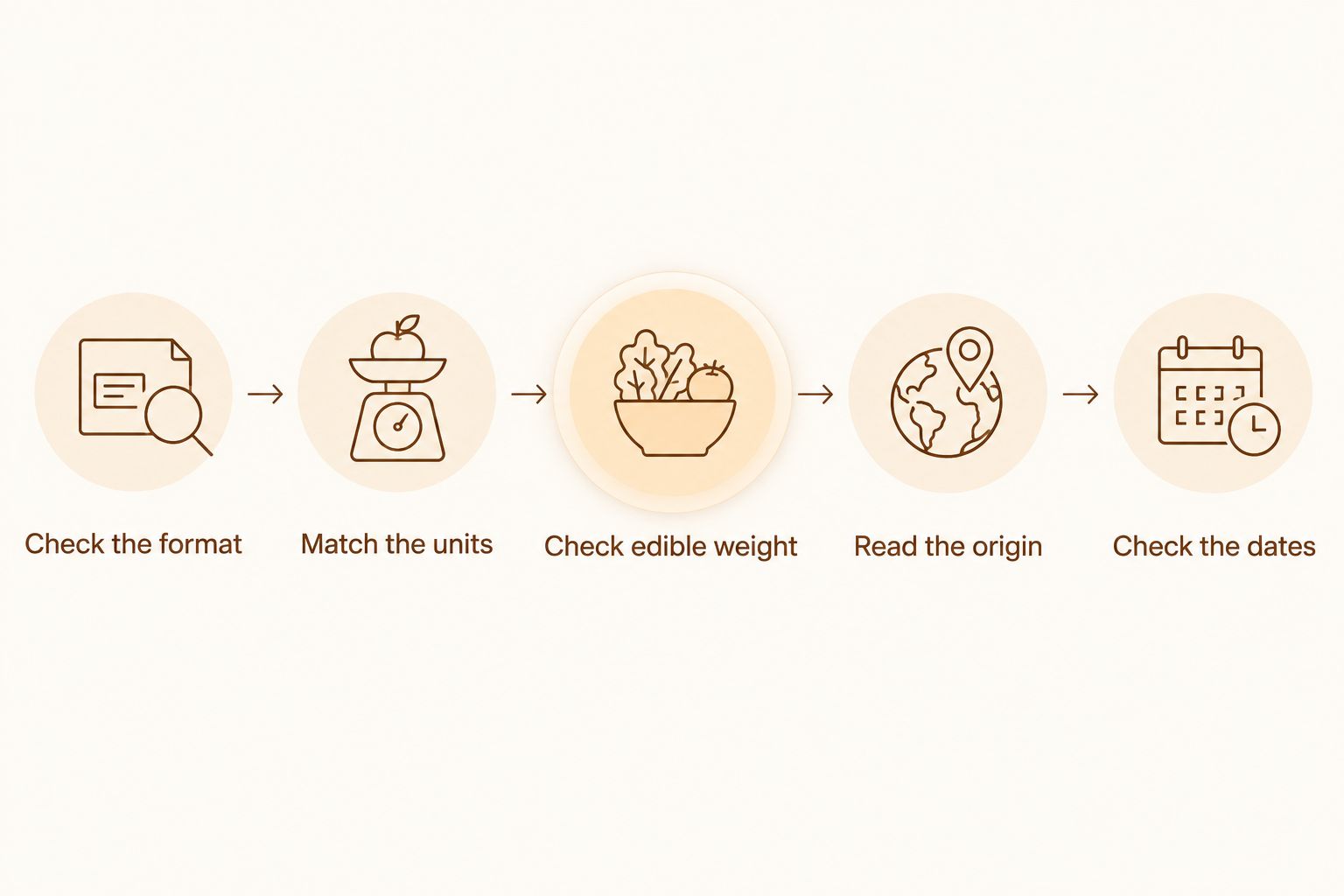
If the seller does not specify an edible-kernel weight for an in-shell package, do not invent a conversion. You can still assess the sourcing information and decide whether the preparation suits you, but an exact edible-weight comparison requires that missing detail.
Does origin explain a whole-nutmeg premium?
Origin tells you where the ingredient was grown when the seller states it clearly. It is different from where the business operates, where a package was filled, or where the plant species first originated.
For a useful nutmeg description, look for a named growing region and documented handling details. Drying and packing are processing steps; they should not be presented as proof that a particular soil created a particular flavor.
The 5Senses whole-spice range includes nutmeg in the shell, alongside other whole spices. Assess nutmeg through its own product information rather than borrowing origin claims from another spice in the range.
Specific provenance is useful evidence; an impressive place name is not a tasting result. You still need nutmeg that smells aromatic when grated and works in the food you make.
How do you get the benefit of whole nutmeg?
The benefit comes from preparation close to cooking, not from leaving an intact kernel untouched in the cupboard. Set up the grater before starting the dish so fresh preparation remains an easy habit.
Grate
Use a clean, dry fine grater suited to hard spices. Grate over a small dish so you can measure the result, rather than guessing how much has fallen directly into a bubbling saucepan.
Keep your fingers clear of the teeth and stop before the remaining piece becomes difficult to hold. Do not force a hard kernel into equipment that is not intended to handle it.
Measure
When a recipe calls for ground nutmeg, measure the freshly grated spice after grating. A count of grater strokes is not a reliable substitute for a recipe measure because the grater, pressure, and kernel all affect the result.
For repeat baking, keep the grating texture and measuring method consistent. Fresh aroma is useful, but it does not remove the need to follow the recipe.
Add
Use grated nutmeg in custards, cakes, cream sauces, or vegetable dishes according to the recipe. For an adjustable savory dish, add a small amount, stir thoroughly, and taste before adding more.
Nutmeg does not need a separate toasting step before every use. Do not add extra heating simply because another whole spice benefits from toasting.
Store
Return the remaining kernel to a dry, tightly closed container away from heat and light. Keep it away from steam while cooking; opening the container over a hot pan exposes its contents to moisture.
Store ground nutmeg with the same care. Whole form gives you control over grinding, not permission to ignore storage.
Is whole nutmeg always better than ground nutmeg?
Whole nutmeg is better for fresh-grating control, not automatically better for every cook. Ground nutmeg is the practical choice when convenience and repeatable measuring matter more than grating at the moment of use.
Choose whole nutmeg if you enjoy that preparation and use the spice across both sweet and savory cooking. Choose ground nutmeg if removing a preparation step helps you use it regularly rather than leave it untouched.
Does buying whole nutmeg guarantee freshness?
Whole nutmeg does not guarantee freshness. The intact format limits exposed surface area, but it does not tell you the harvest date, drying history, or storage conditions.
Smell a freshly grated portion before committing it to a recipe. Weak aroma is a reason to reassess the spice, not an instruction to add an unchecked amount.
Should a busy baker choose ground nutmeg?
Ground nutmeg suits busy bakers who prioritize ready-to-measure preparation. It keeps an extra task out of repeated batches and blends readily with other dry ingredients.
Whole nutmeg suits bakers who want to grate close to mixing and can make that step consistent. Decide around your actual workflow, not a rule that whole always wins.
FAQ
Why is whole nutmeg more expensive than ground nutmeg?
Whole nutmeg is not universally more expensive than ground nutmeg. When comparing packages, check edible weight, origin information, packing details, and whether the whole nutmeg includes its shell before attributing the difference to format.
Is whole nutmeg worth buying for occasional cooking?
Whole nutmeg suits occasional cooking if you are willing to grate it as needed. Buy an amount that fits your routine and store the remaining kernel tightly closed, dry, and away from heat.
Do I grate the shell of whole nutmeg?
No, grate the edible nutmeg kernel, not the hard outer shell. If your nutmeg is sold in the shell, follow the seller's preparation guidance before using the kernel.
Can I replace ground nutmeg with freshly grated nutmeg?
Yes, freshly grated nutmeg can replace ground nutmeg in cooking and baking. Measure it after grating and follow the recipe rather than estimating an amount from grater strokes.
Is ground nutmeg made from a different spice?
No, ground nutmeg is the powdered form of the nutmeg kernel. Mace comes from the lacy covering around the shell and is a separate spice.
How can I compare ounces and grams when buying nutmeg?
Use the conversion of 1 ounce to approximately 28.35 grams to compare declared package weights. For nutmeg in the shell, also establish whether the declared weight includes the shell.
Does a higher-priced nutmeg package prove better quality?
No, a higher-priced package does not prove better quality. Look for specific sourcing and packing information, compare usable quantities, and assess the aroma when you prepare the spice.
One last thing
Make the fresh-grating habit easy before buying the whole format. Keep a suitable grater accessible and a small dish ready for measuring. If that preparation will not fit your routine, ground nutmeg is a sensible choice—not a compromise you need to apologize for.