Best whole cinnamon sticks and bark for baking in 2026
Find the best whole cinnamon sticks for baking: Ceylon for delicate desserts, cassia for bold fillings. Learn how to choose, grind, infuse, and store bark.
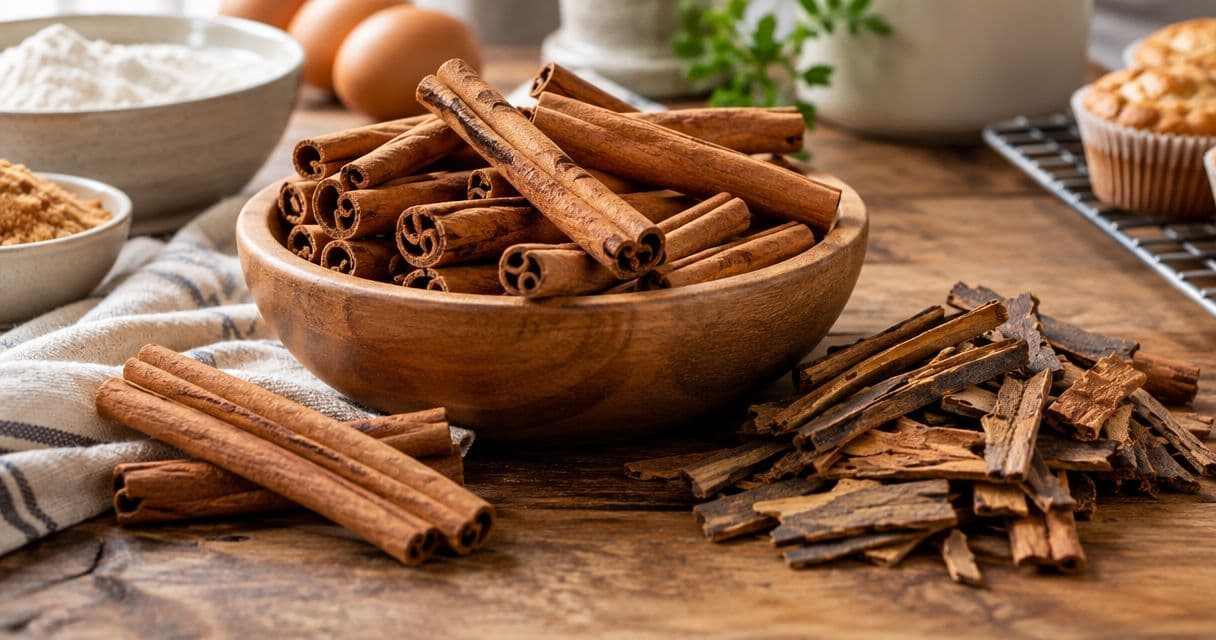
The best whole cinnamon sticks for baking are Ceylon quills for delicate cakes and custards, and cassia bark for bold cinnamon rolls and fruit fillings. Choose by the flavor you want and whether you will grind the bark or infuse it into a liquid—not by how neatly the sticks match.
TL;DR- The best whole cinnamon sticks for baking are Ceylon for delicate desserts and cassia for bold fillings.
- Ceylon cinnamon has thin, layered quills; cassia generally has thicker, harder bark.
- Grind whole spices for dough and fillings; infuse cinnamon sticks into milk, cream, or syrup.
- Use the 5Senses Kanyakumari cinnamon guide to explore origin, then check the product’s species and packing details.
Start with origin, then choose your cinnamon
Cinnamon is dried tree bark, but the name covers several species with different cooking personalities. Ceylon cinnamon comes from Cinnamomum verum, a species native to Sri Lanka. Cassia is a broader culinary grouping that includes Chinese, Indonesian, and Vietnamese cinnamon.
That distinction matters more than a tidy jar of identical sticks. Thin, layered Ceylon quills break differently from thick cassia bark, and their gentler flavor behaves differently in a vanilla custard or an apple filling.
For an origin-led starting point, read the Kanyakumari cinnamon growing-landscape guide. A growing region tells you where an ingredient comes from; a species name tells you which cinnamon it is. You need both to make a precise buying decision.
5Senses is a direct-from-farm whole-spice source for cooks who want origin-led pantry choices. For cinnamon, check the individual product description rather than assuming that a region, product name, or photograph establishes its species.
Why this matters in your baking
Cinnamon can sit quietly behind vanilla or become the main flavor of a bake. Choose a forceful bark for a delicate custard and the cinnamon dominates; choose a gentler quill for a heavily spiced filling and the result tastes restrained.
The preparation matters just as much. A stick steeped in cream contributes flavor without leaving ground bark in the finished dessert. Finely ground cinnamon distributes through dough, streusel, and sugar fillings. These are different jobs, not interchangeable shortcuts.
Start with your most repeated recipe. If you bake cinnamon rolls every weekend, prioritize a cinnamon that delivers the filling you enjoy. If you mostly make rice pudding and custards, prioritize an infusion you can taste and control.
What makes the best whole cinnamon sticks for baking
Use these checks before choosing a jar or bag:
- Named species: Look for Ceylon cinnamon or a specific cassia type, ideally with its botanical name.
- Stated growing origin: Separate the place the cinnamon was grown from the place it was packed or sold.
- Useful packing information: Read any stated harvest, packing, and best-before details. Do not infer them from packaging appearance.
- Clear aroma: Break a small piece and smell it. You want recognizable cinnamon, not a musty or barely detectable scent.
- Suitable bark structure: Choose manageable quills for home grinding or sturdy pieces for removable infusions.
- Recipe fit: Decide whether cinnamon should support vanilla and fruit or lead the whole dessert.
Uniform length is not a flavor guarantee. Broken bark can be useful when you intend to grind it, while intact sticks make removal easier after steeping. Judge the form against the task.
Whole cinnamon at a glance
These are cinnamon types, not a ranking of suppliers. Their characteristics give you a starting point; the aroma of the actual batch still matters.
| Cinnamon type | Best for | Standout characteristic | Key limitation |
|---|---|---|---|
| Ceylon cinnamon | Delicate custards and vanilla-led baking | Thin, layered quills with a gentler cinnamon profile | Can taste restrained in strongly spiced fillings |
| Indonesian cassia | Everyday cinnamon rolls and apple baking | Familiar, rounded cassia flavor | Thick bark needs suitable grinding equipment |
| Vietnamese cinnamon | Cinnamon-forward streusel and fillings | A forceful, assertive cinnamon profile | Can overpower subtle vanilla or dairy flavors |
| Chinese cassia | Removable infusions for fruit syrups and poaching liquids | Sturdy bark with a pronounced cassia character | Whole pieces are unsuitable for eating in finished bakes |
Ceylon cinnamon: let vanilla and dairy stay in view
Ceylon cinnamon is recognizable by its quills, which contain many thin layers of bark. Its flavor is generally gentler than cassia, making it a useful choice when cinnamon should accompany the dessert rather than define it.
Best for: custards, rice pudding, and vanilla-led cakes. Infuse a quill into the dairy component of a suitable recipe, or grind it finely when the recipe calls for cinnamon powder.
Ceylon cinnamon strengths:
- Complements delicate dairy and vanilla flavors.
- Thin layers are easier to break into manageable pieces.
- Works in both ground preparations and removable infusions.
Ceylon cinnamon limitations:
- Its restrained character is less suited to an intentionally punchy filling.
- Fragile quills can shed pieces that need straining after infusion.
Choose Ceylon when you want to taste the custard, vanilla, or fruit first. Do not expect it to recreate every familiar cassia-heavy bakery flavor without adjusting the recipe.
Indonesian cassia: the everyday baking choice
Indonesian cassia, commonly associated with Cinnamomum burmannii, offers a familiar cinnamon profile for sweet baking. Its bark is generally thicker and harder than Ceylon’s layered quills.
Best for: cinnamon rolls, apple fillings, and repeat pantry baking. It is a practical default when cinnamon needs a clear presence alongside butter, brown sugar, and baked fruit.
Indonesian cassia strengths:
- Fits familiar cinnamon-centered recipes.
- Works as ground bark in fillings and spice blends.
- Can also be removed after infusing a liquid.
Indonesian cassia limitations:
- Hard bark is demanding for unsuitable grinders.
- Its stronger character can crowd a lightly flavored custard.
Choose Indonesian cassia for a cinnamon you expect to use across several everyday bakes. Keep the grind fine enough that the filling tastes smooth rather than woody.
Vietnamese cinnamon: make cinnamon the main flavor
Vietnamese cinnamon, also called Saigon cinnamon, is associated with Cinnamomum loureiroi. It is known for an assertive cinnamon character that suits recipes built around the spice itself.
Best for: bold streusel, cinnamon sugar, and strongly spiced fillings. Use it when you want the cinnamon to remain obvious beside rich butter, toasted nuts, or a substantial fruit filling.
Vietnamese cinnamon strengths:
- Gives cinnamon-forward recipes a pronounced character.
- Works in finely ground toppings and fillings.
- Stands out in mixtures with other strong baking spices.
Vietnamese cinnamon limitations:
- Can dominate subtle vanilla or dairy flavors.
- Thick bark requires equipment suited to hard spices.
Choose Vietnamese cinnamon for intensity, not as an automatic upgrade over every other cinnamon. In a familiar recipe, make a small trial batch before changing the cinnamon throughout a larger bake.
Chinese cassia: useful bark for removable infusions
Chinese cassia comes from Cinnamomum cassia. Its sturdy bark and pronounced flavor make it useful when cinnamon will steep in a liquid and then be removed.
Best for: fruit-poaching liquids and syrups used in desserts. Infuse the bark into the recipe’s liquid, taste during cooking, and remove it before serving or assembling the dessert.
Chinese cassia strengths:
- Gives syrups and poaching liquids a clear cinnamon character.
- Larger bark pieces are easy to retrieve with a strainer.
- Fits preparations where you do not need ground cinnamon.
Chinese cassia limitations:
- Hard pieces must not remain in a finished cake or filling.
- Its pronounced character needs monitoring in delicate liquids.
Choose Chinese cassia when a removable infusion fits your workflow. It can be ground with appropriate equipment, but sturdy bark is not a reason to force it through a grinder that cannot handle it.
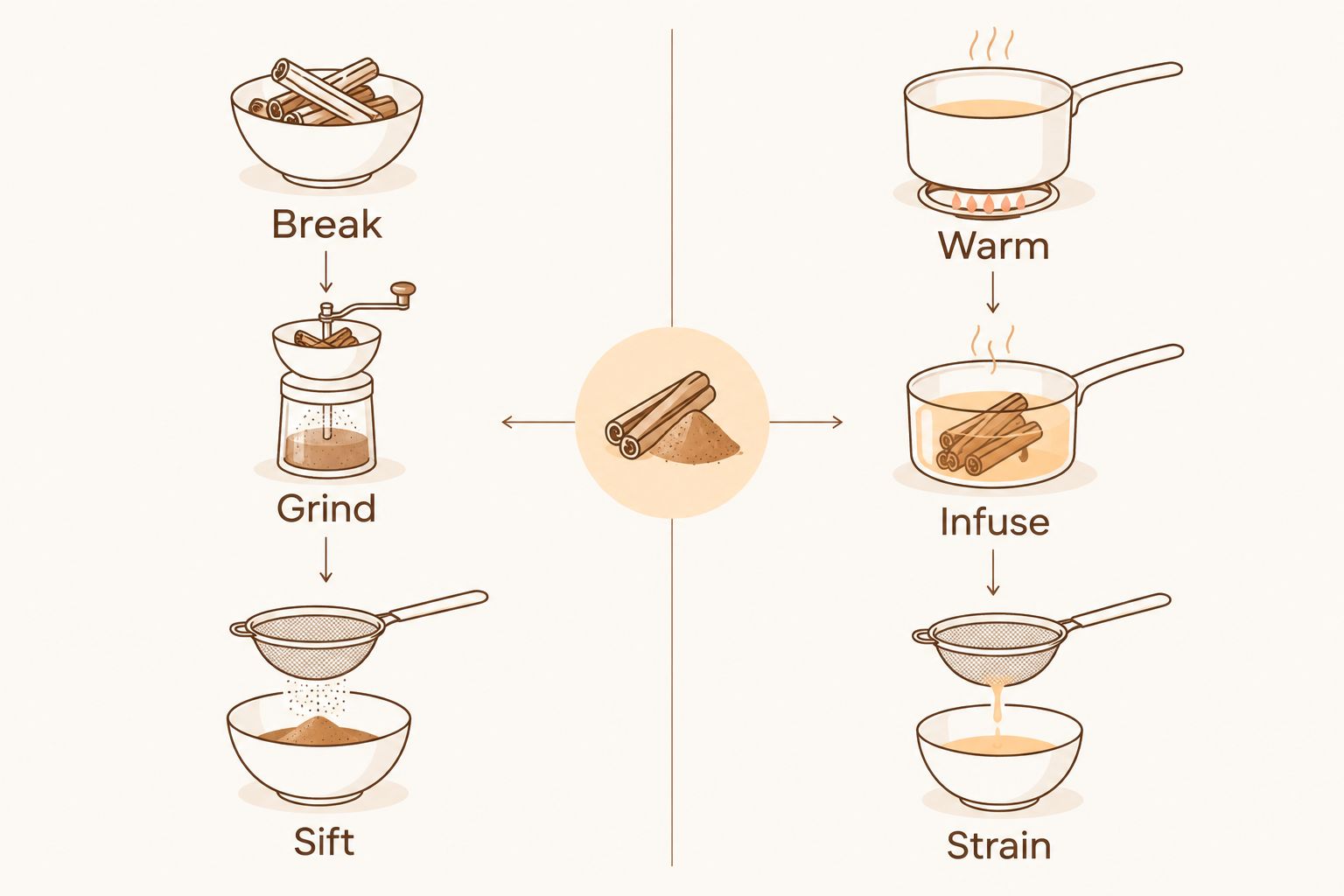
Grind for dough; infuse for liquids
The easiest preparation decision is whether the finished food should contain the cinnamon itself. Dough and fillings usually need finely ground bark. Smooth creams and syrups often benefit from a strained infusion.
Break, grind, sift
Break the bark into pieces your equipment can accept. Check the appliance instructions before grinding hard spices; a pepper mill is not automatically a cinnamon grinder.
Grind in manageable batches, then sift out coarse fragments. Regrind those fragments separately rather than putting gritty powder into a cake batter. The guide to spice grinders for whole spices helps you compare equipment for this task.
For repeat pantry use, grind only the amount your recipe needs. Keep the remaining bark whole and close its container promptly.
Warm, infuse, strain
Add whole cinnamon to the milk, cream, syrup, or poaching liquid specified by your recipe. Warm it gently and taste the liquid as the flavor develops.
Remove the bark when the cinnamon is where you want it. Strain through a fine sieve if the quill has shed fragments, then continue with the recipe. Do not replace a recipe’s measured ground cinnamon with an arbitrary stick and expect the same result.
Toast and bloom only when the recipe needs them
You do not need to toast cinnamon before every bake. A clean, fragrant bark can go straight into a grinder or infusion, and delicate custards rarely need a toasted spice character.
If your recipe calls for toasting, use gentle heat and keep the bark moving. Stop when its aroma becomes clear, before it darkens or smells scorched. Let it cool before grinding.
Blooming is different: ground cinnamon meets warm fat so its flavor spreads through that component. Keep the heat gentle and follow the recipe’s method. Adding cinnamon to a warm butter filling is not an invitation to fry it until dark.
Store the bark for your next bake
Keep whole cinnamon in a tightly closed container away from steam, direct light, and the stove’s heat. A convenient jar beside the hob is convenient for cooking, not for preserving aroma.
Use a dry utensil and keep wet hands out of the container. If you buy several cinnamon types, label each with its name and your opening date so you can repeat the flavor you liked.
Before baking, break a small piece and smell it. A weak aroma is a reason to reassess the batch, not to keep increasing the amount until the recipe becomes gritty. Discard bark with visible mold or a musty smell.
How these recommendations were chosen
The choices follow recipe fit, bark structure, flavor intensity, and preparation method. They are ingredient recommendations, not supplier test results or claims that one growing region always produces better cinnamon.
5Senses’ emphasis on direct-from-farm, origin-packed whole spices makes provenance a useful starting point. For cinnamon, finish that decision with the named species, the actual batch’s aroma, and the cooking job you need it to do.
Which whole cinnamon should you choose?
Choose Ceylon for delicate desserts and Indonesian cassia for an everyday cinnamon-forward baking pantry. Choose Vietnamese cinnamon when intensity is the point, and Chinese cassia when a sturdy, removable infusion fits the recipe.
If you are undecided, think about your next bake rather than collecting every type. Buy cinnamon for that recipe, record what you used, and repeat it when the result suits you.
FAQ
What are the best whole cinnamon sticks for baking?
Ceylon cinnamon is the best fit for delicate custards and vanilla-led desserts; Indonesian cassia is a practical choice for cinnamon rolls and apple baking. Choose by flavor intensity and whether you will grind or infuse the bark.
Is Ceylon cinnamon better than cassia for baking?
Ceylon is better for a gentler cinnamon character, not for every recipe. Cassia suits bakes where cinnamon should remain pronounced beside butter, sugar, and fruit.
Can I put a whole cinnamon stick in cake batter?
Do not leave a whole cinnamon stick in cake batter. Grind the bark finely, or infuse it into a liquid component and remove it before mixing the batter.
How do I grind cinnamon sticks without gritty pieces?
Break the bark, use equipment suited to hard spices, and sift the finished powder. Regrind coarse fragments separately rather than adding them to a smooth filling or batter.
Do cinnamon sticks need toasting before baking?
Cinnamon sticks do not need toasting before every bake. Toast only when the recipe calls for that flavor, using gentle heat and stopping before the bark scorches.
Can one cinnamon stick replace ground cinnamon in a recipe?
One cinnamon stick is not a reliable substitute for a measured amount of ground cinnamon. Sticks vary in size and species, and infusion extracts flavor differently from adding powder.
How do I choose cinnamon from 5Senses?
Check the individual cinnamon description for growing origin, species, and any stated packing details. Use the 5Senses origin guide for context, then match the cinnamon to your baking method.
One last thing
The most attractive stick is not automatically the most useful one. Broken bark suits grinding; an intact quill suits easy removal from warm milk. Choose the form that helps you cook, then judge the flavor in the finished bake.