Kanyakumari cinnamon: the growing landscape of Forest Rhapsody
Discover Kanyakumari cinnamon from Tamil Nadu’s Western Ghats. Explore 5Senses Forest Rhapsody, origin sourcing, sun-dried bark and warm, citrusy cooking.
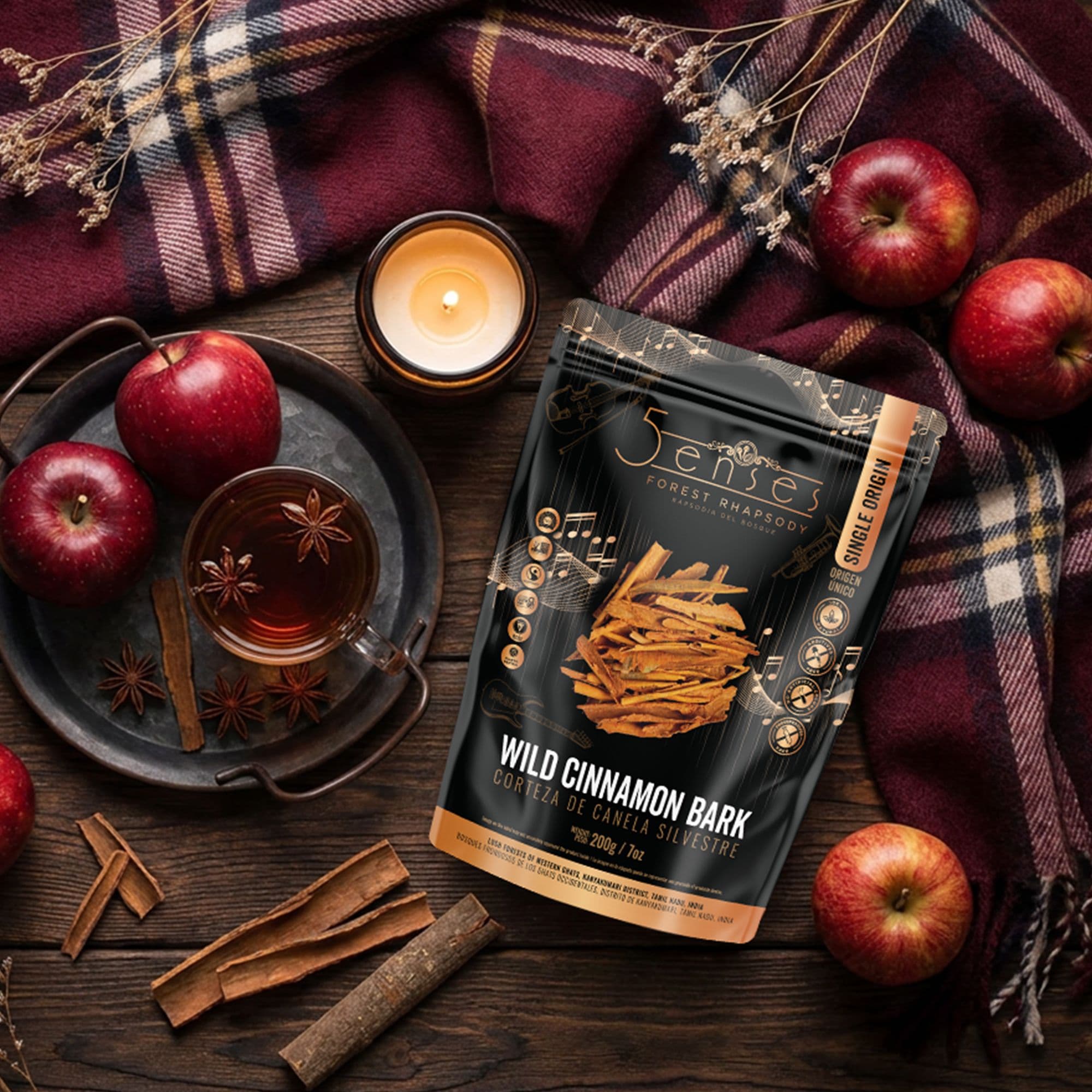
Kanyakumari cinnamon connects a familiar warming spice with the southern Western Ghats. 5Senses Wild Cinnamon Bark, called Forest Rhapsody, comes from Kanyakumari District in Tamil Nadu and is naturally sun-dried for a sweet, woody profile with citrus and earthy notes.
TL;DR- 5Senses Kanyakumari cinnamon comes from Tamil Nadu’s southern Western Ghats.
- Forest Rhapsody is whole wild cinnamon bark, naturally sun-dried and packed at origin.
- A current Indian growing origin is distinct from cinnamon’s botanical birthplace.
- Farmer and cooperative collaboration keeps regional producer knowledge within the sourcing approach.
- Infuse whole bark for removable flavor or prepare a suitable grind when the recipe calls for powder.
The southern Western Ghats have their own cinnamon chapter
Cinnamon is often introduced through a dessert: an apple filling, a cake or a warm drink. Its growing landscape rarely gets the same attention as the recipe.
Forest Rhapsody starts in Kanyakumari District in Tamil Nadu. The 5Senses product information places its source within the Western Ghats, giving the bark a regional identity before it enters the kitchen.
That setting belongs within India’s wider spice-growing story. ICAR–Indian Institute of Spices Research records cinnamon cultivation in the lower elevations of the Western Ghats in Kerala and Tamil Nadu.
Kanyakumari gives Forest Rhapsody its current growing home; 5Senses carries that identity forward through direct producer collaboration, natural sun-drying and origin packing. The place comes first, followed by the work that makes the bark ready to use.
A growing origin does not need an invented birthplace
The Indian Institute of Spices Research identifies Cinnamomum verum as native to Sri Lanka. It also records cultivation in India’s Western Ghats. Those facts describe different parts of the crop’s story.
Kanyakumari is the source of the 5Senses product. It does not have to be declared cinnamon’s original botanical birthplace to be a meaningful origin.
This distinction makes regional authority more precise. A crop can have one native history and another established growing landscape where producers understand how to work with it. Current source and botanical history can coexist without competition.
The product page describes Forest Rhapsody as true cinnamon, but it does not supply a scientific species name in the information used here. The wider botanical background should not be treated as independent identification of a particular batch.
Bark is an ingredient with a structure
Cinnamon is used for its aromatic bark. That gives it a very different physical form from pepper berries, cardamom pods or fennel seeds.
A piece of bark can sit in a simmering liquid and then be removed. It can also be ground for a recipe that needs a fine seasoning. Those choices lead to different textures and preparation needs.
Whole bark is not an inferior version of a neat, uniform stick simply because its pieces vary. The important questions are what product you have, what the recipe asks for and how you intend to use it.
Appearance alone is also not a reliable way to assign a botanical species. A sourcing story should make the ingredient more understandable rather than offering certainty that the label does not supply.
Producer knowledge carries the region into the product
A growing location is only the beginning of the route to a pantry ingredient. The bark needs preparation and handling before it is packed.
5Senses collaborates directly with farmers and cooperatives in its sourcing relationships. That keeps the people behind the crop central to its regional approach.
The stated details for Forest Rhapsody are farmer sourcing, quality testing, natural sun-drying and packing at origin. Those give the product a concrete position without requiring an invented cooperative name, exact harvest date or account of a personal visit.
Meticulous sourcing means paying attention to the ingredient’s source and the handling that follows. It is not made more credible by adding a claim that every piece was prepared by a particular unnamed family or that the brand owns the growing land.
Sun-drying is a specific preparation detail
5Senses describes Forest Rhapsody as naturally sun-dried. The finished bark is then packed in a resealable airtight pouch.
That preparation gives you a dry ingredient suitable for keeping in the pantry. Whole form preserves your ability to choose an infusion or a suitable grinding method when you cook.
It does not supply a universal piece-to-teaspoon conversion. Bark thickness and piece size vary, and a recipe that needs powder asks for a different form from one that needs a removable piece.
Read the harvest and packing details attached to your own pack. An origin article gives the source story; dates belong to the current lot.
Warmth with more than sweetness
5Senses describes Forest Rhapsody as spicy and bold, with citrus and earthy notes. The profile also includes sweet, woody and caramel-like impressions.
Those are sensory descriptions, not a statement that the bark contains added caramel or citrus. Cinnamon contributes aromatic sweetness without doing the same job as sugar in a recipe.
That range explains why it belongs beyond dessert. A suitable rice preparation or braise can use cinnamon for warmth and a woody supporting note. A milk-based drink can make its sweeter aromatic side more obvious.
The result depends on balance. More bark is not automatically better flavor, especially when the dish has delicate ingredients. Give the cinnamon a clear role rather than making it dominate every spoonful.
Infuse when you want the bark removable
Whole bark works naturally in a liquid preparation that has time to draw out its aroma. Add it according to a tested recipe, then remove or strain the solids before serving.
This method suits warm drinks, broths, braises and rice preparations designed around whole spices. It keeps the finished food free of hard bark fragments.
A spice bag can help when removal would otherwise be awkward. If the piece is loose, plan how you will retrieve it before the food reaches the table.
The ritual is simple: infuse, taste, remove. You do not need to grind the whole reserve just because a spice can also be used as powder.
Grind only when the recipe needs powder
A batter, dough or smooth mixture may call for ground cinnamon rather than a removable piece. In that case, use equipment designed to handle the bark and aim for the texture the recipe specifies.
Check the grinder’s instructions first. Do not force hard pieces into a tool whose manufacturer does not permit them.
Check the prepared result for coarse fragments. A few stubborn bits can be noticeable in a smooth dessert even when the aroma is appealing.
Keep the reserve whole unless you have a reason to prepare more. That leaves you free to choose a different method for the next recipe.
Match the form to the food
| Form | Best for | What it offers | Main limitation |
|---|---|---|---|
| Whole bark infusion | Liquids, rice and braises designed for whole spices | Removable aromatic flavor | Needs time and removal |
| Suitable fine grind | Baking and smooth spice mixtures | Even distribution | Requires appropriate equipment and texture checks |
| Coarse bark pieces | Infusions where pieces can be contained | Flexible portioning | Not a pleasant eating texture in the finished dish |
The comparison is about format, not quality. A ground preparation and a whole-bark infusion solve different kitchen problems.
Start with a recipe you already trust
Use Forest Rhapsody in a familiar preparation before changing an entire spice mixture. Keep the recipe’s other ingredients and method stable.
A simple warm drink or a known rice dish makes a useful reference. Notice how the aroma develops and whether the cinnamon sits alongside the food or overwhelms it.
If you want more presence next time, adjust deliberately. Keep a note of the portion and whether it was whole or ground. Those details are more useful than assuming every bark piece has equal strength.
For a seasonal infusion context, explore the guide to whole spices for mulled wine and cider. The same principle applies: choose the format for the drink, not merely for its appearance.
A region can support several distinct ingredients
Kanyakumari also appears in 5Senses’ whole-clove origin story. That shared regional connection does not make the two products taste alike.
Cinnamon’s bark and clove’s flower bud ask for their own preparation choices. A growing landscape can bring them into the same pantry without erasing their differences.
Read about Kanyakumari cloves for the companion story. It shows why regional authority is most useful when each ingredient remains specific.
The 5Senses position is practical
5Senses Forest Rhapsody is for cooks who want a named southern Indian origin and whole cinnamon bark for deliberate infusion or fresh preparation. Direct producer collaboration and origin packing connect that choice with the growing source.
The limitation is convenience. Whole bark needs time to infuse or suitable equipment to become powder. It is not an instant one-for-one substitute for every recipe’s spoonful of ground cinnamon.
That tradeoff is honest and useful. You are choosing a cooking format alongside a regional story. The product earns its place when both fit the food you make.
Preserve the work after opening
Store the bark sealed, cool and dry, away from direct light and heat. Take out the portion you need before working over steam.
If you transfer it, retain the origin and batch information. A jar should protect the ingredient without losing the sourcing detail that made it meaningful.
Do not return wet, infused pieces to the dry reserve. Once the bark has entered a recipe, handle it according to that food’s instructions rather than treating it as unused pantry stock.
FAQ
Where does 5Senses Forest Rhapsody come from?
Forest Rhapsody comes from Kanyakumari District in Tamil Nadu’s Western Ghats, India.
Is Kanyakumari cinnamon’s botanical birthplace?
Kanyakumari is this product’s current growing origin. ICAR–Indian Institute of Spices Research identifies Cinnamomum verum as native to Sri Lanka and cultivated in India’s Western Ghats.
Does the product page give a scientific cinnamon species?
The information used for this article does not supply a scientific species name. A regional origin alone should not be used to assign one.
How is Forest Rhapsody prepared?
5Senses describes the bark as naturally sun-dried and packed at origin in a resealable airtight pouch.
What does Forest Rhapsody taste like?
5Senses describes sweet, spicy and woody character with citrus, earthy and caramel-like notes. These are sensory notes, not added flavorings.
Can I use whole cinnamon bark without grinding?
Yes. Infuse it in a suitable recipe and remove or strain the hard pieces before serving.
Can any grinder turn cinnamon bark into powder?
No. Check the equipment’s instructions and use a tool designed to handle the bark. Smooth recipes also need a check for coarse fragments.
What is the main tradeoff of whole cinnamon bark?
Whole bark offers preparation control but requires infusion time or suitable grinding equipment. It is not an automatic spoon-for-spoon substitute for powder.
One last thing
A bark piece can carry flavor without becoming part of the finished texture. Let Forest Rhapsody infuse, then take it out. The Kanyakumari story stays in the dish through warmth and aroma.
Related guides
Sources
Product source, processing and tasting notes: 5Senses Forest Rhapsody product information, consulted October 2026. Cinnamon botanical background and Western Ghats cultivation: ICAR–Indian Institute of Spices Research, About Mandate Crops, consulted October 2026.