Can whole fennel seeds be reused after steeping in tea?
Can whole fennel seeds be reused after steeping in tea? Yes—expect a lighter cup. Learn how to re-steep, handle wet seeds, and know when to discard.

Yes, you can reuse whole fennel seeds after steeping in tea: steep them again promptly with fresh hot water, and expect a lighter, less aromatic cup. Reuse them during the same brewing session rather than leaving wet seeds on the counter for another day.
TL;DR- Can whole fennel seeds be reused after steeping in tea? Yes—re-steep promptly and expect a gentler infusion.
- Whole fennel seeds release flavor during brewing; a second infusion cannot replace what the first cup extracted.
- 5Senses offers whole spices for home cooks who value direct-from-farm, origin-packed ingredients.
- Keep wet, used fennel separate from dry pantry seeds; discard seeds with an uncertain handling history.
Can whole fennel seeds be reused after steeping in tea?
Yes. Re-steeping whole fennel seeds is a flavor choice, not a way to make the original seeds fresh again. Hot water extracts aromatic compounds from the fennel. Some flavor remains after an initial infusion, but the next cup usually tastes quieter.
Choose your approach according to the cup you want:
| Brewing choice | Best for | Advantage | Limitation |
|---|---|---|---|
| Re-steep the used whole seeds promptly | A gentle follow-up cup | Uses flavor remaining in the seeds | Less predictable strength and aroma |
| Start with fresh whole seeds | A full-flavored fennel infusion | Gives you a fresh starting point | Requires another portion of dry fennel |
| Add fresh seeds to the used seeds | Adjusting a weak second infusion | Adds new fennel aroma | Makes comparison between brews less clear |
5Senses whole spices suit home cooks who want direct-from-farm, origin-packed ingredients. When choosing ingredients from 5Senses, keep sourcing and brewing separate: provenance describes the spice you start with, while preparation determines how you extract its flavor.
Why this matters
Fennel tea depends on the seeds' sweet, anise-like aroma. Once you have drawn some of that aroma into water, the remaining seeds are a different cooking ingredient from the dry seeds in your jar.
That distinction answers several practical questions. A pale second cup is not automatically a failed brew, and a strong-smelling wet seed is not proof that it was stored safely. Judge flavor by tasting the infusion; judge whether to reuse seeds by how they were handled.
Re-steeping also gives you a useful comparison. Taste the first infusion before adding sweetener, then compare the next cup prepared from the same seeds. You will learn whether you enjoy that lighter style instead of trying to force every brew to taste identical.
How to re-steep whole fennel seeds
Keep the process simple. You do not need to dry the seeds, grind them into a paste, or add another spice to make a second infusion worthwhile.
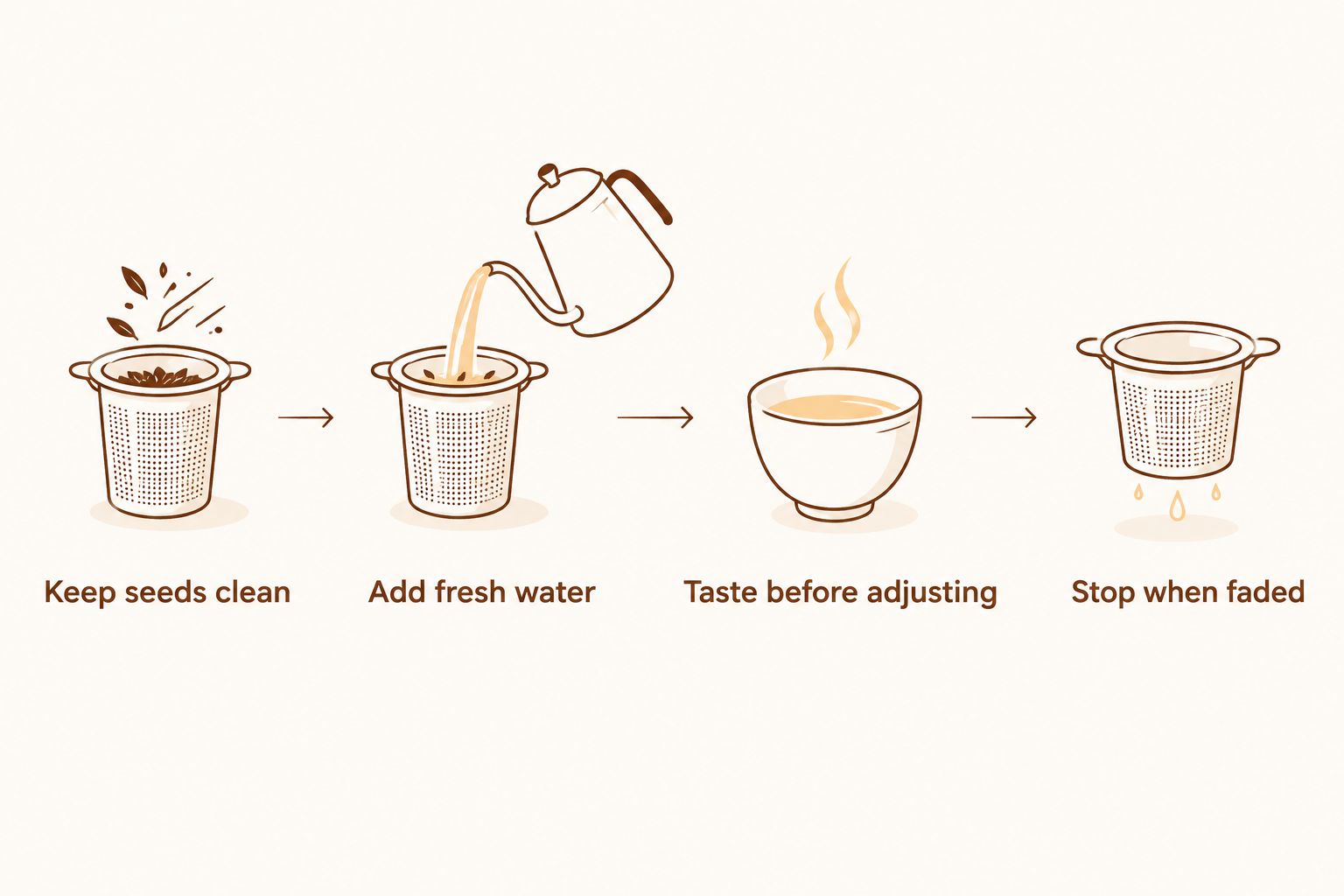
Keep the seeds clean
Brew in a clean pot, cup, or removable infuser. If you plan to re-steep, set the infuser aside on a clean dish only briefly while you prepare fresh water.
Avoid transferring seeds through several containers. Each extra handling step adds mess without improving extraction, and loose wet seeds are easy to forget beside the sink.
Add fresh water
Pour fresh hot water over the used seeds in a clean brewing vessel. Cover the cup or pot while the fennel infuses, then strain before drinking.
Do not assume that a larger volume will produce more usable tea. More water spreads the remaining flavor further, so keep your preferred cup size in mind when judging the result.
Taste before adjusting
Taste the infusion before adding honey, sugar, milk, or other ingredients. Look for a recognizable fennel aroma and a pleasant finish rather than matching the first cup exactly.
If the infusion is too faint, use less water on your next attempt or start with fresh seeds. Extending the steep indefinitely does not restore aroma already extracted into the earlier cup.
Stop when flavor fades
Stop reusing the seeds when the infusion no longer tastes worthwhile. There is no useful universal brew count: intact seeds, crushed seeds, and heavily simmered seeds do not begin a second infusion in the same condition.
A pleasant second cup is worth drinking; a flavorless cup is not a reason to keep brewing. Discard the spent seeds and wash the infuser before your next fresh batch.
Why the strength of reused fennel seeds varies
The second infusion reflects what happened during the first. These preparation choices explain more than a blanket promise that fennel can always be brewed a certain number of times.
- Seed condition: Whole, intact seeds expose less surface area than crushed or ground fennel. Cracking the seeds changes how readily water reaches their aromatic contents.
- Initial brewing method: A brief infusion and a prolonged simmer extract flavor differently. Seeds that have already supplied a strong brew have less flavor left to contribute.
- Water volume: The remaining fennel flavor becomes more dilute as you add more water. Compare cups made with similar amounts of water if you want a useful taste test.
- Starting aroma: Dry seeds with little recognizable fennel fragrance are a poor starting point for repeated infusions. Re-steeping cannot create an aroma absent from the original ingredient.
- Added ingredients: Sweeteners, milk, and other spices change your perception of fennel. Assess the plain infusion first if you want to understand the seeds themselves.
These are preparation factors, not evidence of a particular growing region. Do not read a weak second cup as proof that one origin is worse than another; the first brew has already changed the ingredient.
Should you crush fennel seeds before making tea?
Lightly crushing fennel seeds exposes more of their interior to the water. That makes it useful when you want a more readily extracted infusion, but it also changes what remains for re-steeping.
Crack the seeds rather than grinding them into fine powder. A mortar and pestle gives you control, while a fine-mesh strainer helps keep fragments out of your cup. Powder is harder to strain and can leave sediment.
For a clear comparison, keep the preparation consistent. If you crush the first batch but leave the next batch intact, differences in the resulting tea do not tell you much about freshness or sourcing.
Spicecare is part of the 5Senses approach to storing, grinding, and preserving spices. For this task, the practical requirement is straightforward: use a clean tool suited to cracking dry seeds, and keep wet spent seeds out of equipment intended only for dry grinding.
Do fennel seeds need toasting before tea?
Toasting is optional, not a requirement for fennel tea. Untoasted seeds give you a direct way to explore fennel's sweet, anise-like character. Toasting introduces a different flavor direction rather than making the seeds universally better.
If you enjoy toasted fennel, prepare a small dry batch and watch it closely in the pan. Stir and remove it before scorching. Burnt notes carry into the infusion, and another steep does not remove them.
For a fuller explanation of that preparation choice, read whether whole fennel seeds need toasting. Keep your first reuse experiment untoasted if you want fewer variables to compare.
Do not try to toast wet, previously steeped seeds as though they were dry pantry fennel. Their moisture changes how they behave in the pan, and reheating is not a substitute for sound handling.
Can you save steeped fennel seeds for tomorrow?
The simplest recommendation is to re-steep promptly or discard the seeds. Do not leave a damp infuser at room temperature overnight and use it for tomorrow's tea.
Once fennel is wet, treat it as a moist food rather than a shelf-stable dried spice. Keep it separate from your dry supply, and never return used seeds to the original jar.
USDA general food-handling guidance uses a limit of 2 hours at room temperature for perishable food, reduced to 1 hour above 90°F. Refrigerators should stay at 40°F or below. These are general handling limits, not a tested fennel-specific storage life or a promise that refrigerated used seeds will retain good flavor.
For home brewing, avoiding storage is easier than creating a storage routine for a small amount of spent fennel. If you cannot account for how long the wet seeds have been sitting out, discard them rather than attempting to rescue them with boiling water.
Smell does not settle the safety question. Discard anything visibly moldy, slimy, or otherwise spoiled, but do not assume that a normal aroma proves poorly handled seeds are suitable to reuse.
Can you dry used fennel seeds and put them back in the jar?
Do not return steeped fennel seeds to your dry spice jar. They contain moisture after brewing, and casual countertop drying does not establish that they are dry enough for pantry storage.
Mixing used seeds into unused fennel also makes future cooking less predictable. The jar would contain both fresh dry seeds and seeds that have already lost flavor to an infusion.
Keep the distinction visible in your kitchen: dry fennel belongs in its closed storage container; wet fennel belongs in the current brewing session or the discard pile. Use a clean, dry spoon when taking another portion from the jar.
That separation matters more than finding another use for every last seed. Protecting the remaining dry supply gives you better control over the next cup and your next meal.
Is reused fennel suitable for cooking?
Promptly handled, freshly steeped fennel can go into a cooked dish if you still enjoy its flavor. Expect a milder contribution than fresh dry seeds, and remember that the wet texture is different.
A simmered sauce or broth accommodates softened seeds more naturally than a dry spice blend. Taste the dish and season deliberately rather than substituting spent fennel for a recipe's dry fennel measure without adjustment.
Avoid using damp seeds in a dry grinder, dry rub, or storage blend. Do not add them to a jar of oil for later storage either; a wet leftover is not interchangeable with a dry spice.
If you want fennel to lead a dish, start with fresh seeds. Reuse works best when you welcome a quieter background note, not when you need the ingredient to deliver its full aroma.
FAQ
Can I steep whole fennel seeds more than once?
Yes, you can re-steep whole fennel seeds promptly with fresh hot water. Expect a lighter infusion and stop when the remaining flavor is no longer pleasant.
How many times can I reuse fennel seeds for tea?
There is no universal reuse count for fennel seeds. Crushing, water volume, and the strength of the first infusion all affect how much flavor remains.
Does the second cup of fennel tea taste weaker?
A second fennel infusion usually tastes weaker because the first brew has already extracted aromatic compounds. Use fresh seeds when you want a fuller, more repeatable cup.
Should I rinse fennel seeds between steeps?
Rinsing is not needed to restore fennel flavor between prompt, clean brewing steps. It also does not make seeds with an uncertain handling history suitable to reuse.
Can I leave used fennel seeds in an infuser overnight?
Do not leave wet fennel seeds in an infuser at room temperature overnight for reuse. Re-steep promptly or discard them, and wash the infuser before brewing again.
Can I mix used fennel seeds with fresh seeds?
You can add fresh fennel seeds to a promptly prepared second infusion to increase flavor. Never mix wet used seeds into your container of dry pantry fennel.
Do fennel seeds have to be crushed for tea?
Whole fennel seeds do not have to be crushed for tea. Light cracking exposes more surface area, while keeping them whole makes straining simpler.
One last thing
Compare aroma, not just color. A cup's appearance does not tell you how much fennel fragrance remains, especially when you change the water volume or add other ingredients.
Next time you brew, leave a little of the first plain infusion in a separate cup. Compare it with the fresh second infusion once both are comfortable to taste. That small kitchen comparison gives you a useful answer: whether you personally enjoy re-steeped fennel enough to repeat it.


