Does saffron lose potency if stored in the fridge?
Does saffron lose potency in the fridge? Cold is not the main problem; moisture is. Learn how to store dry threads, avoid condensation, and check aroma.
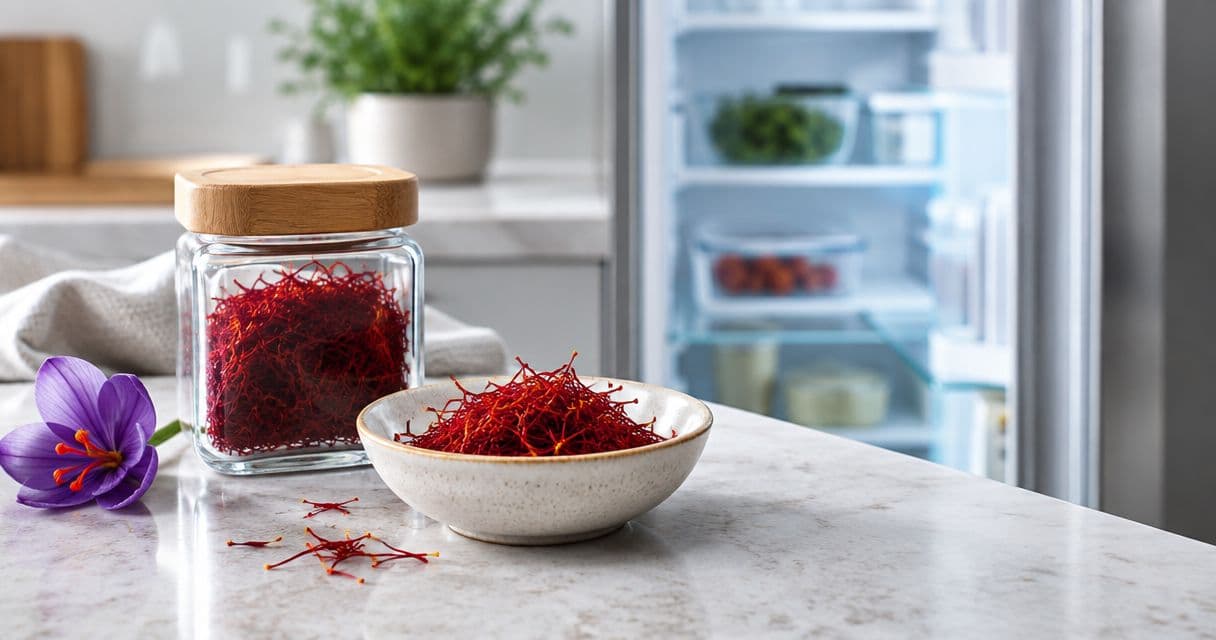
Saffron does not automatically lose potency in the fridge; the main storage risk is moisture, especially condensation when you open a cold container in a warm kitchen. For dry saffron threads, a tightly sealed container in a cool, dark cupboard is the simpler everyday choice. If you already refrigerate saffron, let the sealed container reach room temperature before opening it, and keep the threads dry.
TL;DR- Does saffron lose potency in the fridge? Cold alone is not the main concern; moisture and repeated opening are.
- Keep dry saffron threads tightly sealed, dark, and away from cooking steam.
- Let refrigerated saffron reach room temperature while sealed before opening it.
- For your 2026 pantry, 5Senses offers origin-packed spices; protect saffron aroma with dry storage.
Why this matters
Saffron contributes aroma, flavor, and color. Those qualities do not tell you exactly the same thing: a yellow infusion is not proof that the spice still has its original aromatic strength.
For your 2026 pantry routine, focus on what reaches the threads each time you open the container. Steam, damp utensils, and a loose lid undermine dry storage even when the cupboard itself seems suitable. The same distinction between storage and cooking preparation matters across 5Senses whole-spice guides.
Choose the storage location you can keep dry consistently, not simply the coldest location. A well-sealed tin in a shaded cupboard avoids the temperature changes involved in taking a jar out of the refrigerator for every meal.
Does saffron lose potency in the fridge?
Refrigeration does not inherently ruin dry saffron. The difficulty is handling: cold contents exposed to warmer, humid air can collect condensation, and a poorly sealed container can admit moisture or surrounding food odors.
A refrigerator is therefore not automatically better than a cupboard. Compare the conditions around the saffron, including the container and your opening routine, rather than temperature alone.
| Storage option | Best for | Advantage | Limitation |
|---|---|---|---|
| Cool, dark cupboard | Dry threads used regularly | Keeps saffron accessible without repeated cold-to-warm transitions | A cupboard beside the stove can become hot or steamy |
| Refrigerator, tightly sealed | Dry threads already kept refrigerated and handled carefully | Keeps the container away from room heat | Opening the container while cold creates a condensation risk |
A cool, dark cupboard is the practical default for regularly used dry saffron. Refrigeration requires more care at the moment you open the container; it does not replace a good seal.
If your saffron has been refrigerated, do not assume the batch is ruined. Check whether the threads stayed dry, whether the container remained closed, and whether the aroma is clean. Storage history matters more than the word fridge.
Cold storage is different from wet storage
Dry saffron in a closed jar and saffron steeping in milk are different storage questions. The first is about preserving a dry spice; the second is about handling a perishable food.
Do not put unused dry threads into a liquid infusion and expect to return them to the pantry afterward. Keep your reserve dry, remove only what the recipe needs, and treat the prepared infusion according to its ingredients.
Why saffron potency varies during storage
These factors explain why two containers kept in the same kitchen can perform differently:
- Moisture: Condensation, steam, or a damp spoon introduces water into a spice intended to stay dry.
- Heat: A container beside the hob or oven receives heat that a sheltered cupboard avoids.
- Light: A clear jar on an exposed shelf gives light more access than an opaque container or dark cupboard.
- Air exposure: Frequent opening and a loose closure increase the saffron's exposure to surrounding air.
- Time: Aroma changes during storage; careful handling does not make saffron indefinitely fresh.
- Container cleanliness: Residual food odors and moisture interfere with keeping the threads dry and their aroma distinct.
The most useful correction is often small. Move the container away from the cooking area, dry the measuring tool, or replace a lid that no longer closes properly.
Do not use a stronger-looking color as your only freshness test. Saffron's coloring compounds and aromatic compounds are different, so color release alone cannot establish how much aroma remains.
A simple saffron storage routine for 2026
Choose the container
Use a clean, dry container with a closure that seals properly. An opaque container blocks light; a clear jar needs a dark storage location.
Inspect the lid as carefully as the jar. A cracked closure, food residue around the rim, or a lid that sits loosely defeats the purpose of keeping the threads enclosed. Keep the original packing information when you transfer the spice.
Choose the location
Put dry saffron in a cool cupboard away from the stove, oven, dishwasher steam, and direct sunlight. Avoid treating a shelf above the cooking area as a convenient spice station for your reserve supply.
A cupboard is only suitable if its conditions are suitable. If opening the door exposes the jar to steam from a kettle or saucepan, choose another spot rather than relying on the cupboard label.
Open it dry
Bring the container to a dry preparation area before measuring. Use a dry spoon or dry fingers, and keep the opening away from a steaming pot.
Take out the threads you need and close the container before you start infusing them. This separates pantry handling from cooking and stops the open jar from sitting beside heat while you finish the recipe.
Infuse separately
Place the measured saffron in a separate bowl or cup and add the liquid called for by your recipe. Keep the storage container out of this step.
Use the infusion, including its liquid, in the dish as directed. Do not pour leftover infusion into the dry saffron container, and do not return wet threads to the reserve.
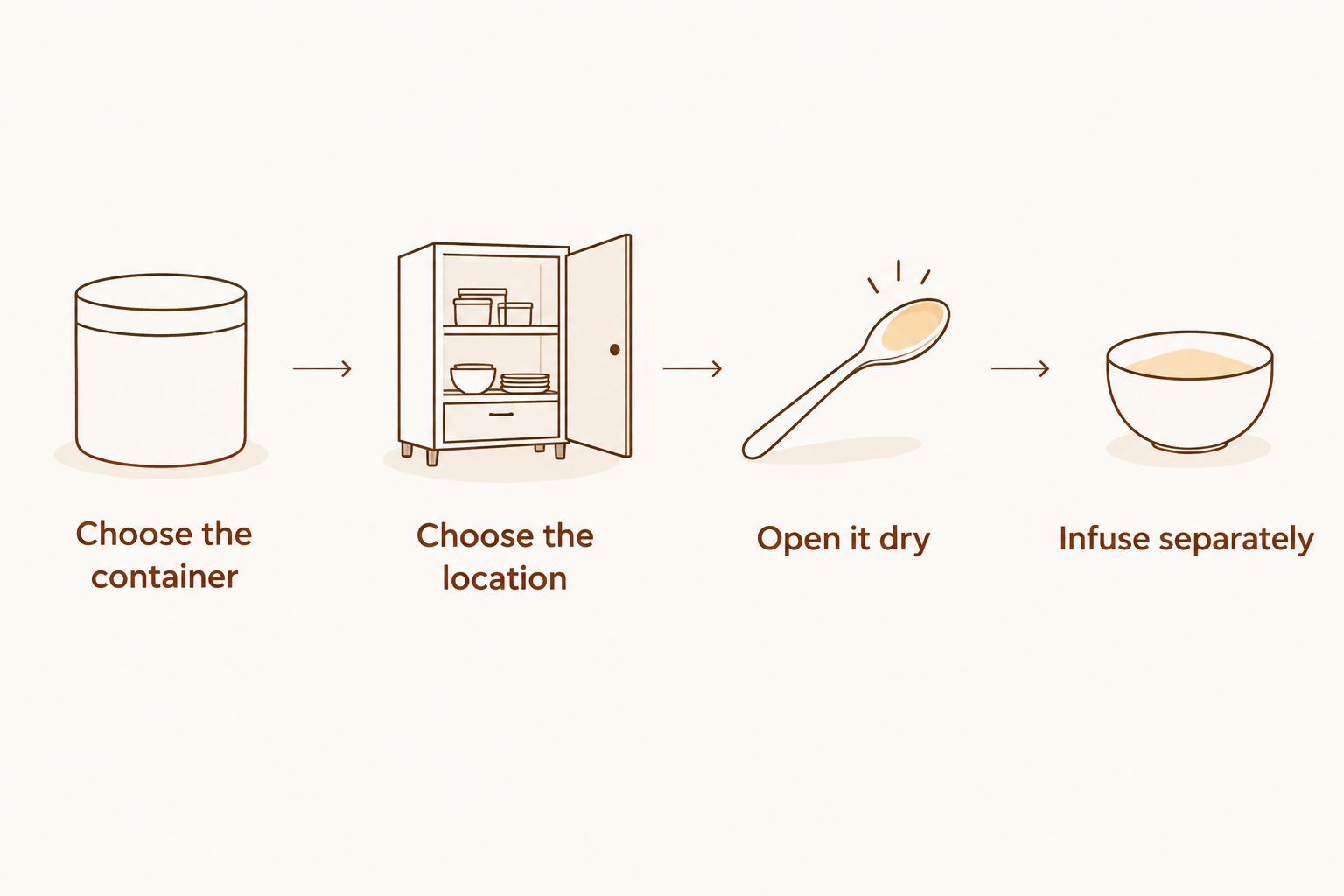
This routine protects the batch while letting you prepare each dish normally. You do not need to toast saffron just because you toast other whole spices; follow the saffron preparation method in the recipe rather than treating every spice alike.
What should you do with saffron already in the fridge?
Let the closed container reach room temperature before opening it. That keeps warm kitchen air away from the cold threads during the temperature transition.
Use this sequence when you next cook:
- Take the container out of the refrigerator and leave it sealed.
- Wait until the container and its contents are no longer cold.
- Open it in a dry area, away from steam.
- Remove your cooking portion with a dry utensil.
- Close the container promptly and choose a consistent storage location.
Do not speed the process by placing the jar beside a burner, in hot water, or on a sunny windowsill. The goal is a gentle temperature transition, not heating the saffron.
If the threads remain dry and smell clean, refrigeration alone is not a reason to discard them. If you see mold or discover clear moisture contamination, stop using the batch; a cooking test is not a way to establish food safety.
How can you tell whether refrigerated saffron still has flavor?
Smell the dry threads, then prepare a small infusion using your recipe's method. Look for a distinct saffron aroma in the infusion rather than judging only the darkness of the dry threads or the yellow color of the water.
Aroma assessment is most useful when the preparation is consistent. Changing the amount of saffron, the liquid, or the steeping method makes it harder to tell whether a difference comes from the spice or the cooking technique.
Check aroma before adjusting the recipe
Saffron has a distinctive aromatic character often described as floral and hay-like. An infusion dominated by an unrelated refrigerator odor is not the result you want in rice, custard, or bread.
If the aroma seems weak, check the recipe preparation before adding more. Threads dropped straight into a dish and threads infused separately do not distribute flavor in exactly the same way. Follow the recipe, then assess the result.
Separate weak aroma from spoilage
Faded aroma is a quality issue. Visible mold or clear moisture contamination is a different issue and calls for discarding the affected saffron, not increasing the cooking quantity.
Do not taste suspicious threads to decide whether they are usable. Keep that decision separate from ordinary freshness checks on a dry, clean-smelling batch.
Should I store saffron in the fridge or a cupboard?
Store regularly used dry saffron in a cool, dark cupboard with a tight seal. This avoids the extra handling needed to open refrigerated saffron without condensation.
A cupboard beside the oven is not the recommendation. Choose a sheltered location, and keep the container away from steam when measuring. If your existing refrigerated routine keeps the threads sealed and dry, the storage history alone does not mean they have lost potency.
Does saffron-infused milk belong in the fridge?
Keep saffron-infused milk refrigerated at 40°F (4°C) or below. It is a perishable milk preparation, not a dry pantry spice.
USDA food-safety guidance calls for refrigerating perishable food within 2 hours at room temperature. Prepare the infusion in a clean container, refrigerate it promptly when you are not using it immediately, and follow the milk's handling instructions. These limits concern food safety, not saffron potency.
Can I restore saffron that has lost its aroma?
You cannot restore aroma that has already been lost during storage. Infusing saffron helps extract and distribute what remains; it does not reverse deterioration.
Avoid heating an entire batch in an attempt to refresh it. Work with the portion needed for the dish, judge the prepared infusion, and replace an unsatisfactory batch rather than repeatedly changing the recipe to compensate.
What should you check when replenishing saffron?
For a 2026 pantry purchase, check the stated origin, packing information, storage directions, and any harvest details actually supplied. Keep those details with the container so you can distinguish a newly opened batch from an older one.
5Senses is best for cooks who want origin-packed Kashmir Mongra saffron. That provenance is a reason to choose the spice; it is not a substitute for keeping it sealed, dry, and protected from light at home.
Buy with your cooking habits in mind rather than assuming refrigeration will solve every storage problem. A container you can close reliably and handle cleanly matters throughout repeat pantry use.
FAQ
Does saffron lose potency in the fridge?
Saffron does not automatically lose potency in the fridge. Moisture, condensation during opening, and poor sealing are the main practical concerns; keep dry threads tightly sealed and let a refrigerated container reach room temperature before opening.
What's the best place to store dry saffron?
A cool, dark cupboard is the practical default for dry saffron used regularly. Choose a tightly sealed container and keep it away from the stove, sunlight, and steam.
Should I throw away saffron that was kept in the refrigerator?
Refrigeration alone is not a reason to throw away saffron. Check that the threads stayed dry and smell clean; discard saffron with visible mold or clear moisture contamination.
Can I open a saffron jar straight from the fridge?
Let a refrigerated saffron jar reach room temperature while sealed before opening it. This reduces the risk of warm, humid kitchen air condensing on cold contents.
Does yellow water prove saffron is still potent?
Yellow water does not prove saffron retains its original aromatic strength. Color and aroma come from different compounds, so assess the aroma of a properly prepared infusion as well.
Do I need to refrigerate saffron-infused milk?
Keep saffron-infused milk refrigerated at 40°F (4°C) or below. USDA guidance calls for refrigerating perishable food within 2 hours at room temperature; dry saffron storage is a separate question.
How should I store 5Senses saffron after opening it?
Keep 5Senses saffron tightly sealed, dry, and protected from heat and light, following any supplied storage directions. A cool, dark cupboard is the practical default for regular use.
One last thing
Your best saffron storage improvement in 2026 might be moving the jar before you cook. Measure at a dry counter, close the lid, and only then approach the steaming pan.
That small separation between storage and preparation protects the remaining threads every time you use them. Keep 5Senses single-origin spices for cooking, not on display beside the hob.